Before you exchange contracts or raise your hand at auction, you need to check title and encumbrances, review the Section 32 and any strata records, commission a building and pest inspection, confirm finance pre-approval, and have a solicitor review the contract’s special conditions. Some of these checks must happen before you bid or sign; others fall inside the cooling-off or settlement period. If you would rather hand the process to someone who does this daily, working with a buyer’s agent is a direct option worth considering.
TL;DR:
- Most Sydney property purchases fail because buyers skip critical checks like title searches, strata records, and building inspections before bidding or signing.
- Conducting a title search reveals mortgages, caveats, and easements that could delay or block settlement, and must be ordered through NSW Land Registry Services.
- Strata records should include by-laws, AGM minutes, sinking fund status, and insurance certificates to identify potential costs from defects, levies, or disputes.
- Standard building and pest reports generally cover the property’s main structure but often miss issues in common areas, roof, or older buildings, necessitating additional inspections if risks are flagged.
- A buyer’s agent can manage the entire due diligence process, leveraging early access, negotiation skills, and coordinated timelines to mitigate risks and secure better deals.
Table of Contents
- Your step-by-step due diligence checklist
- Checking title, encumbrances and strata records properly
- What building and pest reports cover, and when you need more
- Contracts, finance and the NSW cooling-off window
- From viewing to settlement: who does what, and when
- Why a buyer’s agent changes how due diligence gets done
- How Sydney Property Buyers can run this checklist for you
- FAQ
Your step-by-step due diligence checklist
Most Sydney purchases fail or stall because a buyer skipped a check that felt optional at the time. The tasks below are ordered by urgency, not importance: everything on this list matters, but some items block you from bidding at all.
Before you offer or bid at auction:
- Order a title search through NSW Land Registry Services to confirm ownership, mortgages and caveats.
- Read the Section 32 (vendor disclosure statement) in full, not just the summary page.
- Request strata by-laws, minutes, sinking fund statements and insurance certificates if the property is strata-titled.
- Book a building and pest inspection, ideally before auction day if the agent allows pre-auction access.
- Get finance pre-approval in writing from your lender.
During the contract or cooling-off period:
- Have a solicitor or conveyancer review special conditions, inclusions and the settlement date.
- Confirm your finance condition deadline aligns with the cooling-off window.
- Chase up any remedial quotes if the pest or building report flagged issues.
Before settlement:
- Arrange a pre-settlement inspection within a few days of handover.
- Confirm tenancy status, keys and included chattels match the contract.
Typical costs: building and pest inspections commonly run a few hundred dollars each, conveyancing fees vary by firm and complexity, and strata record searches carry a modest retrieval fee. A conveyancer or solicitor handles the legal checks, a licensed inspector handles the physical ones, and a buyer’s agent, where engaged, coordinates the lot.
Checking title, encumbrances and strata records properly
A title search tells you who legally owns the property and what is attached to it. You order this through NSW Land Registry Services, and the fields that matter most are the registered mortgage (confirms the vendor’s lender must be paid out at settlement), any caveats (a third party’s claim over the property, which can delay or block settlement), and easements (rights of way, drainage or utility access that restrict what you can build or renovate).
For strata properties, the title search is only half the picture. You also need:
- The by-laws, which govern renovations, pets and short-term letting.
- At least two years of AGM and committee meeting minutes.
- The sinking fund balance and any special levy proposals.
- The current building insurance certificate.
Minutes that mention unresolved building defects, a thin sinking fund, or a looming special levy are red flags worth raising with the vendor before you commit. Buyers agents check strata records precisely because these documents often reveal costs a building report cannot see.
Pro Tip: Ask the strata manager directly whether any defects notifications or disputes are recorded that haven’t yet reached the minutes.
What building and pest reports cover, and when you need more
A standard building inspection covers structural soundness, visible defects, roof space and subfloor access where it exists. A pest inspection checks for active termite activity and past damage. Together they cost a few hundred dollars and give you a reasonable picture of a freestanding house.
What they typically miss: common property in strata buildings (the building report usually covers only the unit itself), roof coverings on multi-storey blocks, and rising damp in older sandstone or brick terraces common across the inner west and eastern suburbs. Standard reports often don’t extend to shared services or common-property structural issues in strata and company title buildings, so a special-purpose inspection is sometimes the only way to see the full risk.
Consider commissioning extra checks when:
- The building predates 1980 and shows signs of rendering or patch repairs.
- You’re buying a heritage-listed property and any renovation plans touch original fabric.
- The strata minutes mention water ingress, cracking or render failure.
Pro Tip: Brief the inspector on the property’s age and any issues flagged in the contract or strata minutes before the inspection, not after.
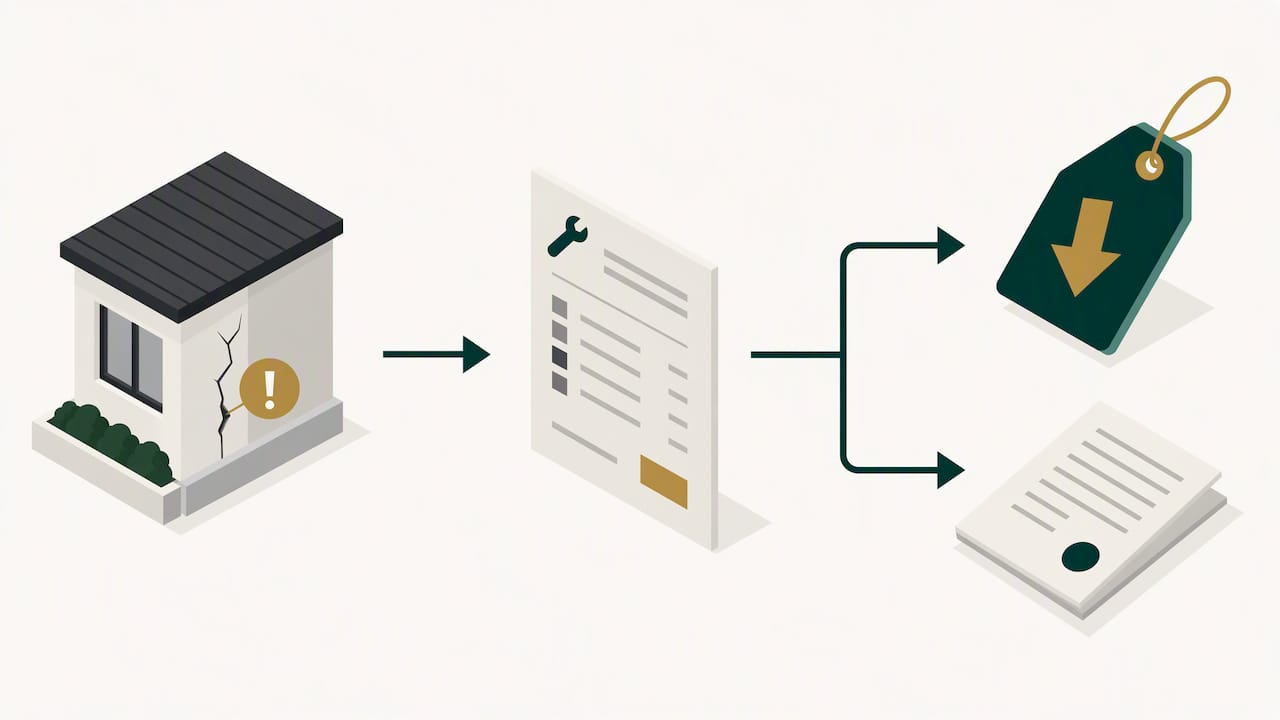
Follow up any adverse finding with a written remedial quote. That figure becomes your negotiating tool, whether you use it to request a price reduction or a special condition before exchange.
Contracts, finance and the NSW cooling-off window
The contract of sale is where many buyers get caught out, not because the document is hidden, but because they don’t read the special conditions closely. Ask your solicitor to check:
- The deposit amount and whether it’s held in trust.
- Special conditions covering finance, building and pest, or strata inspection.
- Inclusions and exclusions, listed item by item, not assumed.
- The settlement date and any sunset clauses.
In New South Wales, residential buyers typically rely on a five-business-day cooling-off period after exchange, unless it’s waived (which commonly happens at auction, where there is no cooling-off at all). This window is your last practical chance to pull out or renegotiate based on finance or inspection findings, so don’t let it lapse without acting on anything you’ve uncovered.
Coordinate your finance condition deadline with your lender’s valuation and formal approval timeline well in advance, following these critical tips and tricks for real estate buyers and borrowers. A lender’s valuation can come in below the purchase price, and discovering that on the last day of your finance window leaves no room to negotiate or walk away cleanly.
From viewing to settlement: who does what, and when
A Sydney purchase moves fast once you’ve found the right property, so it helps to know who’s responsible for what at each stage.
- Before you offer or bid: you (or your buyer’s agent) order the title search, review the Section 32 and strata records, and book inspections.
- Immediately after exchange: your solicitor reviews the contract formally, and your finance condition clock starts.
- During the conditional period: your lender arranges valuation and formal approval, your inspector delivers reports, and your solicitor raises any requisitions.
- Settlement week: you conduct a pre-settlement inspection, confirm tenancy status and included items, and your solicitor finalises adjustments and arranges fund transfer.
Each role, buyer, solicitor, lender, inspector, and buyer’s agent where engaged, has a deadline that affects the others, so a missed finance approval or a late inspection booking can push the whole settlement.
Why a buyer’s agent changes how due diligence gets done
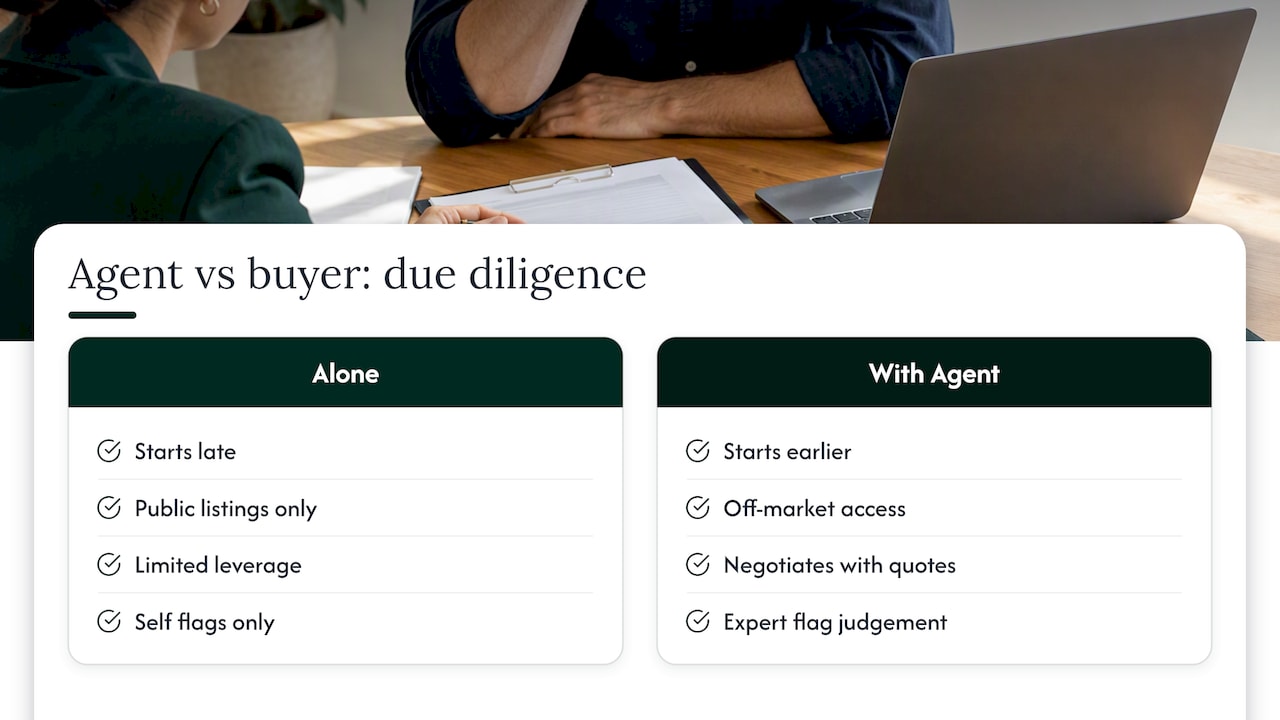
Most of the checks above are things any buyer can technically do alone. What a buyer’s agent changes is the sequencing and the leverage. We’ve seen remediation quotes used as genuine negotiating points rather than filed away after settlement, and off-market access means some of our strongest purchases never went through a public campaign at all, so due diligence started earlier, with less competition pushing the price.
The agency is directed by an experienced licensed real estate agent with a background in negotiation, auction bidding and off-market acquisition. The value isn’t just running the checklist. It’s knowing which flag in a strata minute or building report is a genuine deal-breaker and which is routine wear that every building of a certain age carries.
— Kristan
How Sydney Property Buyers can run this checklist for you
If you’d rather not coordinate searches, inspectors, solicitors and a lender yourself, we offer two ways in. Our Complete Purchase Solution covers the entire process: strategy, on-market and off-market search, independent appraisal, due diligence, negotiation, auction bidding and settlement coordination. If you’ve already found a property and just need representation at the table, our Negotiation Only service steps in at that point, and Auction Bidding is available if you’d rather not bid yourself.

- We order and interpret title searches, Section 32 disclosures and strata records.
- We brief and follow up with building and pest inspectors on your behalf.
- We coordinate your conveyancer and lender timelines so nothing lapses.
- We negotiate on price and conditions using what the due diligence actually finds.
We’ve secured 100+ properties for clients across the inner west, eastern suburbs, lower north shore and eastern beaches, with an average purchase time of 54 days from engagement to settlement. Get in touch through our services page to discuss which option suits your purchase, or call 1800 676 177.
FAQ
What is due diligence when buying property in Sydney?
Due diligence means verifying everything about a property before you commit: title and ownership, strata records where relevant, building condition, pest activity, and the contract terms. It covers the checks buyers should complete before exchange and during the conditional period.
What is a Section 32 and why does it matter?
A Section 32, or vendor disclosure statement, sets out legal and title information about a property that the vendor must provide before you sign. You can read what to check in a Section 32 before relying on it for your own due diligence.
How long is the cooling-off period in NSW?
Residential buyers in New South Wales typically have a five-business-day cooling-off period after exchange, unless it’s waived, which is common at auction. Use this window to finalise finance and inspection findings before it lapses.
Do I need a pre-settlement inspection?
Yes. A pre-settlement inspection confirms the property’s condition, included items and tenancy status match the contract before you hand over final funds.
Can a buyer’s agent handle due diligence for me?
Yes, a buyer’s agent can coordinate title searches, strata record reviews, inspections and solicitor liaison on your behalf. Our Complete Purchase Solution covers the full process, while Negotiation Only suits buyers who have already found a property.
Recommended
- Five Business Days: What NSW Buyers Must Do Before the 5pm Cutoff
- Before You Waive Cooling Off: 5 Checks for NSW Buyers on 66W Certificates
- Section 32 explained: what Sydney buyers need to know
- What does due diligence mean for property buyers?