A Section 66W certificate is the document that removes a buyer’s cooling-off period, making a residential contract binding and unconditional the moment it’s signed at exchange. Once issued, the buyer loses the standard right to walk away for a small penalty. Instead, they risk losing their full deposit and facing damages if they default. It’s authorised under section 66W of the Conveyancing Act 1919.
TL;DR:
- Signing a 66W certificate makes the contract unconditional immediately at exchange, removing the five-day cooling-off period in most cases.
- Only a solicitor, barrister, or licensed conveyancer acting for the purchaser can sign the certificate, ensuring independence and genuine advice.
- The penalty for default after issuing a 66W certificate can result in forfeiting the full deposit, often 10%, and exposes buyers to potential damages and litigation.
- Buyers should secure unconditional finance approval and complete inspections, including reading full strata records, before requesting a 66W certificate.
- The certificate is typically prepared at the moment of exchange, often under tight timelines, increasing the risk of rushing through critical due diligence steps.
Table of Contents
- What is a 66W certificate and where does it come from?
- Who can sign a 66W certificate, and who can’t?
- How the certificate changes exchange and what it costs you if things go wrong
- The practical risks nobody mentions until it’s too late
- Your checklist before agreeing to waive cooling-off
- Getting the certificate signed and delivered at exchange
- How professional buyer representation reduces 66W risk
- Where to verify the law yourself
- Why the standard advice on 66W certificates undersells the risk
- Sources
- FAQ
What is a 66W certificate and where does it come from?
Section 66W of the Conveyancing Act 1919 sets out the legal basis for waiving cooling-off rights in New South Wales. The certificate must be in writing, signed by a solicitor or barrister (licensed conveyancers issue them in practice too), and it must state its purpose plainly: that the signing practitioner has explained the effect of the contract, and the effect of handing this certificate to the vendor, to the purchaser.
That last requirement isn’t a formality. It’s the legislature’s way of forcing a genuine advice conversation before someone signs away a legal protection. A certificate that skips this step, or is signed by someone who never actually advised the buyer, isn’t worth the paper it’s printed on. For the definitive wording, AustLII’s copy of section 66W and the NSW Government’s guidance on contracts and deposits are the two sources worth bookmarking.
Who can sign a 66W certificate, and who can’t?
Only a solicitor, barrister, or licensed conveyancer acting for the purchaser can sign the certificate. That’s the whole point of the safeguard. The practitioner has to be genuinely independent, giving advice with the buyer’s interests in mind, not the seller’s.
That rules out the vendor’s own solicitor, and it also rules out anyone within that solicitor’s firm. A conflict of interest at this stage defeats the purpose of the certificate entirely, since the buyer needs someone who will honestly flag the risks rather than smooth the path to a quick sale.
In practice, this means engaging your own conveyancer or solicitor before you need the certificate, not scrambling to find one an hour before exchange. Fees for a same-day or urgent 66W certificate tend to run higher than for a certificate prepared with a few days’ notice, so timing matters for your wallet as well as your legal position.
How the certificate changes exchange and what it costs you if things go wrong
NSW law gives most residential buyers a five-business-day cooling-off period after exchange, extending to 10 business days on many off-the-plan contracts, according to NSW Government guidance. A 66W certificate switches that off. The contract becomes unconditional the second both parties exchange, with no five-day buffer to reconsider, arrange finance, or discover a problem with the property.
The gap in penalties is enormous. Rescinding during a normal cooling-off period costs a buyer 0.25% of the purchase price, roughly $2,500 on a $1 million property. Default after an unconditional exchange with a 66W certificate can mean forfeiting the full deposit, commonly 10% of the purchase price, plus exposure to damages if the vendor has to resell at a loss.
That’s a $100,000 exposure on a $1 million purchase, against a $2,500 exposure under standard cooling-off terms. Vendors can also pursue further legal action to recover any shortfall between the original contract price and what they eventually achieve on resale, which can drag a buyer into litigation well after they thought the deal was dead.
The practical risks nobody mentions until it’s too late
The legal mechanics are one thing. The everyday scenarios that actually catch buyers out are another, and they tend to cluster around three areas.
- Finance shortfalls: a lender’s valuation comes in below the contract price after exchange, leaving the buyer to cover the gap in cash or breach the contract.
- Hidden defects: pest activity, structural cracking, or drainage problems surface after exchange, and because the contract is unconditional, they’re now entirely the buyer’s problem.
- Strata surprises: special levies, building defect claims, or a cash-strapped owners’ corporation only come to light once someone actually reads the strata records, which often happens after the 66W has already been signed.
- Off-the-plan timing: sunset clauses and staged payment schedules create their own version of the finance-shortfall problem, months or years down the track.
Pro Tip: Never sign a 66W certificate before your solicitor or conveyancer has reviewed the strata report in full, not just the summary page. Building defect claims and special levies are routinely buried in the minutes of owners’ corporation meetings, not the headline figures.
Sydney Property Buyers has seen finance shortfalls catch out even well-prepared purchasers when a valuation comes in lower than the contract price, which is exactly why unconditional finance approval, not just pre-approval, needs to be locked in before a certificate is issued.
Your checklist before agreeing to waive cooling-off
Treat this as a strict sequence, not a set of boxes to tick in any order. Skipping ahead is where most 66W disasters start.
- Secure unconditional finance approval in writing, confirmed against the lender’s actual property valuation, not just a pre-approval figure.
- Complete building and pest inspections, and if the property is strata-titled, request and read the full strata records, including recent AGM and EGM minutes.
- Have your solicitor or conveyancer review the contract, negotiating or clarifying any special conditions before exchange, not after.
- Confirm your deposit funds are cleared and ready to transfer, since delays here can create their own breach risk.
- Check the settlement date works against your actual finance drawdown timeline and any sale of an existing property.
Only once every step above is genuinely complete should you instruct your practitioner to prepare a 66W certificate. If any item is still outstanding, the safer move is to exchange with the standard cooling-off period intact, even if it means a slightly less attractive offer to the vendor.
Getting the certificate signed and delivered at exchange
Once your finance, inspections, and contract review are locked in, instruct your solicitor or conveyancer to prepare the certificate. They’ll need the final contract version, confirmation that finance is unconditional, and sign off that you’ve read and understood the inspection and strata findings.
The certificate itself is short: it names the property, confirms the practitioner acted for the purchaser, and states that the effect of the contract and of giving the certificate has been explained. It’s typically handed across, physically or by email, at the moment of exchange, alongside the signed contracts and deposit.
Timing varies by scenario. Pre-auction offers sometimes require a 66W certificate as a condition of the vendor even considering the offer, since vendors often request one to secure certainty before taking a property off the market. Same-day exchanges compress the whole checklist into hours rather than days, which is precisely when corners get cut. Off-the-plan purchases add sunset-date and staged-payment considerations that a standard resale contract doesn’t have.
How professional buyer representation reduces 66W risk
Buyers agents and solicitors reduce the odds of a costly default by running the checklist properly, before pressure to exchange forces a shortcut. That means liaising with the lender to confirm unconditional finance, commissioning building and pest reports early, negotiating contract terms, and confirming settlement readiness before anyone talks about waiving cooling-off.
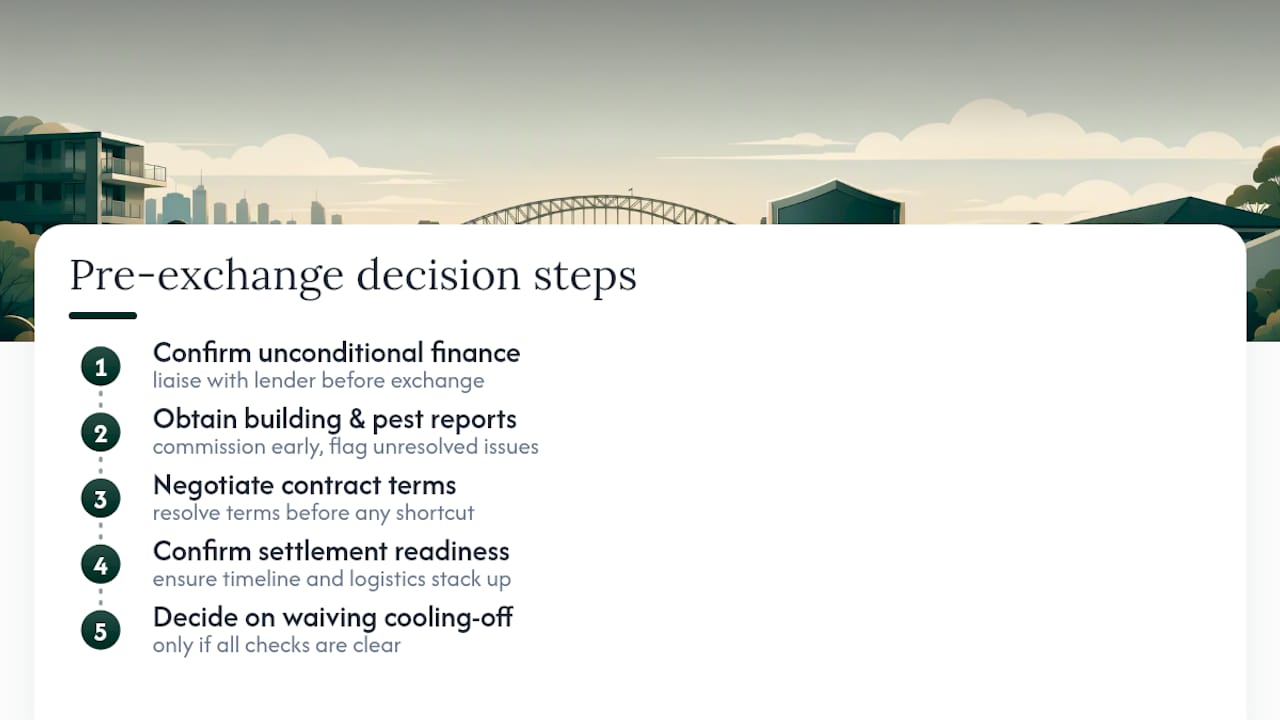
Kristan Johnson, director of Sydney Property Buyers and 2024 Outstanding Buyers Agent of the Year at the Inner West Local Business Awards, applies this discipline across the agency’s full-service acquisition process, from strategy through to settlement. A competent buyers agent or solicitor will also tell you when not to issue a certificate, if finance is still conditional, if a building report has flagged something unresolved, or if the settlement timeline simply doesn’t stack up yet.
Where to verify the law yourself
Read the statute directly at AustLII’s section 66W page and the NSW Government’s contracts and deposits guidance for the official position on cooling-off. LegalVision’s explainer covers the practical mechanics well. None of this replaces advice from a practising NSW solicitor or licensed conveyancer on your specific contract.
Why the standard advice on 66W certificates undersells the risk
Most guides treat the 66W certificate as a procedural step, something your solicitor handles while you focus on the exciting part of buying a property. That framing understates what’s actually at stake. The certificate isn’t a formality bolted onto exchange; it’s the moment you trade a legal safety net for a competitive edge, and the trade only makes sense if every other piece of your purchase is already locked down.
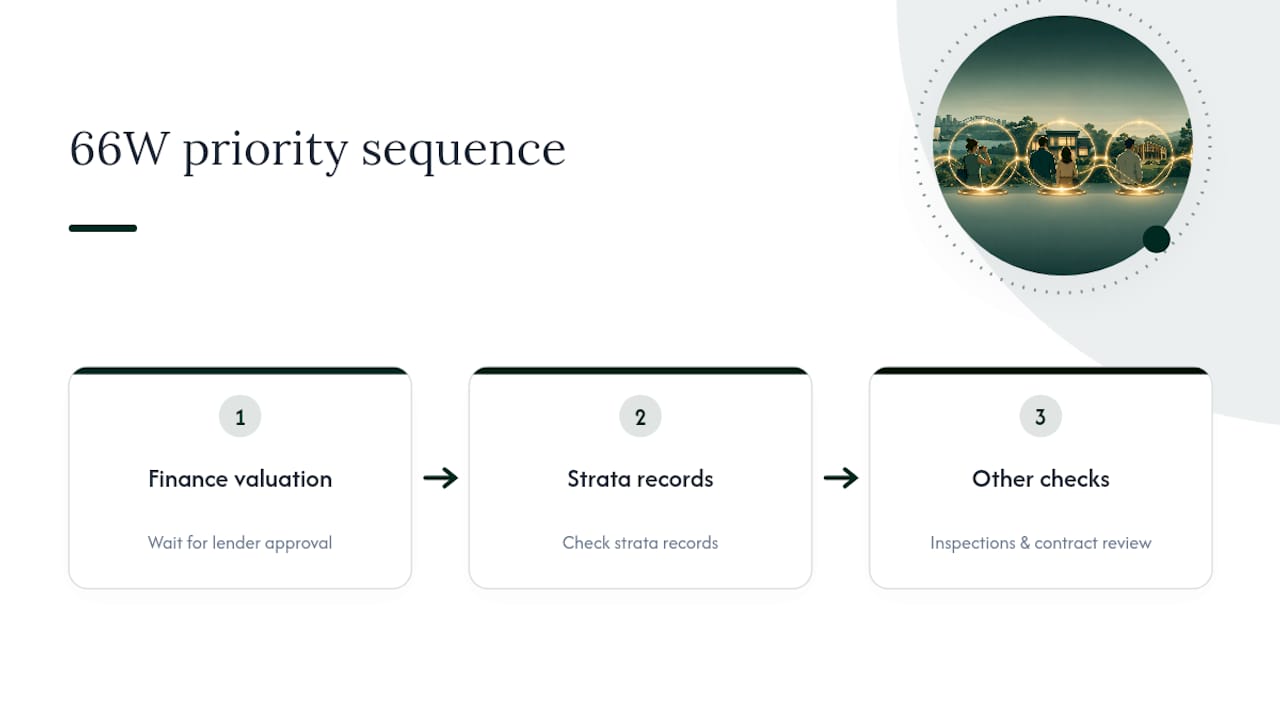
The conventional advice, get finance approved and do your inspections, is correct but incomplete. It rarely stresses the sequencing. Buyers get finance pre-approval, feel confident, and then treat the 66W as a rubber stamp rather than waiting for the lender’s actual valuation to land. That gap between pre-approval and unconditional approval is where most of the genuine 66W disasters happen, not in some rare hidden defect nobody could have found.
If you’re weighing whether to offer a 66W certificate on a property you want, prioritise the finance valuation first, strata records second, and everything else after. Get those two right and the rest of the checklist falls into place naturally. Get them wrong and no amount of contract review will save you.
— Kristan
This article is general information, not a substitute for advice from a qualified lawyer. Consult a qualified legal professional about your own circumstances before acting on anything here.
Sources
- CONVEYANCING ACT 1919 – SECT 66W
- Contracts and deposits when buying property in NSW | NSW Government
- Section 66W Certificate NSW: Risks, Checklist and Legal Guide | Leda Lawyers
FAQ
What is a 66W certificate in NSW?
A 66W certificate is a document that waives a buyer’s standard cooling-off period, making a residential property contract unconditional immediately at exchange. It must be signed by a solicitor, barrister, or licensed conveyancer acting for the purchaser under section 66W of the Conveyancing Act 1919.
What happens if I default after signing a 66W certificate?
You risk forfeiting your full deposit, commonly 10% of the purchase price, and could face further damages if the vendor resells the property at a loss, compared with a 0.25% penalty under standard cooling-off rights, according to Leda Lawyers.
Can I sign my own 66W certificate without a lawyer?
No. The certificate must be signed by a solicitor, barrister, or licensed conveyancer acting for you, and it must state that they explained the contract’s effect to you before you signed.
Why would a vendor ask for a 66W certificate?
Vendors often request one in competitive or pre-auction scenarios to secure certainty that the sale won’t fall through during a cooling-off window, particularly when multiple buyers are interested in the same property.
How long does the standard NSW cooling-off period last if I don’t waive it?
Most residential buyers get five business days after exchange, extending to 10 business days on many off-the-plan contracts, under NSW Government guidance.
Recommended
- Section 32 explained: what Sydney buyers need to know
- Do This Before Exchange to Avoid NSW Property Settlement Delays
- Strata by-laws in NSW: what buyers and owners need to know
- Unconditional exchange: what Sydney buyers must know