A successful pre-settlement inspection confirms three things: the property matches its condition at exchange, every fixture and fitting on the contract is present and working, and any repairs the seller promised are actually done. Book this walkthrough several days before settlement, never the morning of. If you find something serious, contact your conveyancer or solicitor immediately, before you sign off.
TL;DR:
- Book the final inspection three to seven days before settlement to ensure repairs are complete and the property remains in the expected condition.
- Focus on documenting observable issues with timestamped photos and videos, clearly referencing contract clauses, to enable quick conveyancer action.
- Conduct a systematic room-by-room check, testing appliances, fixtures, and safety features, while avoiding unsafe or complex testing beyond your confidence.
- If problems are found, act immediately by photographing and notifying your conveyancer, and ensure the seller provides proof of completed repairs or offers a price reduction.
- A buyer’s agent attending the inspection adds value by identifying issues early and assisting with proper documentation for a faster resolution.
Table of Contents
- Room-by-room pre-settlement inspection checklist
- What to bring and when to book the final walkthrough
- How to document issues for your conveyancer
- What happens if the pre-settlement inspection finds problems?
- Who’s behind this pre settlement inspection guidance
- Where to check jurisdiction-specific rules
- The checklist matters less than what you do with what it finds
- Sources
Room-by-room pre-settlement inspection checklist
A proper property inspection guide works through the house systematically rather than wandering room to room hoping something jumps out. Bring a torch, your phone charger, and twenty minutes of patience, because rushing is how buyers miss a cracked cistern or a dead power point.
Work through the property in this order:
- Exterior and entry. Check gutters for damage or debris, fences for new leans or gaps, and the roofline for missing or slipped tiles. Confirm the seller has removed rubbish and personal belongings, and look for signs the property is genuinely vacant if vacant possession was agreed.
- Living areas. Open every window and door to check they latch and lock properly. Look at flooring and walls for damage that wasn’t there during your earlier visits, and test power points and light switches using your phone charger as a quick, reliable tester.
- Kitchen. Turn on the oven and cooktop, run the rangehood, and start the dishwasher through a short cycle if time allows. Run the taps and check drainage isn’t sluggish, and open every cupboard to confirm the benchtops and included appliances match what’s listed in the contract.
- Bathrooms and laundry. Run each shower and tap, flush every toilet, and switch on exhaust fans to check they’re working. Look under sinks and around the shower base for visible leaks or fresh water staining.
- Utilities. Test the hot water system, and run heating and cooling for a minute each to confirm they respond. Check smoke alarms are physically present, and confirm you can access the meter box and that gas or electricity connections look intact.
- Garage, outbuildings and pools. Test garage remotes and any automatic gates, and check outbuildings for damage or missing items. If a pool or spa is included, check visible pump operation, but leave detailed testing of pool equipment to a specialist rather than guessing at it yourself.
Skip anything that looks unsafe. Don’t test gas appliances if you’re not confident doing so, and never enter a roof space, subfloor, or anywhere structurally questionable without someone qualified present. A buyer’s agent who attends property settlement inspections regularly will know exactly where the common trouble spots hide in a given property type.
Pro Tip: Film a short video panning across each room rather than taking single photos. A ten second clip of the dishwasher running or the ducted heating kicking in is far harder for a seller to dispute than a still image, because it shows the appliance actually working at the time of inspection.
What to bring and when to book the final walkthrough
Bring the signed contract and inclusion list, your building and pest report, photos from your earlier viewings, a torch, and a notepad. Pack your phone with plenty of storage free and the charger in your pocket, not the car.
- Take the buyer’s agent if one has represented you through the purchase, since they’ve likely seen the property before and know exactly what changed.
- Loop in your conveyancer beforehand so they’re reachable by phone the moment you walk out the door.
- If you’re interstate or overseas, ask your buyer’s agent or a trusted representative to attend on your behalf and report back immediately.
Book the pre-settlement inspection three to seven days out. Too early and the seller hasn’t finished moving out or completing repairs; too late and there’s no time left to fix a genuine problem before funds change hands. The walkthrough itself usually takes between 10 and 30 minutes, depending on the size of the property, so build in a buffer if it’s a larger house.
How to document issues for your conveyancer
Evidence wins arguments. A conveyancer working from one clear photo and a contract clause moves faster than one working through a rambling email describing the problem in paragraphs.
- Photograph and film everything. Take timestamped photos of any concern, and short video clips of appliances running so the operational condition is obvious, not just a static image.
- Write a short note for each issue. Record the location, a one-line description, the relevant contract clause or repair promise, and how serious it is.
- Name your files properly. Use a date_location_issue format, attach the relevant contract excerpt, and send everything through email or your conveyancer’s client portal rather than a string of text messages.
- Ask for proof when repairs were promised. Request receipts, trade licences, and contractor contact details rather than taking a seller’s word that work is finished.
Pro Tip: Clear, dated photographs are the buyer’s most persuasive evidence if a dispute arises after settlement, so oversharing evidence beats sending too little.
What happens if the pre-settlement inspection finds problems?
Photograph the issue, notify the selling agent, and get your evidence to your conveyancer or solicitor the same day. Delay costs you leverage.
- The seller completes the repair before settlement and provides proof, such as a receipt or contractor invoice.
- The seller agrees to a price reduction reflecting the cost of the outstanding work.
- Funds are held back or placed in escrow until the fix is done, where the contract and jurisdiction allow it.
- A reinspection is arranged, though this only works if there’s still time before the settlement date.
Ordinary wear and tear, or a defect that already existed at exchange, generally isn’t grounds to withhold funds. The real threshold is material change since exchange, something broken, missing, or damaged that wasn’t like that when you signed. If the issue looks structural or electrical, you may need a specialist report before your conveyancer can advise you properly, and that can push out the timeline. Worth remembering: a pre-settlement inspection is not a substitute for a building and pest inspection, a strata report, or a dedicated electrical or plumbing assessment. It checks observable condition, inclusions, and completed repairs, nothing more.
Who’s behind this pre settlement inspection guidance
This guide is written from the perspective of Kristan Johnson, a licensed real estate agent and the 2024 Outstanding Buyers Agent of the Year at the Inner West Local Business Awards. Sydney Property Buyers exclusively represents purchasers, never sellers, and runs property inspections seven days a week, independent of open home schedules.
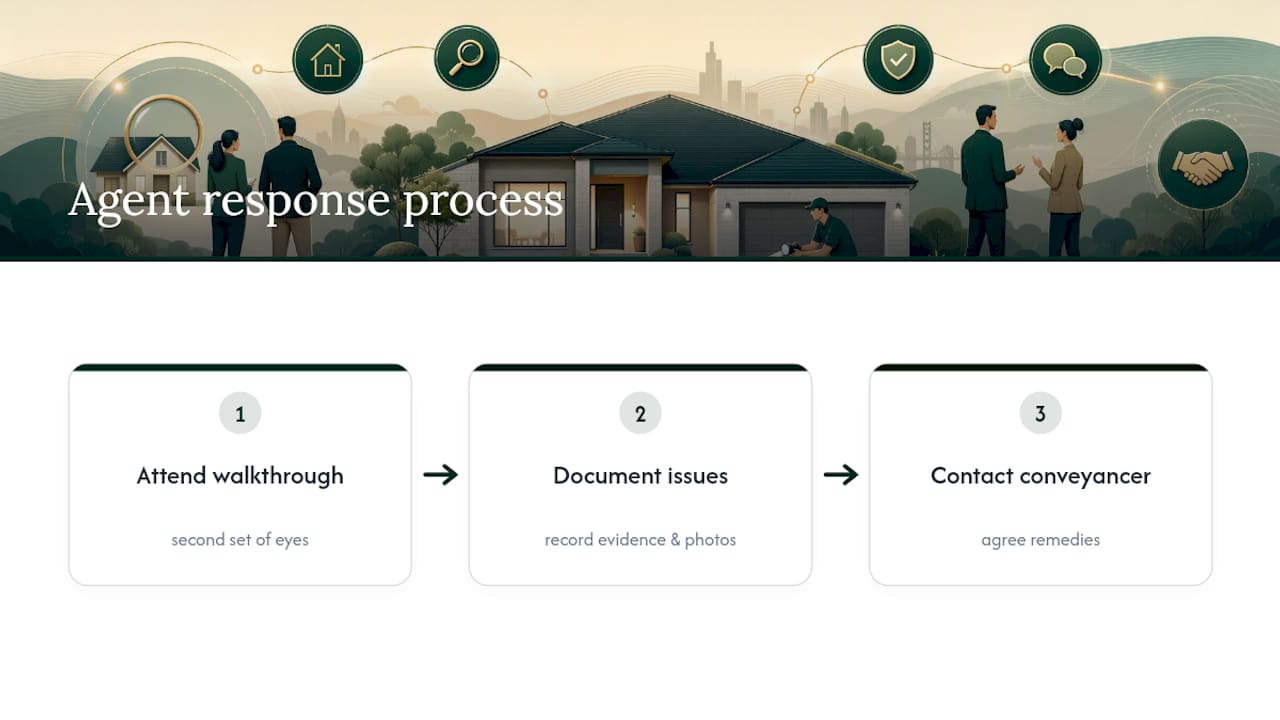
A buyer’s agent who attends the final walkthrough brings a second, experienced set of eyes, documents issues properly, and liaises directly with your conveyancer on remedies. Sydney Property Buyers offers both full-service purchase support and negotiation-only representation for buyers who’ve already found their property.
Where to check jurisdiction-specific rules
The CommBank pre-settlement inspection checklist covers timing and general process. Westpac’s final house inspection checklist details what to test and how to record it. For a broader look at buyer checklists generally, DealAnalyzerAI’s property decision criteria list offers a useful investor’s-eye perspective. Always confirm your specific rights with your own conveyancer, since contract terms and state legislation vary.
The checklist matters less than what you do with what it finds
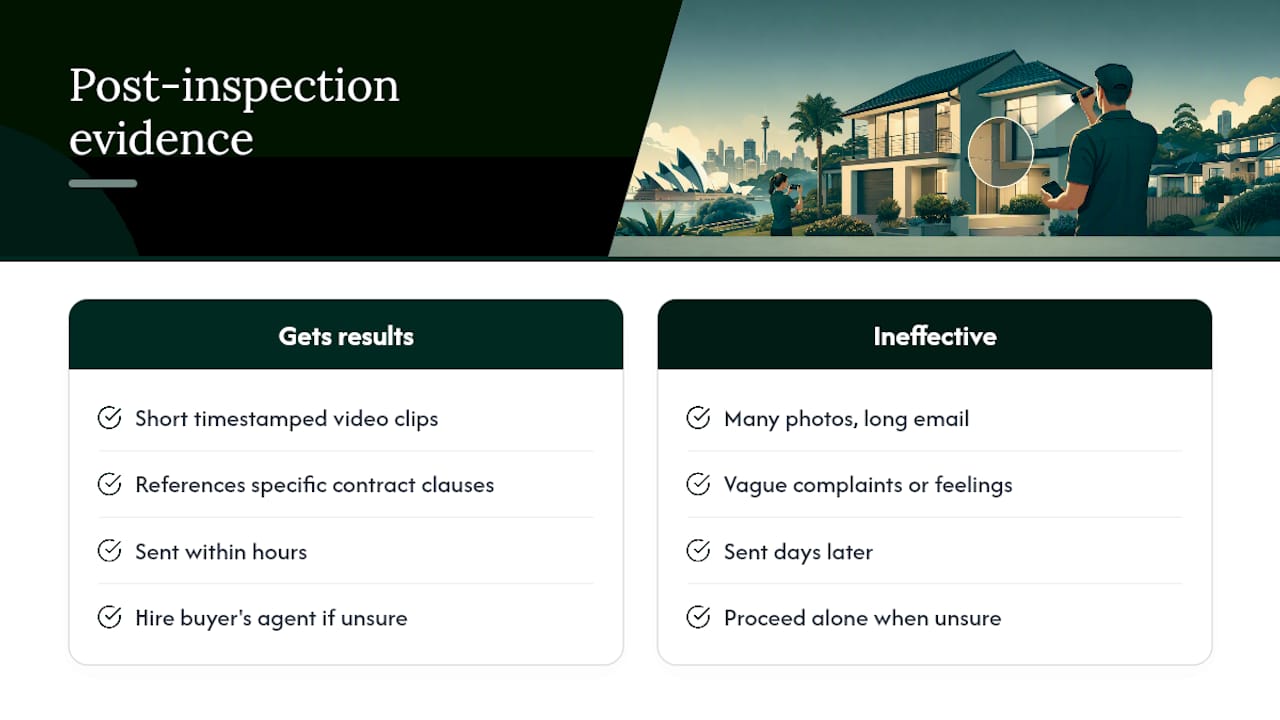
Most buyers treat the pre-settlement inspection as a formality, a box to tick between exchange and handover. That’s backwards. The walkthrough itself takes twenty minutes; what you do with the evidence afterwards is where outcomes actually diverge. I’ve seen the conventional advice fixate on the checklist itself, telling buyers to “check the oven” and “test the taps” as if ticking boxes is the job. The job is building a case your conveyancer can act on within hours, not days.
Prioritise the video over the photo, the contract clause over the vague complaint, and speed over thoroughness once you’re past the walkthrough itself. A buyer who sends a conveyancer three sharp, timestamped clips referencing specific contract clauses gets a faster, more decisive response than one who sends twenty photos and a long email explaining feelings about the situation. If you’re not confident doing this alone, that’s precisely the moment a buyer’s agent earns their fee, not before.
— Kristan
Ready for professional representation at your next inspection? Sydney Property Buyers attends walkthroughs seven days a week and can manage documentation, negotiation, and settlement on your behalf. Explore how the process works on the full purchase journey page, or call 1800 676 177 to discuss your settlement timeline.
Sources
- Pre settlement inspection checklist — CommBank
- Final house inspection checklist — Westpac
- Pre-Settlement Inspection Checklist for Australian Property Buyers — RealEstateCalc
Recommended
- How a buyers agent oversees property settlement in sydney
- Why a buyer’s agent attends inspections in Sydney
- Do This Before Exchange to Avoid NSW Property Settlement Delays
- Why a buyer’s agent reviews contract: Sydney guide