A deceased estate in Sydney is an ordinary home sold by an executor or administrator after the owner has died. The sale looks like any other, but the seller’s authority, the contract conditions and the settlement date all depend on probate. A buyer who understands those extra steps can bid with confidence. A buyer who doesn’t can be left waiting months, or can overpay on the assumption that estate sales are bargains. At Sydney Property Buyers we represent buyers only, and this is how we would walk a friend through it.
TL;DR
- The seller is the executor or administrator, who holds the property on trust for the beneficiaries. Settlement can’t happen until a grant of probate or letters of administration is issued.
- Estate homes are not automatically cheaper. Price depends on location, condition and competition, so value needs independent research.
- Contracts often carry special conditions and limited warranties. Have the contract reviewed by a NSW conveyancer or solicitor before you exchange or bid.
- Overseas buyers, including US citizens, face foreign investment approval, surcharge duty and a current ban on established dwellings.
- A buyers agent can run the appraisal, due diligence, negotiation and auction bidding for you, so the estate’s constraints don’t become your risk.
Table of Contents
- What a deceased estate sale actually is
- How Sydney deceased estates reach the market
- What to check before you make an offer or bid
- Probate, special conditions and the settlement clock
- Are estate homes cheaper?
- Costs you should budget for
- If you are buying from the United States
- How a buyers agent helps with an estate purchase
- Our view
- FAQ
- Sources
What a deceased estate sale actually is
When a property owner dies, the home becomes part of their estate. The person named in the will to manage it is the executor. If there is no will, or no executor able to act, a court appoints an administrator. Either one becomes the vendor named in your contract, holding the property on trust for the beneficiaries. The land is transferred to them through a transmission application lodged with NSW Land Registry Services once the grant has issued.
This is different from an estate clearance of furniture, jewellery or collectables. Those are auctions of contents. The search results for this topic mix the two, but a property purchase is a real estate transaction with the legal steps of an estate on top.
One detail worth knowing: not every death produces a probate sale. Property held as joint tenants passes to the surviving owner without probate, while a tenant in common’s share goes into the estate. The title search shows which applies. For a broader view of the executor’s side, the deceased estate property process in NSW is laid out step by step for executors.
How Sydney deceased estates reach the market
Estate homes are marketed like other homes: online listings on Domain and realestate.com.au, open homes, the agent’s network and local marketing. One typical timeline from marketing to exchange is 5 to 10 weeks.
Auction is common because it shows the executor sought market value, but it is not required. An executor can also sell by private treaty or to a family member. If the estate is sold at auction, the executor or administrator may bid only if the auction conditions allow it and the auctioneer announces it before bidding starts, under section 66 of the Property and Stock Agents Act 2002. That is an exception to the usual rule that a seller can’t bid.
High-end estates attract the same campaigns as any prestige listing. In November 2026, a Double Bay estate that had been in one family for more than 50 years came to market with a A$30 million price guide and an expressions-of-interest campaign. Most estate sales are far more modest, and many never reach a portal at all. Over 30% of our purchases are secured off-market, which is why we look beyond public listings for every client.
What to check before you make an offer or bid
In NSW the buyer takes the property as they find it. The Law Society advises having the contract reviewed before exchange, with building and pest inspections done before exchange or before bidding at auction. With an estate, add these questions:
- Has probate been granted? If not, how long is the contract allowing for it, and is there an end date?
- Do all executors sign? Usually they must.
- What do the special conditions say? Executors often can’t give the assurances an owner-occupier could, so warranties are typically limited.
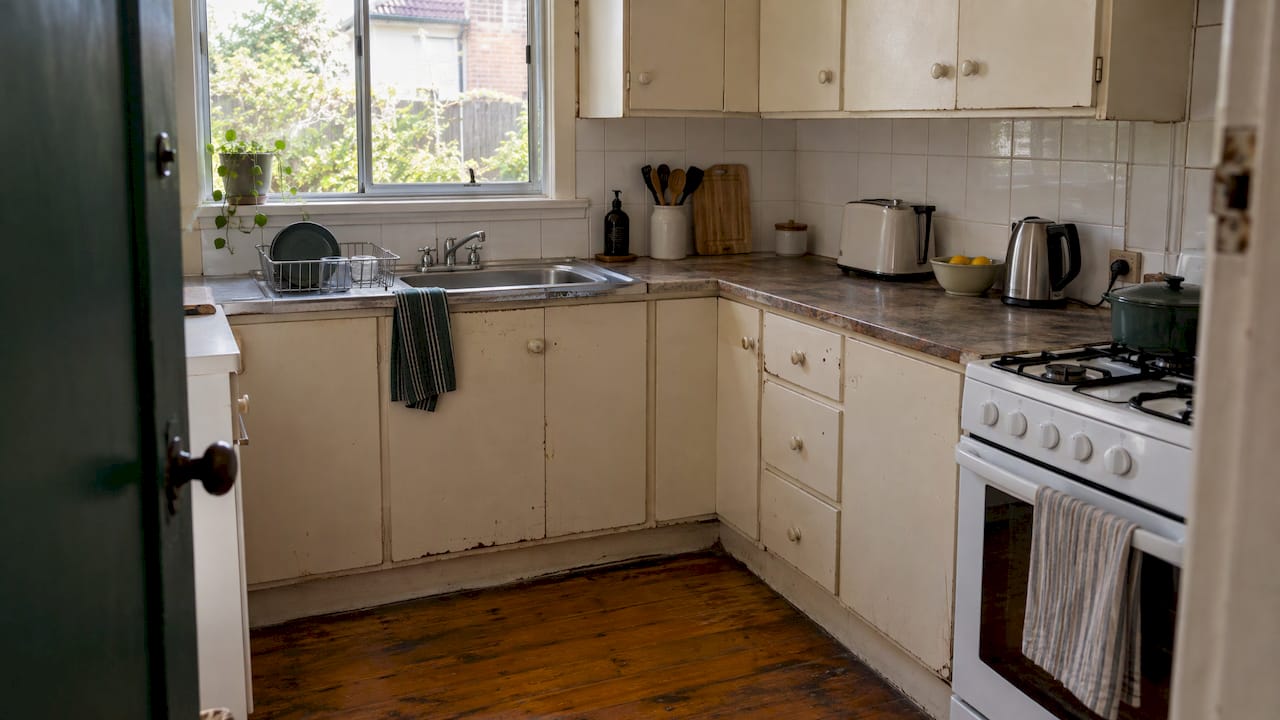
- Is vacant possession included, and who clears the contents? The property may also be unmaintained, so inspections matter more, not less.
- Whose name is on the title? A property can’t be sold with the deceased person’s name on the title. It must first go to the surviving spouse or the executor.
- What do the searches show? Between exchange and settlement your lawyer checks the title, council and water rates and land tax. Unpaid land tax is a first charge on the land that can become your debt if settlement proceeds without clearance.
The NSW Government’s conveyancing guidance adds pool compliance, planned development and government interests in the land. NSW conveyancers must be licensed with NSW Fair Trading. Our Sydney due diligence checklist covers what to protect during the 5 day cooling off period.
In a full service engagement, due diligence is one of the things we take on, and we inspect properties 7 days per week, so you aren’t limited to the agent’s open home times.
Probate, special conditions and the settlement clock
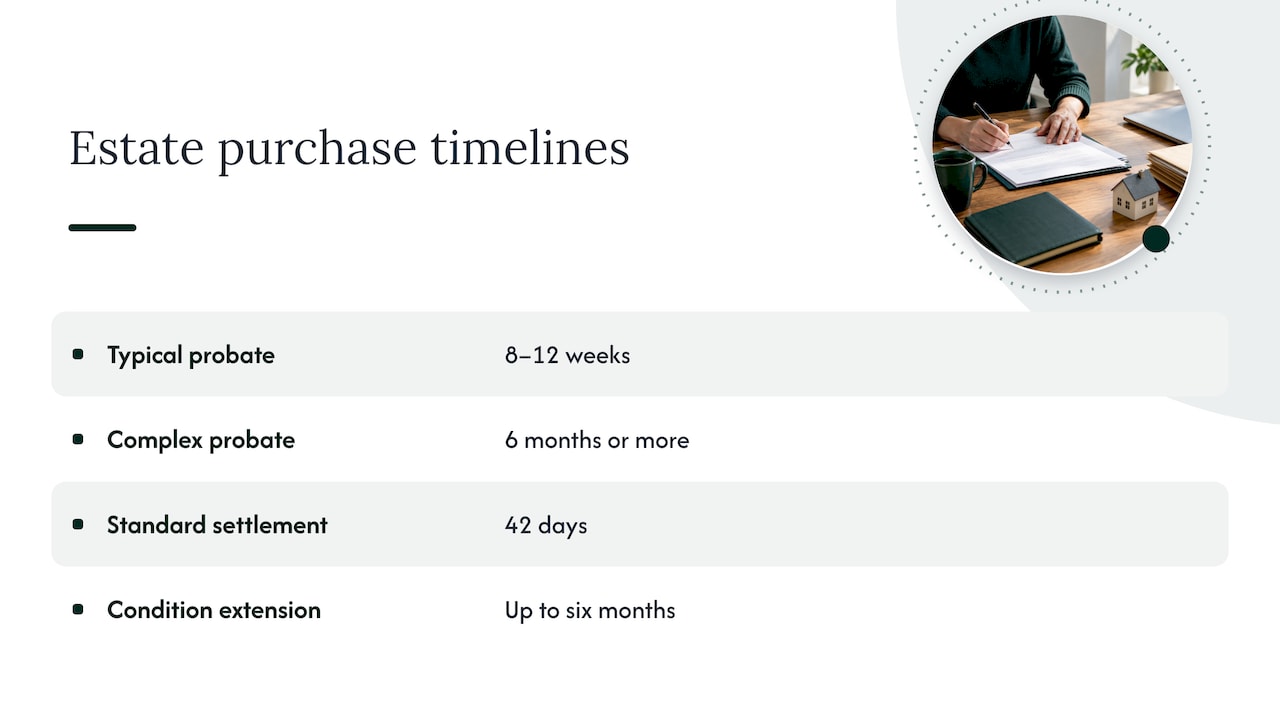
This is where estate purchases differ most. A standard NSW settlement is 42 days. Estate contracts can carry a special condition requiring an event, such as the grant of probate, before the vendor becomes owner. One NSW law firm warns that such conditions can stretch settlement by up to six months.
Probate itself typically takes 8 to 12 weeks in NSW, and 6 months or more for complex estates. Before the grant, a property can be listed, offers accepted and contracts exchanged. Settlement, mortgage discharge and distribution of proceeds can’t happen until it issues.
There is a trap here. A “subject to grant” clause does not by itself give an intended administrator legal authority. Their title flows from the grant, so exchanging with someone who has no authority to transfer title creates legal and financial risk. This is a point for your solicitor or conveyancer, who should read the special conditions before you sign.
Plan your own side around this: finance approvals, a lease ending on your current home, or a purchase deadline all need a buffer. Our guide to what to do before exchange to avoid settlement delays shows how to line those dates up. Across our clients, the average time from engagement to settlement is 54 days.
Are estate homes cheaper?
Not as a rule. Price depends on market conditions, location, condition, buyer demand and the executor’s duty to achieve a fair market outcome. Executors are often advised to get valuations and several agent appraisals before selling, so a well-run estate campaign is usually priced to the market.
The market itself moves. One report put the Sydney median house price at A$1.42 million in the September quarter 2026, with a 72% auction clearance rate. Earlier in the year, ABC News reported a 0.9% fall in Sydney home values in May 2026. These figures are published for their periods and change with each release, so test any estate home against recent comparable sales, not a headline median.
Where estates can create value is in the terms and the seller’s situation. An executor often wants certainty and a clean sale, not the last dollar of a bidding war. A buyer who can offer a settlement that suits the probate timetable, with finance ready and inspections done, is in a stronger position to negotiate. Our clients save about 9% on average against the purchase price, and our guide to negotiating a Sydney house price explains the approach.
Costs you should budget for
Buyers in an arm’s-length estate sale pay ordinary transfer duty (stamp duty) on the price. The A$100 concessional rate applies only to transfers to beneficiaries, not to people buying from the estate. Add your conveyancing, inspections, loan costs and any clearing or repair work if the home has been left as it was.
First home buyers should check whether NSW first home stamp duty relief applies to them. Investors should look at NSW land tax thresholds before they commit.
If you are buying from the United States
US-based buyers are treated as foreign persons. That brings several extra steps:
- Approval first. A foreign person should submit an investment proposal before the transaction, or make the contract conditional on foreign investment approval, and not proceed until the Government decides.
- Established homes are restricted. From 1 April 2025 to 30 June 2029, most foreign buyers are banned from buying established dwellings. With approval they can usually still buy new dwellings or vacant residential land. Because most estate homes are established, check eligibility before you pursue one.
- Surcharge duty. Foreign buyers pay ordinary duty plus a 9% surcharge in NSW.
- Paperwork. Overseas records such as US bank statements usually need an English translation kept with the original for settlement checks.
The rules are detailed and change, so confirm your status with a NSW lawyer or conveyancer before bidding. Our guides on whether a foreign buyer can purchase Sydney property and buying sight unseen cover the buyer’s side.
How a buyers agent helps with an estate purchase
An estate sale has more moving parts than a standard sale: an executor who may not know the property’s history, conditions tied to probate, and often an auction. A buyers agent works only for you, so every step is aimed at your outcome.
With our Full Service, we cover strategy, search (on-market and off-market), independent appraisal, due diligence, negotiation, auction bidding and settlement. Our independent appraisal means you’re not relying on the vendor’s agent for value. Our holistic investment analysis looks at capital growth potential and rental yield if you’re buying to invest. If you’ve already found the property, Negotiation Only gives you professional representation on price. If it goes to auction, our guide to bidding with confidence in Sydney shows how we approach the day. If a property is passed in, the negotiation afterwards is often where the deal is made.
We work across the Inner West, Eastern Suburbs, Lower North Shore and Eastern Beaches. Our team is licensed (NSW Licence 20456819) and we have secured more than 100 properties for clients, with a 5.0 Google rating.
If you’re looking at a deceased estate, see our Complete Purchase Solution and Auction Bidding services or call 1800 676 177.

Our view
Estate sales reward the buyer who is prepared. The executor wants a clean, defensible sale, and the buyer who arrives with finance sorted, inspections done and a contract already reviewed is the one who can offer terms that suit the estate while protecting themselves.
We see the best results when the buyer treats the legal conditions and the price as one negotiation. Probate timing, possession and warranties all have a dollar value, and they are part of what we negotiate. Add access to off-market and pre-market properties, and you often see an opportunity before the crowd does.
That is why we act only for buyers. Our job is to keep you steady when a sale is emotional for the vendor’s family and complicated on paper.
Kristan
FAQ
Can I buy a house before probate is granted?
Yes, in many cases you can exchange contracts before the grant, but you can’t settle until it issues. The contract should say what happens if probate is delayed, including any end date. Have a NSW conveyancer or solicitor read those special conditions before you exchange.
Do I pay less stamp duty on a deceased estate?
No. You pay ordinary transfer duty on the price. The A$100 concessional rate applies only to transfers to beneficiaries, not to buyers in an arm’s-length sale.
Is a deceased estate sold with warranties?
Usually fewer than a normal sale. The executor may not know the property’s history, so contracts typically limit warranties. That makes your own building and pest inspections and searches before exchange especially important.
Can a US citizen buy a deceased estate in Sydney?
A US citizen is a foreign person under Australian rules and generally needs foreign investment approval. Established dwellings are currently restricted for most foreign buyers, so check eligibility with a NSW lawyer before bidding.
Can a buyers agent help me buy a deceased estate?
Yes. We handle the search, appraisal, due diligence, negotiation and auction bidding, and can represent you on negotiation alone if you’ve already found the home. Contact us on 1800 676 177 or hello@sydneypropertybuyers.com.au.
Sources
- What Is a Deceased Estate? What the Will Controls in NSW
- Selling Deceased Estate Property in NSW
- Buying a Deceased Estate in NSW: Probate and Finance
- Buying a Deceased Estate Property in QLD and NSW
- Double Bay deceased estate report, realestate.com.au
- Buying a home, The Law Society of NSW
- Deceased estate sales: bargain buy or big mistake?
- What Is Conveyancing? The Complete Guide
- Conveyancing for property buyers and sellers, NSW Government
- Contract of Sale: Everything you need to know
- Letters of Administration NSW: Pre-Grant Guide
- What Is a Deceased Estate Sale? A Buyer’s Guide
- Sydney Property Prices Spring 2026
- Sydney’s falling property prices, ABC News
- Foreign buyers and surcharge duty in an Australian conveyancing matter
- Can foreigners buy property in Australia?
- NSW Property Purchase Source of Funds Translation
Recommended
- How to Buy Below Market in Sydney: A Guide for US Buyers
- Auction Bidder Etiquette in Sydney: A Buyer’s Guide
- Benefits of buying off-market in Sydney: 2026 guide
- Passed In Property in Sydney: What Buyers Do Next