The price on the contract is rarely the number you pay. In Sydney the extras arrive in layers: transfer duty at exchange or settlement, reports before you bid, legal and registration fees, loan charges, and for many overseas buyers a 9% surcharge. Budget for all of them before you start, and use a buyers agent who works only for purchasers, so the price, the reports and the negotiation are handled with the full cost in view. That is how we work at Sydney Property Buyers.
This guide is written for buyers, including US-based buyers, who want the full list with real figures. Amounts are in Australian dollars (A$).
TL;DR
- Transfer duty is the biggest extra. NSW’s 2026–27 scale reaches A$52,237 plus A$5.50 per A$100 above A$1,290,000.
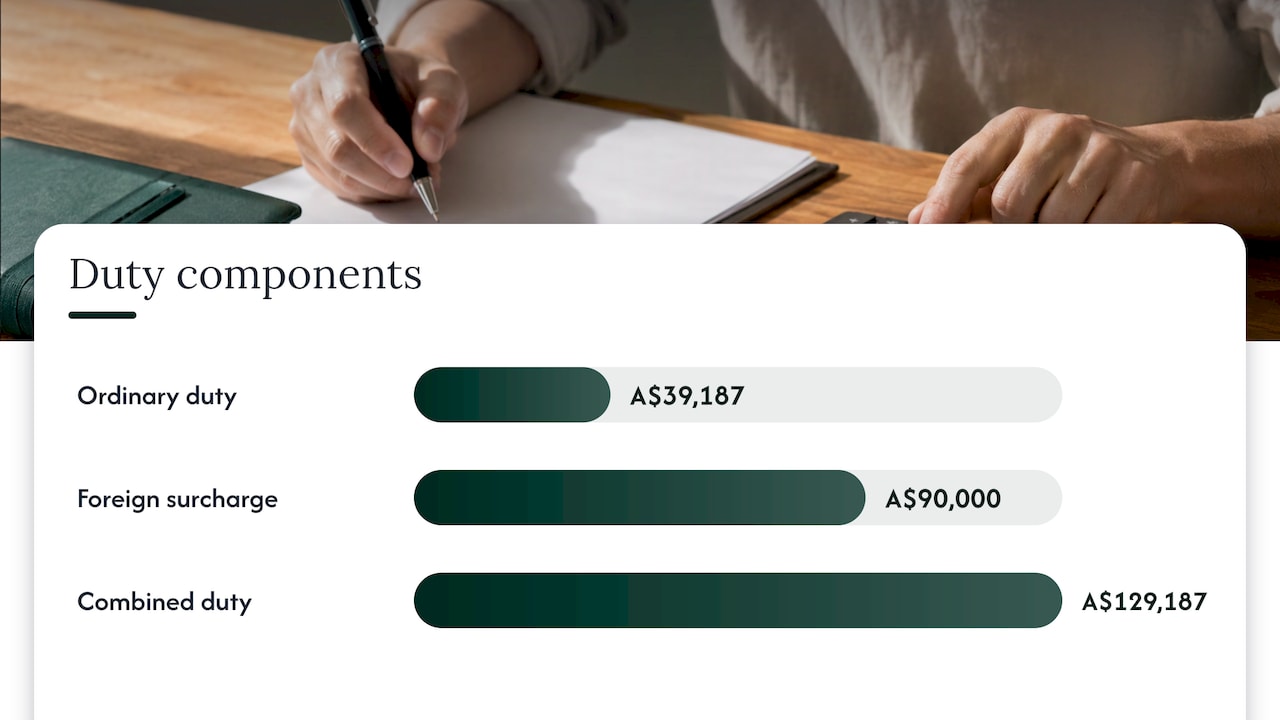
- Foreign purchasers pay a further 9% surcharge on residential property. On A$1 million that is A$90,000 on top of A$39,187 ordinary duty.
- Costs before settlement include building, pest and strata reports, conveyancing, loan fees and registration, and they repeat if you bid on several properties.
- Ownership costs continue after settlement: council rates, insurance, strata levies, maintenance and, for investors, land tax.
- Plan the whole budget first, then set your maximum bid from what is left after these costs.
Table of Contents
- Transfer duty: the largest cost beyond the price
- The 9% surcharge for foreign purchasers
- Costs before settlement
- Costs after you own it
- A sample budget for a A$1 million purchase
- How to keep the costs under control
- Where a buyers agent fits
- Our view on hidden costs
- FAQ
- Sources
Transfer duty: the largest cost beyond the price
Transfer duty (called stamp duty in everyday speech) is a state tax paid on a property purchase. In New South Wales it is charged by Revenue NSW on the dutiable value, which is the higher of the purchase price or the market value. Revenue NSW’s rate page explains that the 2026–27 general scale applies according to the contract date.
The scale is marginal, like income tax brackets. It starts at A$1.25 per A$100 up to A$18,000, then climbs through brackets to A$52,237 plus A$5.50 per A$100 above A$1,290,000. The same page is the place to run your own figure before you bid, because the scale is reset each financial year.
A worked example from Revenue NSW shows the scale in practice: on a A$1 million property, ordinary duty is A$39,187. That is nearly 4% of the price, due on top of your deposit.
If you are a first home buyer purchasing to live in, concessions may apply. We cover how they work in our guide to NSW first home buyer stamp duty.
The 9% surcharge for foreign purchasers
This is the cost that surprises US buyers most. NSW charges surcharge purchaser duty of 9% of the dutiable value of residential-related property, in addition to ordinary transfer duty. Revenue NSW’s surcharge duty guide gives the A$1 million example: A$90,000 surcharge plus A$39,187 ordinary duty, a combined A$129,187.
Who counts as foreign? Revenue NSW’s guidance for individuals generally treats an individual as foreign unless they are an Australian citizen or fall within specified residency or visa exceptions. For relevant permanent residents, ordinary residence generally requires at least 200 days in Australia in the preceding 12 months. A US citizen living in the United States should assume the surcharge applies unless an exception clearly fits.
Timing matters too. The surcharge is due by settlement where there is a transfer, or otherwise within three months of the contract, whichever deadline comes first, and overdue duty attracts daily interest.
Foreign buyers also face approval rules, which we explain in can a foreign buyer purchase Sydney property.
Costs before settlement
The NSW Government’s guide to buying costs lists the upfront items: transfer duty, lenders mortgage insurance (LMI) if you borrow more than 80% of the purchase price, building, pest and strata reports, conveyancing, mortgage and title registration, and loan application or valuer fees. It also notes that some of these can be incurred more than once if you research or bid on more than one property.
That last point is the real hidden cost. A buyer who loses three auctions has paid for three sets of reports. Sydney’s market rewards preparation, and a clear shortlist keeps this spending down.
Building, pest and strata reports
A building and pest inspection checks structure, timber pests and defects. For apartments and townhouses, a strata report summarises the owners corporation’s finances, levies, repairs and disputes. The reports are what turn a price into an informed price: a major defect or a looming special levy is a negotiating point.
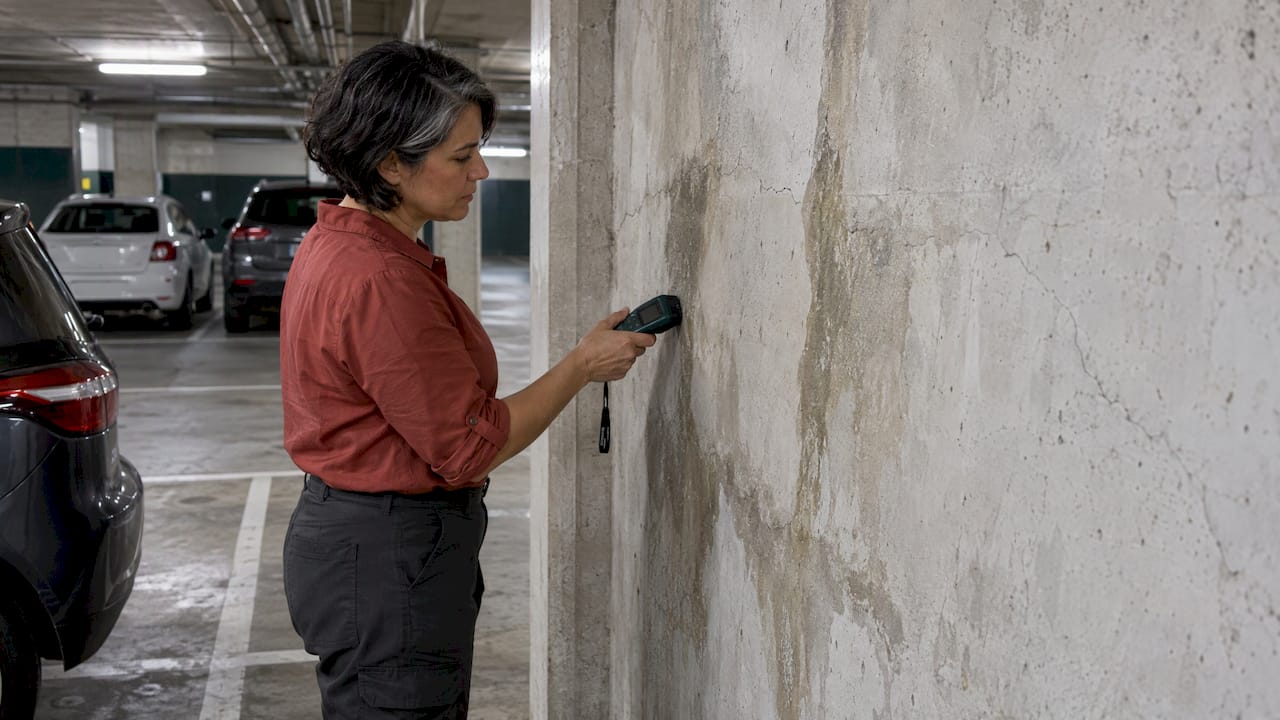
Typical costs differ by property type and size, and our page on strata report cost in Sydney breaks them down. Reading the results before you bid matters as much as ordering them. Our guide to a building inspection before bidding covers the risks for overseas buyers, and the property inspection checklist shows what to look at on the day.
The NSW Government also says buyers should check for authority interests and planned development, undisclosed fence disputes or illegal work, pool compliance and arrears before settlement. Each of these is a potential cost that never appears in the listing.
Conveyancing costs
Conveyancing is the legal work behind a purchase. NSW Fair Trading describes it as covering contract review, searches, duty, mortgage documents, settlement adjustments, title change and settlement itself. You can use a licensed conveyancer or a solicitor.
Fees vary, and NSW Fair Trading advises asking for an itemised estimate before work begins. As a guide, Your Property Guide’s 2026 estimate puts licensed conveyancer professional fees at A$1,000 to A$2,500 and solicitor fees at A$1,500 to A$3,200 for standard NSW matters. These are estimates, not quotes.
Professional fees are only part of it. Disbursements are the third-party charges the conveyancer pays on your behalf. The same guide’s example for an A$800,000 NSW purchase includes:
| Item | Estimate |
|---|---|
| Title search | A$18.70 |
| City of Sydney rates certificate | A$105 |
| Sydney Water certificate | A$9.81 |
| PEXA transfer fee | A$146.30 |
| Transfer registration fee | A$182.73 |
If you have a mortgage, add A$182.73 for mortgage registration and A$73.04 for the PEXA mortgage fee. PEXA is the online platform on which Australian settlements are lodged. Disbursements are small individually but add up, and they come before any inspection or strata report.
Loan costs and LMI
If your deposit is under 20%, the lender will usually charge LMI, a one-off premium that protects the lender, not you. The NSW Government lists it among upfront costs when you borrow more than 80% of the price. Loan application and valuation fees can also apply. Ask your broker for these figures in writing before you commit to a purchase.
Our page on what a Sydney house deposit buys shows how deposit size affects the rest of your budget.
Settlement adjustments
At settlement, council and water rates are apportioned between seller and buyer. If the seller has prepaid a rates period that runs past settlement, you reimburse them for your share. Strata levies and land tax can also be adjusted. These figures are on your settlement statement, so ask your conveyancer for an estimate before you arrange your funds. Our guide on avoiding NSW settlement delays covers what to do before exchange.
Costs after you own it
The NSW Government says to allow for land tax, council rates, utilities, insurance, strata levies and maintenance. Apartment buyers should read the strata records closely, because levies are a recurring cost and a special levy can arrive without warning.
Land tax for investors
Land tax is a state tax assessed on the aggregate land value, not the purchase price. The NSW general threshold is A$1,075,000 of combined non-exempt land value, and a principal residence is generally exempt, according to the NSW Government’s investment property tax guide. Foreign persons may face a surcharge land tax with no tax-free threshold. StewartBrown’s 2026 newsletter reports that surcharge as 5% of NSW residential land value for 2026, in addition to ordinary land tax.
For a US investor, this means a rental property can carry a yearly tax bill that a purely local buyer would not face. We explain the thresholds in NSW land tax for US investors.
A sample budget for a A$1 million purchase
The figures below use Revenue NSW’s A$1 million example plus the estimates quoted above. They are illustrations, not a quote.
| Cost | Resident buyer | Foreign purchaser |
|---|---|---|
| Ordinary transfer duty | A$39,187 | A$39,187 |
| Surcharge purchaser duty (9%) | none | A$90,000 |
| Conveyancing professional fee | A$1,000 to A$3,200 | A$1,000 to A$3,200 |
| Reports, registration, loan fees, LMI | varies by property and loan | varies by property and loan |
So a foreign purchaser should expect more than A$130,000 in duty alone before the conveyancer sends an invoice.
How to keep the costs under control
- Set a total budget, not a price budget. Work backwards from your cash and borrowing to a maximum bid that leaves room for duty, fees and a buffer.
- Shortlist before you pay for reports. Every extra property is another set of fees. A due diligence checklist helps you decide which are worth the spend, and protects your five-day cooling-off period.
- Get itemised quotes. Ask your conveyancer for a written estimate of fees and disbursements.
- Use the reports to negotiate. A defect found before exchange can reduce the price. Our building report negotiation packet shows how.
- Check your foreign-purchaser status early. The surcharge changes the whole budget.
Where a buyers agent fits
Our service covers strategy, search (on-market and off-market), independent appraisal, due diligence, negotiation, auction bidding and settlement. Because the property inspections run seven days a week and are not tied to open home times, you can compare properties before paying for formal reports on each. Our clients have saved about 9% on the purchase price on average, and more than 30% of our purchases are secured off-market. On a purchase of this size, a lower price also lowers the duty, which is calculated on the dutiable value.
The fee is paid on completion of a purchase, with a small retainer at engagement that is deducted from the final balance. If you have already found a property, our Negotiation Only service handles the price. See the Complete Purchase Solution and Auction Bidding or our Negotiation Only service.
Average time from engagement to settlement is 54 days. Our office is at 79 New Canterbury Rd, Petersham NSW 2049, and you can call 1800 676 177.
Our view on hidden costs
Most buyers who come to us have a price in mind and a vague idea that there will be some fees. The real shock is the total: duty, reports, legal costs and loan charges together can move your required cash by tens of thousands of dollars.
Our approach is to price the whole purchase first. When you know the full cost, you know your true ceiling at auction, and you stop paying for reports on properties that were never going to work.
The best saving is on the price itself, because duty follows it down. That is why we put so much effort into negotiation, auction bidding and off-market access. A lower price helps your deposit, your duty and your loan at once.
Kristan
FAQ
How much are conveyancing costs in Sydney?
A 2026 estimate from Your Property Guide is A$1,000 to A$2,500 for a licensed conveyancer and A$1,500 to A$3,200 for a solicitor on standard NSW matters. Disbursements such as searches and registration fees come on top. Ask for an itemised estimate before work starts.
Do US buyers pay more to buy in Sydney?
Usually yes, if they count as foreign under NSW rules. Revenue NSW charges a 9% surcharge purchaser duty in addition to ordinary transfer duty. Ongoing surcharge land tax can apply to foreign owners as well.
When is transfer duty paid?
Ordinary duty is paid through the settlement process, and your conveyancer arranges it. Revenue NSW says surcharge duty is due by settlement where there is a transfer, or otherwise within three months of the contract, whichever comes first.
Can I lose money on reports if I do not win the property?
Yes. The NSW Government notes that some costs can be incurred repeatedly if you research or bid on more than one property. A short, well-researched list limits this.
Sources
- Costs when buying a home, NSW Government
- How to calculate transfer duty, Revenue NSW
- What is surcharge purchaser duty, Revenue NSW
- Surcharge purchaser duty for individuals, Revenue NSW
- Conveyancing for property buyers and sellers, NSW Government
- Conveyancing Fees 2026, Your Property Guide
- Understanding state taxes on residential investment property, NSW Government
- StewartBrown 2026 Land Tax Edition
Recommended
- Buyers agent fees in Sydney: what you’ll actually pay
- Price per Square Metre in Sydney: What Buyers Pay
- Save an average 9% on Sydney property: is a buyer’s agent worth it?
- A$40,000 to A$230,000: What Sydney House Deposits Buy in 2026