Use your inspection report to request one of four things: repairs, a credit at settlement, a price reduction, or an exit from the contract altogether. Move fast, because your inspection contingency window is short, and never send a request without a contractor’s written quote attached. The Consumer Financial Protection Bureau confirms buyers can typically walk away penalty free if a satisfactory inspection clause is in place and the findings don’t stack up.
TL;DR:
- Negotiations should focus on verified must-fix issues supported by contractor quotes rather than vague concerns or cosmetic defects.
- Present a concise, prioritized summary with clear dollar figures and relevant excerpts to increase the likelihood of successful seller concessions.
- Ensure all agreed-upon repairs are confirmed by a re-inspection with receipts before settlement to avoid trust-based risks.
- Restrict requests to repair, credit, or price reduction based on the defect’s impact on value or safety, considering lender and legal limits early.
- Engaging a buyer’s agent can streamline the process by managing contractor quotes, negotiations, and re-inspections efficiently.
Table of Contents
- What can you actually ask for after a building inspection?
- How do you prepare a negotiation case that a seller takes seriously?
- How should you present findings to the seller or their agent?
- Locking the agreement into the contract
- Verifying the work before you settle
- What experienced buyer’s agents do differently
- What most negotiation advice gets wrong
- When it’s time to bring in a buyer’s agent
- Sources
- FAQ
What can you actually ask for after a building inspection?
Every building report negotiation boils down to four possible outcomes, and picking the right one for the situation is half the battle. Ask for repairs when the issue is something you’d rather not manage yourself, like a roof leak that needs a licensed roofer before you move in. Ask for a credit when you’d prefer cash at closing so you can choose your own tradesperson on your own timeline. Push for a price reduction when the issue is large enough to affect what the home is genuinely worth, not just what it costs to fix. And use the contingency to walk away when the findings reveal something structural or financial that changes the deal entirely.
Sellers often prefer credits over repairs because a credit hands them cost and timeline control back, according to Zillow’s negotiation guidance. A seller managing their own move doesn’t want to chase quotes for someone else’s benefit.
- Repairs: best for major, licensable work you don’t want to inherit as a project.
- Credit: best when you want flexibility to choose your own contractor.
- Price reduction: best when the defect affects long-term value, not just a quick fix.
- Walk away: best when the inspection reveals something that changes your appetite for the deal entirely.
Lenders and escrow rules can cap how large a seller concession is allowed to be, so a request that looks reasonable to you might need restructuring to clear underwriting. Check this early rather than after you’ve built your whole ask around it.
How do you prepare a negotiation case that a seller takes seriously?
Start by splitting the report into two piles. Must-fix items are anything touching safety, structure, or insurability, think foundation cracks, active leaks, faulty wiring, or anything an insurer would flag. Negotiable items are cosmetic or routine maintenance, the kind of thing every home accumulates over a decade.
- Read the full report once, then set it aside and work from a shortlist.
- Flag every must-fix item and cross-reference it against the inspector’s own severity language.
- Call licensed contractors for written quotes on each must-fix item, not verbal estimates.
- Order specialist follow-ups where the inspector recommends them, structural engineer, electrician, or pest specialist.
- Build one itemised table: issue, inspector’s note, contractor quote, requested remedy.
A specific dollar figure is what moves a negotiation forward. Vague concern rarely persuades anyone. The American Society of Home Inspectors points out that itemised contractor quotes, rather than rough estimates, materially increase a seller’s willingness to accept a credit or reduction.
Pro Tip: Get at least two contractor quotes on your single most expensive item. A seller’s agent will often push back on one number, but two independent quotes landing in the same range are much harder to argue with.
Most items on a typical report are not deal breakers, and treating every notation as a crisis undermines your credibility when you do raise a genuine one, a point NAR’s own guidance to buyers makes directly.
How should you present findings to the seller or their agent?
Send a one-page summary, not the full multipage report. Nobody on the other side wants to wade through forty pages of moisture readings and photos to find your actual ask, and a tight document signals you know exactly what matters.
Your submission should include:
- A concise cover summary listing each issue and your requested remedy
- The specific inspector excerpts relevant to those issues (not the whole document)
- Contractor quotes attached as backup for each dollar figure
- Your exact request stated in plain terms, repair, credit amount, or price adjustment
Lead with your top one or two items, the ones touching safety or major systems, rather than opening with a long list of minor gripes. NAR’s home inspection guidance recommends prioritising structural and safety findings precisely because sellers respond better to a focused request than a scattershot one. Sellers who’ve had pre-listing inspections done may already know about some issues, which can make them more receptive, or more defensive, depending on whether they’ve already addressed them.
Pro Tip: Keep your tone collaborative rather than accusatory. “We’d like to work through these three items together” gets a faster, warmer response than a demand letter tone, even when the dollar amount is identical.
Be ready to compromise on secondary items to protect your position on the ones that matter most. In competitive markets, some buyers waive inspection contingencies entirely to win a deal, which shrinks the leverage available to everyone else, so don’t assume every seller expects a lengthy negotiation.
Locking the agreement into the contract
A verbal agreement over email is not enforceable at settlement. Whatever you negotiate needs to become a written, signed part of the contract.
- Confirm your inspection contingency deadline before you start negotiating, and don’t let discussions drag past it.
- Draft a formal addendum to the purchase agreement covering every negotiated item, dollar figure, and deadline.
- Get both parties’ signatures on the addendum before proceeding further in the transaction.
- Check lender limits on concessions, since state rules and loan programs can cap the total credit a seller can offer.
Concessions can cover repair costs, closing cost assistance, or other financial credits, but NAR’s consumer guide on seller concessions is clear that lender rules and state law can limit the total amount allowed. A verbal promise from a seller’s agent means nothing if it never makes it into the addendum.
Verifying the work before you settle
Never take a seller’s word that repairs are done. Book a re-inspection, ideally with the original inspector, before settlement to confirm the work actually meets a reasonable standard rather than a rushed patch job.
- Walk through every negotiated item on your final walkthrough, not just the big ones.
- Ask for receipts or contractor invoices as proof the work was completed by a licensed tradesperson.
- Check that repairs match what was agreed, not a cheaper substitute.
- If something’s incomplete, use an escrow holdback or delay settlement rather than proceed on trust.
Pro Tip: Photograph every repaired item during your final walkthrough. If a problem resurfaces after settlement, dated photos are far more useful than memory.
A pre-settlement inspection checklist helps keep this step from getting rushed in the final week before closing, when everyone’s attention is elsewhere.
What experienced buyer’s agents do differently
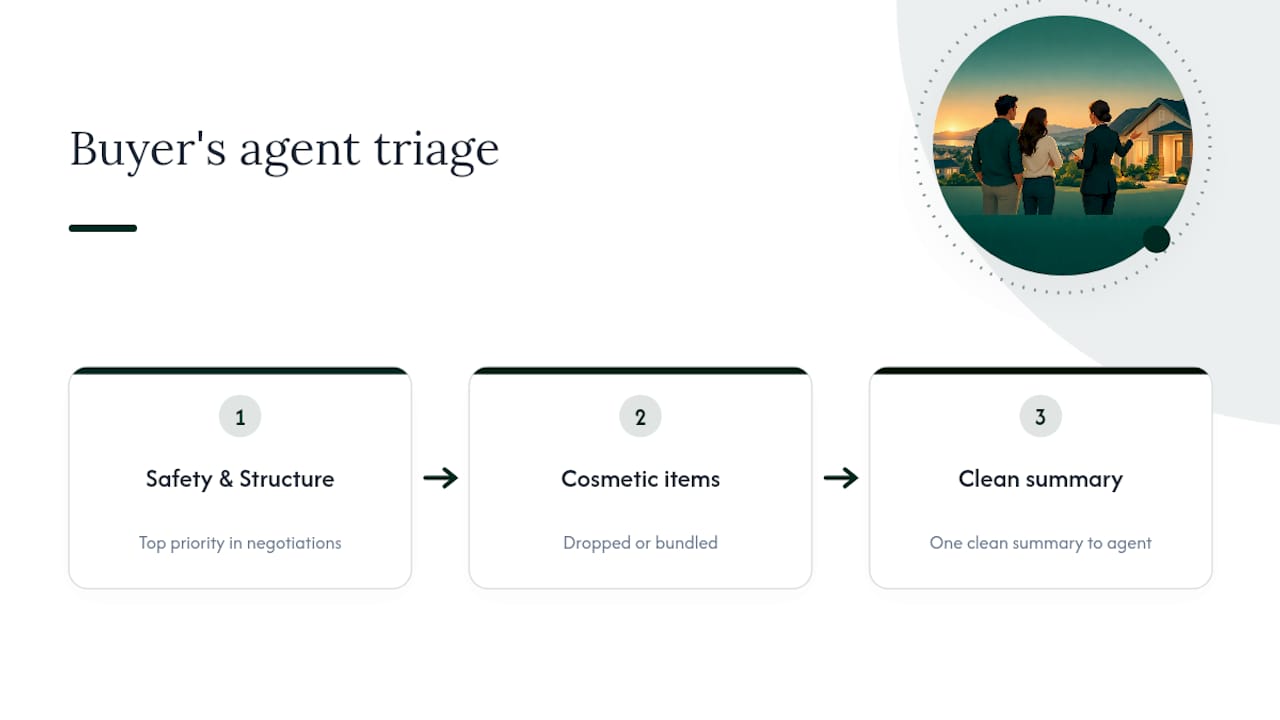
A licensed buyer’s agent typically attends the inspection itself, not just the negotiation that follows, which changes what gets prioritised. Kristan Johnson, director of Sydney Property Buyers and 2024 Outstanding Buyers Agent of the Year (Inner West Local Business Awards), has built negotiation packets around exactly this triage approach: safety and structural items first, cosmetic items dropped or bundled, one clean summary sent to the agent rather than the raw report. A buyer’s agent attending the inspection catches context a written report alone can miss, like whether a defect is recent or long-standing.
What most negotiation advice gets wrong
Most guidance treats every inspection finding as equally negotiable, and that’s backwards. A cracked tile and a failing roof structure do not belong in the same sentence, let alone the same request, yet plenty of buyers send sellers a report highlighted top to bottom and wonder why the response is defensive rather than cooperative.
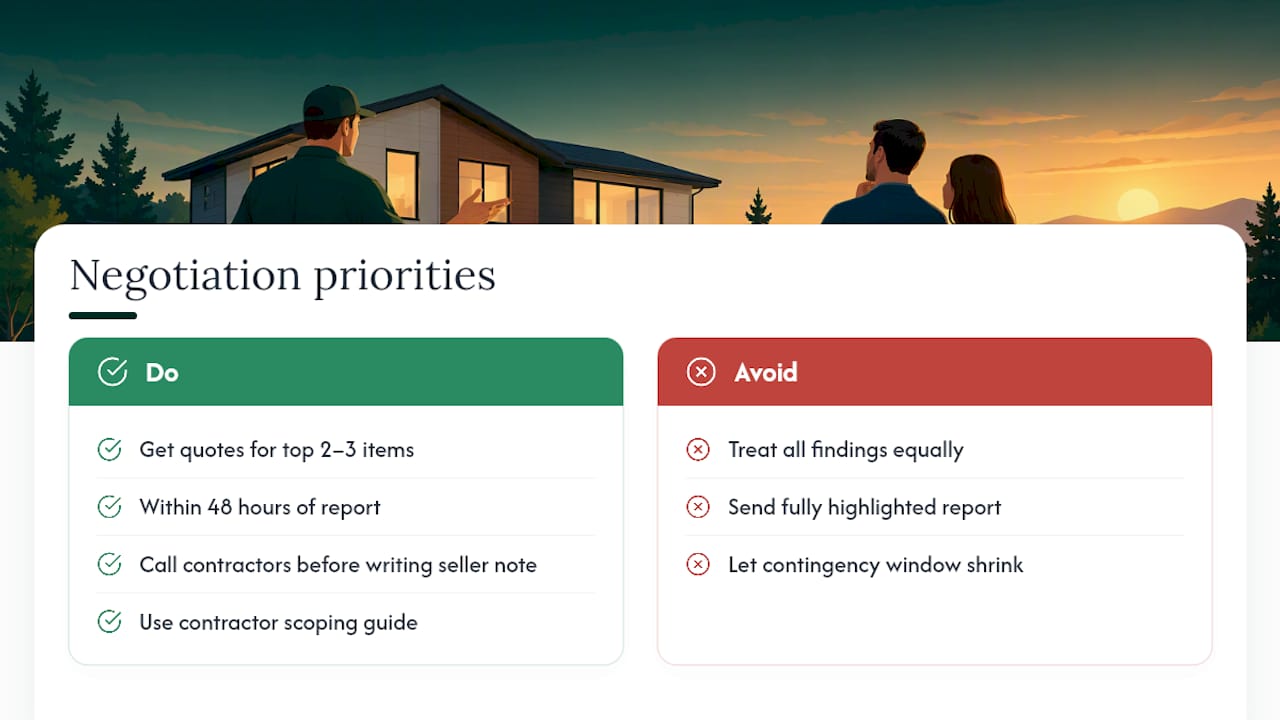
The gap in most advice is timing discipline. Buyers spend days debating strategy and lose half their contingency window before they’ve even called a contractor. By the time quotes come back, there’s no runway left to negotiate properly, and panic replaces leverage.
What should come first: get quotes on your two or three biggest items within 48 hours of receiving the report, before you draft a single word to the seller. Everything else, tone, wording, sequencing, matters less than having real numbers in hand while you still have time to use them. A construction contractor’s guide to repair scoping is a useful reference for understanding how contractors price common defects, even outside the specific project it discusses.
— Kristan
When it’s time to bring in a buyer’s agent
Sydney Property Buyers is the alternative to going it alone on a building report negotiation, particularly for buyers who’ve found the right property and now need someone who negotiates for a living to secure the best outcome on price and repairs. Rather than managing contractor quotes, seller correspondence, and re-inspection timing yourself while also trying to settle in on time, a licensed buyer’s agent handles the whole exchange.

If you already have a property under contract and need representation solely for the negotiation stage, the Negotiation Only service is built exactly for that. Buyers earlier in their search who want the full journey, strategy, off-market access, due diligence, negotiation, and settlement, can look at the Complete Purchase Solution. Sydney Property Buyers offers buyers agent services across Sydney’s Inner West, Eastern Suburbs, Lower North Shore and Eastern Beaches, assisting clients with property purchase negotiations. Call 1800 676 177 or email hello@sydneypropertybuyers.com.au to discuss your situation.
Sources
- Consumer Financial Protection Bureau — Schedule a home inspection
- Zillow — How to negotiate after an inspection
FAQ
How much will a builder or seller typically negotiate after an inspection?
There’s no fixed percentage, it depends entirely on the dollar value of verified defects and how competitive the market is at the time. A request backed by two contractor quotes on a genuine structural issue tends to succeed far more often than a vague ask based on cosmetic wear, according to NAR’s inspection guidance.
How much can you negotiate after a home inspection?
You can typically negotiate repairs, a credit, or a price reduction proportional to the documented cost of fixing must-fix items. Zillow’s guidance notes that presenting concrete repair estimates, rather than round numbers, is what actually strengthens your position.
What are the biggest red flags in a building inspection report?
Foundation movement, roof structure failure, active water intrusion, and outdated or unsafe electrical wiring are the classic red flags, since each touches safety, structure, or insurability. Cosmetic wear and routine maintenance items are common and rarely worth treating as deal breakers on their own, per NAR’s advice to buyers.
How do you get a seller to lower the price after an inspection?
Send a concise, one-page summary with the top one or two safety or structural issues, backed by written contractor quotes, and state your requested price adjustment clearly. Buyers who skip vague complaints and lead with a documented dollar figure tend to see faster, more favourable responses, and a licensed buyer’s agent through a Negotiation Only engagement can manage this process directly.
What happens if the seller won’t complete agreed repairs before settlement?
You can use an escrow holdback, delay settlement until the work is verified, or exercise remedies written into your signed addendum, depending on what the contract allows. A re-inspection before settlement, ideally by the original inspector, is the best way to confirm the work meets an acceptable standard before you close.
Recommended
- Our Services — Full Purchase & Negotiation Only
- 3 Proofs Buyers in Australia Need: Pre Settlement Inspection Checklist
- 2–4 Weeks: Pre-approval vs Conditional Approval for US Homebuyers
- Auction deposit percentage for US buyers: what to expect