Brick usually wins on longevity, fire resistance and resale appeal. Weatherboard usually wins on upfront cost and warmth of character. The better house for you is the one whose walls are in good condition and whose upkeep you will actually keep up with. A tired brick house with failing mortar can cost more to fix than a well-kept weatherboard. That is why, when you buy in Sydney, the condition of the walls matters more than the material itself.
This guide explains the difference in plain terms, compares the two on cost, maintenance, comfort, safety and resale, and shows what to check before you bid. Most of the published cost research comes from the United States, so figures are in US dollars and are there to show relative differences, not Sydney prices.
TL;DR
- A weatherboard house has walls clad in horizontal timber boards. Brick can be solid masonry or a single brick layer over a timber frame (veneer).
- Build cost is closer than most people expect: one US study put a brick-veneer home only 1.4% above the same home in wood siding.
- Brick generally needs less routine upkeep and resists fire better. Timber needs regular repainting or restaining and close attention to moisture.
- Both can hide expensive problems: failed mortar, blocked weep holes, rot near the ground. A condition check matters more than the material.
- If you are buying in Sydney, having a specialist inspect and negotiate for you protects you from paying a premium for a wall problem.
Table of Contents
- What the two terms actually mean
- Cost: closer than you might think
- Maintenance and durability
- Comfort: insulation and moisture
- Fire and pests
- Appearance and resale
- What to inspect before you bid
- A quick way to decide
- Why walls are best judged with someone on your side
- Getting the purchase right in Sydney
- FAQ
- Sources
What the two terms actually mean
“Weatherboard” is mainly an Australian and New Zealand word. Collins Dictionary describes a weatherboard house as one whose walls are made entirely of weatherboards. In the United States the same horizontal, overlapping timber cladding is usually called clapboard or lap siding, which is why American search results for this topic talk about wood siding.
Brick comes in two main forms, and the difference matters when you inspect:
- Solid or double brick: the wall itself is masonry and carries load.
- Brick veneer: a single, non-structural layer of brick tied to a timber or steel frame with metal ties. InterNACHI explains that veneer is attached to the frame this way and is not what holds the house up.
A listing that says “brick” does not tell you which of these you are buying. Ask, and confirm it in the building report.
Cost: closer than you might think
The common assumption is that brick is far more expensive. The evidence is more modest. A September 2023 RSMeans study commissioned by the Brick Industry Association found that the total construction cost of an average 2,700 sq ft, two-storey US home with brick veneer was 1.4% higher than the same home with wood siding. The same study put brick 5.8% above vinyl and 21% below stone veneer. Because the study was commissioned by a brick industry body, read it as a guide to the size of the gap, not as a final verdict.
The cladding itself is a bigger gap per square foot. A House Beautiful guide cites US$9 to US$20 per square foot installed for solid brick and US$5 to US$12 for brick veneer. It also notes that many new homes use brick only on the front wall, with other cladding on the other three sides. That is worth knowing in Sydney too: a facade that looks like a brick house may be brick on one side only.
Angi summarises the usual trade-off: brick houses cost more but tend to carry higher resale value, while wood is the more affordable option for first-time buyers and tight budgets.
What this means for you as a buyer: you are rarely choosing between two prices for the same house. You are choosing between two houses in different condition, on different blocks, in different suburbs. The material explains only part of the asking price.
Maintenance and durability
This is where the two diverge most.
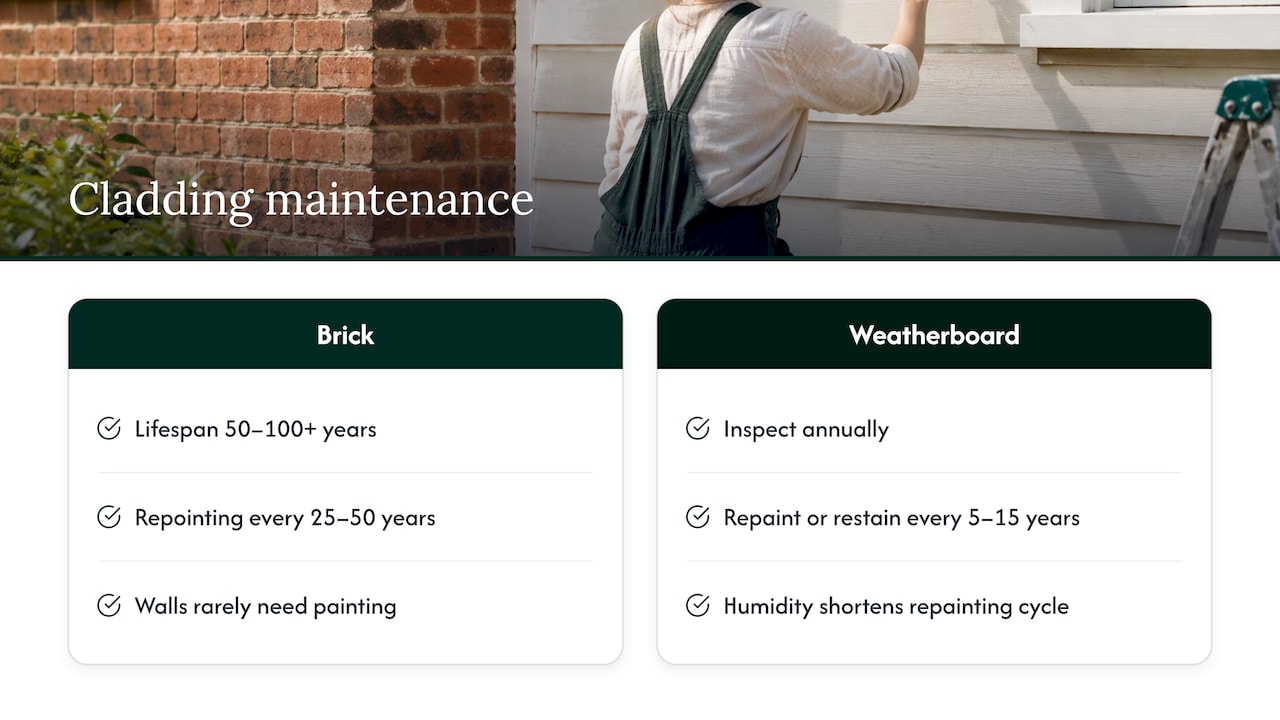
Brick. Frontier Foam says properly installed brick can last 50 to 100 years or more, with repointing (replacing worn mortar between the bricks) sometimes needed every 25 to 50 years. The walls themselves rarely need painting.
Weatherboard. The same source says wood siding needs annual inspection and repainting or restaining every 5 to 15 years, depending on climate and finish. Humidity shortens that cycle. Weatherboard is not a poor choice, but it rewards an owner who stays on top of paintwork and gaps.
A useful rule from a 2026 buyer’s framework by Modern Mill: choose cladding for the maintenance routine you will really follow. If you are buying an investment property you will manage from a distance, or you are time-poor, lower-maintenance walls have a clear appeal.
Brick is not maintenance-free. Angi reports average brick-wall repairs of about US$1,650, rising to as much as US$5,000 for full restoration. The aim at inspection is to find out which end of that range the house is heading for.
Comfort: insulation and moisture
Brick’s thermal mass absorbs heat and releases it slowly, which helps steady indoor temperatures. Angi rates brick as more energy efficient than wood. Timber is a decent insulator in its own right but is more exposed to rot, mould and pests.
The wall as a whole matters more than the outer layer. Frontier Foam notes that wood siding has limited insulating value unless it is backed by continuous insulation and an air barrier, and that brick’s thermal mass works best in the right climate and wall design. So when you inspect, ask what is behind the cladding: insulation, sarking or wrap, and the cavity. The same logic applies inside the home, where well-fitted coverings affect both comfort and presentation, as this piece on window treatments and home value shows.
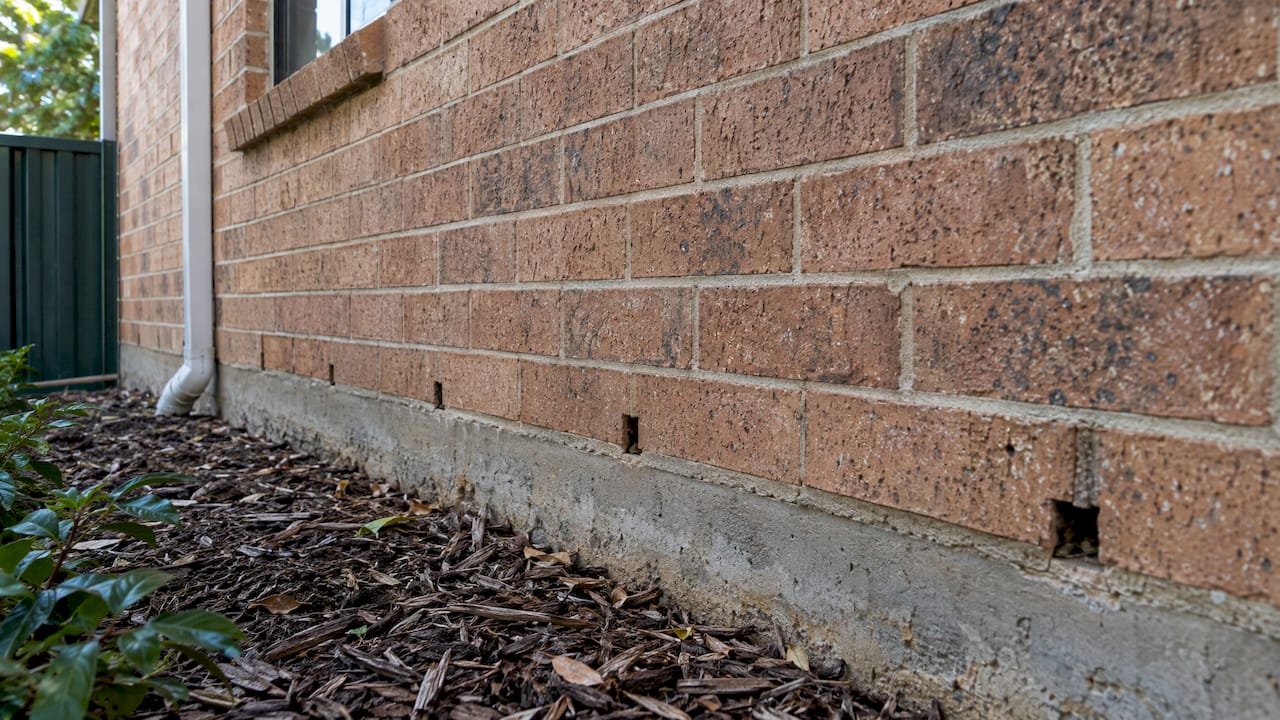
Moisture is the risk to watch in veneer. InterNACHI warns that weep holes, the small gaps that let water out from behind the bricks, are often clogged with mortar during construction. Blocked weep holes let moisture build up behind the brick, which can rot the timber frame and invite pests. You cannot see that from the street.
Fire and pests
Brick is non-combustible. Frontier Foam points to this as a defensive advantage in bushfire-type zones, while wood siding is combustible and may need fire-retardant treatment. The Insurance Institute for Business & Home Safety explains the mechanism in its wildfire retrofit guide: fire can enter combustible siding at the lap joints and spread into the wall cavity and eaves, which is why noncombustible cladding such as brick gives the best protection.
If the house you are considering sits near bushland, check the property’s bushfire rating through the council and make sure your insurer is told about the cladding. Insurance questions about a specific property are best settled with your insurer before you exchange.
Appearance and resale
House Digest reports that the average resale value of a brick home is at least 6% higher than homes in other materials, and that brick homes can be cheaper to insure because the material is less likely to be damaged by fire, wind or flooding. That is a US source, so treat it as a direction, not a Sydney guarantee.
The same article quotes a real estate agent who says brick lifts curb appeal but offers less flexibility in colour and design, which matters if buyers in your target market want a modern, customised look. A weatherboard house can be repainted in a new palette in a week. Brick is a more permanent decision.
Presentation still counts either way. Landscaping choices such as mulch colours that suit brick are a low-cost way to lift a brick facade before you sell or lease.
What to inspect before you bid
This is the part that protects your money. The material is the starting point, and the inspection tells you the real cost.
If the walls are brick
The U.S. National Park Service advises checking for cracking, spalling, bowing, leaning and mortar deterioration, and working out whether the walls are solid masonry, cavity masonry or non-structural veneer. Specifics to look for:
- Cracks that follow the mortar joints. The NPS says cracks that open and close with the seasons are usually thermal movement, while active cracks need flexible sealant. Large, widening or stepped cracks need an engineer’s opinion.
- Crumbling or missing mortar. This is the cheap fix if caught early.
- Flaking or powdery brick faces (spalling). The NPS warns that waterproof coatings and non-breathable paint trap moisture and speed up brick decay, so a brick wall that has been painted over deserves a closer look.
- Weep holes. The American Society of Home Inspectors says flashing and weep holes belong above and below windows, above doors and low in the wall. Missing ones are a more serious flag in newer construction than in older homes.
If the walls are weatherboard
InterNACHI’s exterior guidance says wood rot is likely when the moisture content of the wood is above 20% in mild temperatures. Check end grains, joints and outside corners, and look for blistering, peeling or chalking paint. Angi adds that rot usually starts on the shaded side, near the ground or where the roof overhang gives little protection, and that soft, mushy boards give it away under light finger pressure.
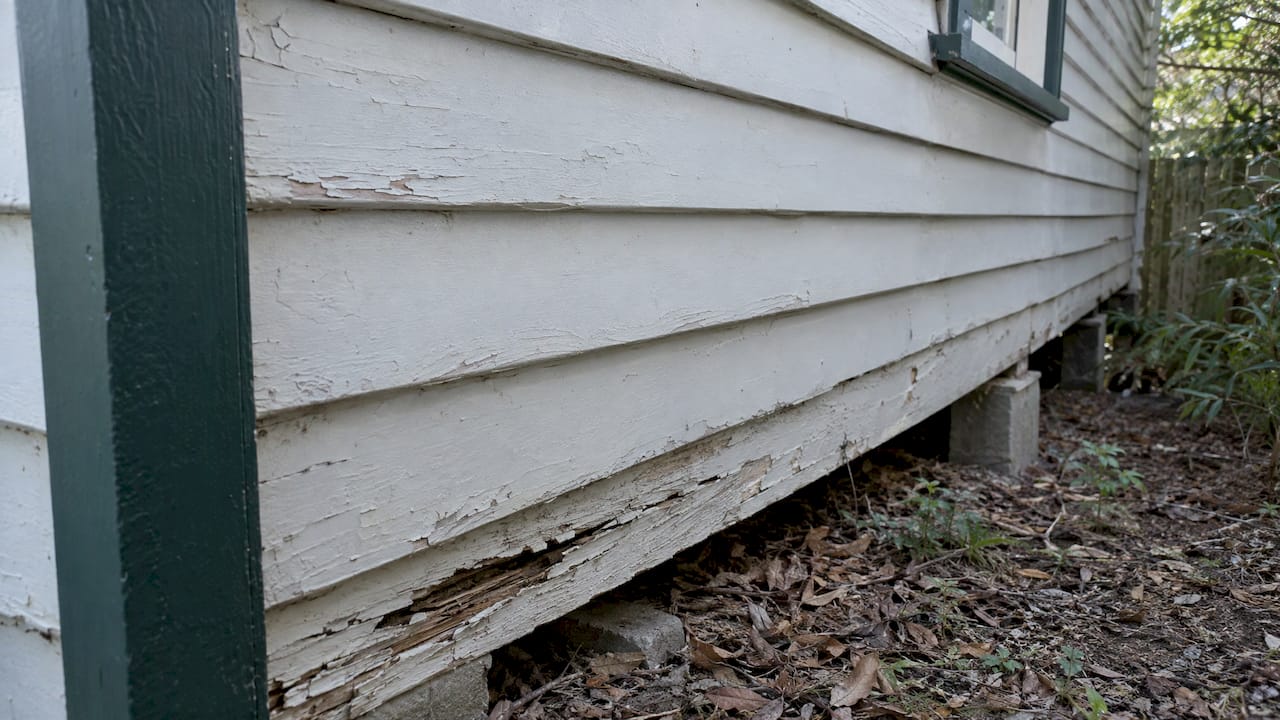
Also look at what touches the ground. Boards sitting in soil or garden beds will fail early, so keep the base clear and the garden bed below the lowest board.
Whichever you choose
A pre-purchase building and pest report is the standard tool. Our guide to building defects every buyer should check covers the strata side, and our due diligence checklist shows what to complete before you are committed. If a report finds wall problems, a clear building report negotiation packet turns the findings into a price conversation.
A quick way to decide
| Your priority | Leans towards |
|---|---|
| Lowest routine upkeep | Brick |
| Lowest upfront wall cost | Weatherboard |
| Fire resistance | Brick |
| Easy colour changes | Weatherboard |
| Thermal stability | Brick, with a well-insulated wall |
| Resale appeal | Brick often, but condition decides |
A house with good bones in the right street beats the right material in the wrong condition. If both are on your shortlist, compare the repair bill each is likely to carry, not the label.
Why walls are best judged with someone on your side
Cladding problems are the kind a casual open home hides: a fresh coat of paint over soft boards, or tidy pointing over a damp cavity. Seeing them takes time on site and the right questions, and inspecting the property alone is hard to do well when the sale is moving. We inspect seven days a week, not just at open home times, which gives you the chance to look at the walls in daylight and from every side. Our guide on why a buyer’s agent attends inspections explains what that adds.
Our view
Buyers often ask us whether they should hold out for brick. Our answer is that brick is a sound choice, and we like what it offers: longevity, fire resistance and strong resale appeal. But the material is only one input. We look at the whole property: the condition of the walls, the block, the street, capital growth potential and rental yield.
We act only for buyers and never for sellers, so our advice on a wall is about your outcome. We carry out independent appraisals and due diligence, and we negotiate hard on price when a defect turns up. Across our clients, the average saving on purchase price has been about 9%, and more than 30% of our purchases are secured off-market, before the competition sees them.
If a house you love has a wall issue, the question is never just “is it brick?” The question is what it will cost, and what that does to the price you should pay.
Kristan
Getting the purchase right in Sydney
We are a licensed Sydney buyers agency (NSW Licence 20456819) working across the Inner West, Eastern Suburbs, Lower North Shore and Eastern Beaches. Our Complete Purchase Solution covers strategy, on-market and off-market search, independent appraisal, due diligence, negotiation, auction bidding and settlement. If you have already found a house, Negotiation Only gives you professional representation on price. The average time from engagement to settlement is 54 days.

See how the Complete Purchase Solution and Auction Bidding work, or call us on 1800 676 177 to talk through the house you are considering. If you are weighing up whether you need representation at all, start with our guide on whether you need a buyers agent.
FAQ
Is brick cheaper than weatherboard?
Not usually on the wall itself, but the whole-house gap can be small. A 2023 US study found a brick-veneer home cost 1.4% more to build than the same home in wood siding, though brick cladding costs more per square foot. Over time, brick’s lower repainting needs narrow the difference further.
Is a brick house always better than a weatherboard house?
No. Brick tends to last longer and resist fire better, but a poorly maintained brick wall with failing mortar or blocked weep holes can be costly to fix. A well-kept weatherboard house in good condition can be the better buy. The inspection result matters more than the label.
What is the difference between double brick and brick veneer?
Double brick walls are masonry and carry the load of the house. Brick veneer is a single outer layer of brick attached to a timber or steel frame, and the frame carries the load. Your building report should confirm which one you are buying.
Which one is better in a bushfire-prone area?
Brick, because it does not burn. Timber cladding is combustible and can let fire into the wall cavity at its joints. Check the property’s bushfire rating with the council and talk to your insurer about the cladding before you commit.
Sources
- Collins English Dictionary: weatherboard
- InterNACHI: Solid Brick vs. Brick Veneer
- RSMeans residential siding comparative cost study, 2023
- House Beautiful: house siding options
- Angi: Wood vs. brick houses
- Frontier Foam: wood siding and brick comparison
- Modern Mill: how to choose siding
- IBHS Wildfire Retrofit Guide
- House Digest: brick and resale value
- U.S. National Park Service: common problems with brick masonry
- American Society of Home Inspectors: Siding ABC’s
- InterNACHI: how to inspect the exterior
- Angi: exterior home inspection
- Window treatments and home value
- Mulch colours for a brick house
Recommended
- Duplex vs Townhouse in Sydney: Which Should You Buy?
- Buyers: Judge a north facing house in ten minutes, checklist and fixes
- Villa vs Townhouse: What the Difference Means in Sydney
- Protect Your 5 Day Cooling Off: Sydney Due Diligence Checklist