The single most effective auction bidding tip is to pair rigorous pre-auction research with a strict walk-away price, then hold that line no matter what happens in the room. Before bidding day, check comparable sales in the area and confirm your finance is fully approved. Everything else, tempo, body language, online tactics, is secondary to that discipline.
TL;DR:
- Setting a strict walk-away price based on comparable sales and confirming full finance approval prevents overpaying before the auction begins.
- Using uneven bid increments and controlling the pace during bidding helps maintain discipline and avoid emotional reactions.
- Standing near the front and tracking genuine bidders rather than body language allows better assessment and reduces chances of bidding against oneself.
- Online auctions require platform familiarity, early login, and conservative proxy limits to avoid unintentional overbidding or disputes.
- Committing to your hard price in writing and rehearsing your exit line in advance safeguards against psychological traps like FOMO and escalation.
Table of Contents
- Preparing before auction day: the checklist that matters
- Bidding tactics that keep you in control on the day
- What to do physically and mentally on auction day
- Adapting your tactics for online and hybrid auctions
- Why bidders overpay: the psychology behind bad decisions
- What experienced buyers agents do differently
- Why discipline beats instinct at auction
- How Sydney Property Buyers helps you bid with confidence
- Sources
- FAQ
Preparing before auction day: the checklist that matters
Most overpaying happens before the auction even starts, when a buyer walks in without a clear number in mind. Pre-auction research and comparable sales analysis lets you set a realistic soft price (what you’d happily pay) and a hard price (the absolute limit you will not cross). The same source notes that failing to fix a walk-away figure in advance is the most common reason bidders end up paying over market.
Comparable sales tell you what similar properties have actually sold for recently, not what agents are quoting. Cross-check at least three comparable results before settling on your numbers.
Due diligence should be locked in well before the auctioneer arrives:
- Review the contract of sale and any special conditions with a solicitor or conveyancer.
- Arrange pest and building inspections if buying a house.
- Confirm finance pre-approval and understand the deposit rules that apply once the hammer falls.
- Understand what unconditional exchange means, because winning at auction commits you immediately.
Registration is straightforward but easy to overlook: bring photo ID, register for a bidder’s number or paddle before the auction starts, and if bidding online, set up your account and test it days in advance.
Bidding tactics that keep you in control on the day
Opening early signals confidence and can discourage weaker bidders, but it also reveals your hand. Waiting lets you gauge the field first, though it risks the auctioneer building momentum without you. There’s no universal answer, but as a beginner, waiting for two or three bids to land before entering usually gives you more information for less risk.
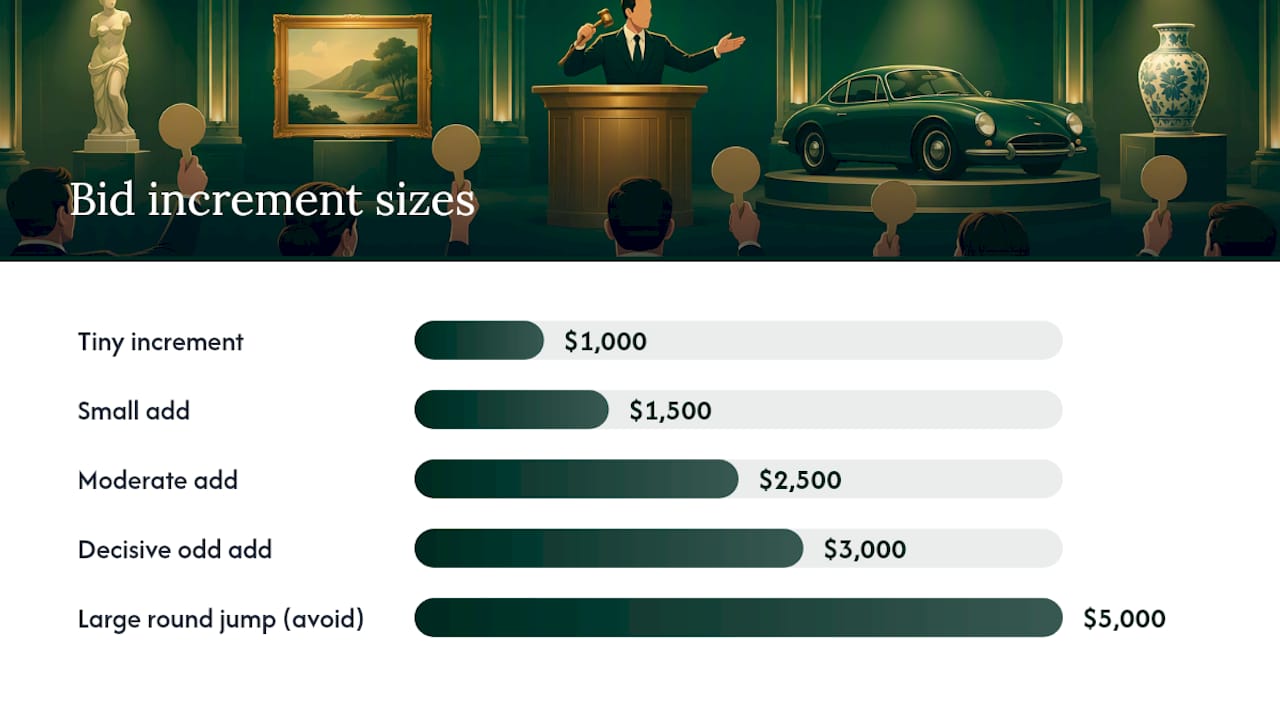
Once you’re in, control the pace with odd or curly increments rather than round numbers. Experienced auctioneers recommend slowing the tempo with odd increments and decisive bids rather than shouting large, obvious maximums early. Adding $1,000 or $2,500 instead of jumping in $5,000 blocks forces the auctioneer to do arithmetic and can slow a runaway auction.
- Start with a moderate bid once early interest has shown itself, not the opening call.
- Use uneven increments ($3,000, $1,500) to break the auctioneer’s rhythm.
- When the pace speeds up near your hard price, make one clear, decisive bid rather than a hesitant one.
- If another bidder replies with a tiny, desperate increment, hold firm rather than matching their panic.
- Reserve an aggressive, round-number jump only as a genuine closing move, not an opening gambit.
Pro Tip: Before the auction starts, write your hard price on a card and check it against the current bid every time you’re about to raise your hand.
Run a quick mental check before every bid: does this figure still sit below my hard price, and does it match what comparable sales actually support? If either answer is no, stop.
What to do physically and mentally on auction day
Where you stand matters more than most first-time bidders realise. Standing near the front, facing the crowd, lets you see who else is bidding rather than guessing from body language behind you.
- Position yourself where you can see the auctioneer and most other bidders at once.
- Track who is actually bidding, not just who looks interested, so you never bid against yourself.
- Watch for hesitation, side glances at partners, or a bidder checking a phone: these are common tells that someone is close to their limit.
- If the property passes in, the highest bidder at that point usually gets first right to negotiate directly with the vendor.
If negotiation follows a pass-in, restate your hard price to yourself before re-entering the room, and let the agent make the first move on price rather than reopening with your best offer.
Adapting your tactics for online and hybrid auctions
Online auctions operate differently, and treating them like a live room is a common mistake. Latency and unfamiliar interfaces catch out bidders who haven’t practised on the platform beforehand.
- Check the platform’s specific rules on bid increments and how the bid clock extends when a late bid lands.
- Log in early and place a test bid if the platform allows it, so you’re not learning the interface under pressure.
- Use watchlists to monitor multiple lots, but set proxy or autobid limits conservatively rather than at your hard price.
- Keep screenshots and timestamps of your bids; online marketplace rules can differ from traditional auctions, and records help if a dispute arises.
Why bidders overpay: the psychology behind bad decisions
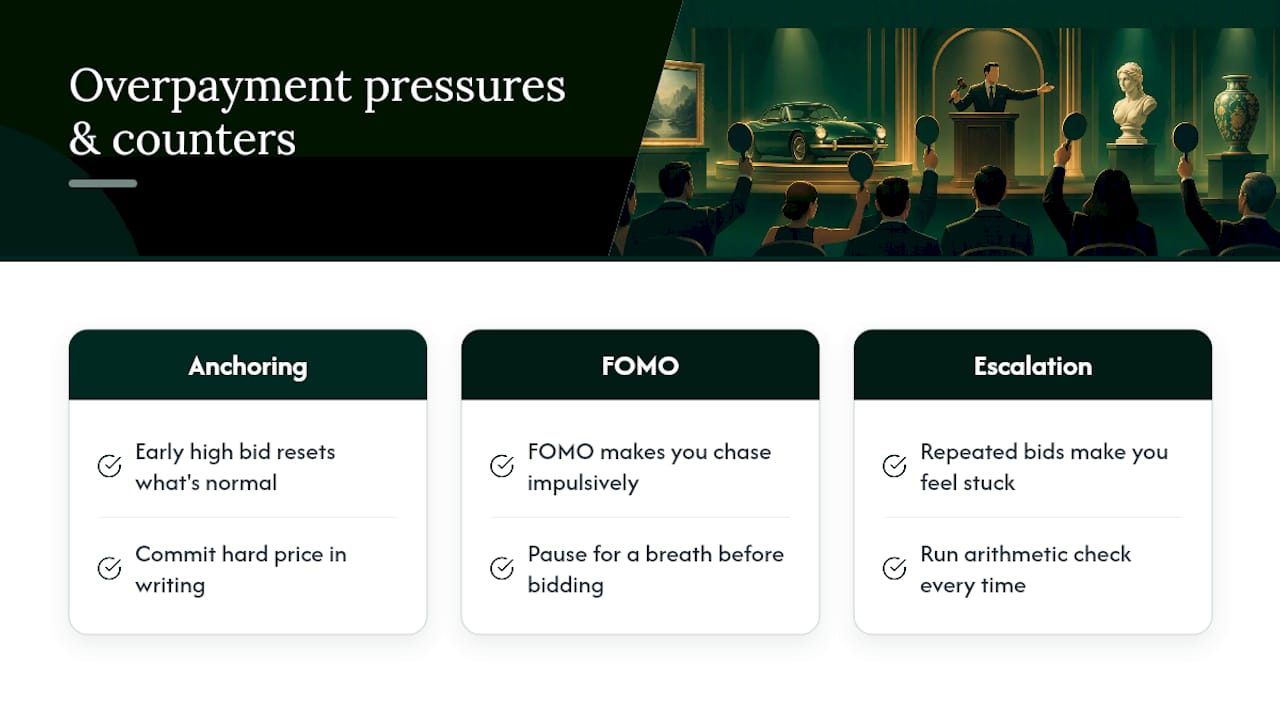
Auctions are built to create urgency, and urgency is exactly what makes buyers overpay. Anchoring happens when an early high bid resets your sense of what’s normal. FOMO pushes you to chase a property you’d walk away from calmly the next day. Escalation of commitment sets in when you’ve already bid several times and feel you can’t stop now, even as the price passes your hard limit.
Three simple rules counter this: commit to your hard price in writing before the auction, pause for a breath before every bid rather than reacting instantly, and run the arithmetic check from the bidding section every single time.
Pro Tip: Rehearse your exit line out loud beforehand, something as simple as “that’s my limit, I’m out”, so it’s ready the moment your hard price is reached.
What experienced buyers agents do differently
Buyers agents apply the same fundamentals with more depth: checking off-market comparables the public rarely sees, pacing bids to read the room before committing, and knowing exactly how to reopen negotiations if a property passes in.
- Cross-referencing off-market sales data alongside public results for a fuller price picture.
- Setting bidding pace deliberately rather than reacting to the auctioneer’s rhythm.
- Handling post pass-in negotiation directly with the vendor’s agent.
Bidding solo works well for buyers with time, steady nerves and a clear hard price. It’s worth considering professional representation when the stakes are high, the market is competitive, or emotion is likely to override discipline on the day.
Why discipline beats instinct at auction
Auctions reward the buyer who has already made their decisions before the bidding starts, not the one who thinks fastest under pressure. The tactics matter less than the willingness to stop. Every overpaid auction result I’ve seen traces back to a number that wasn’t fixed firmly enough in advance.
— Kristan
How Sydney Property Buyers helps you bid with confidence
If you’d rather have someone else hold the paddle and the discipline, Professional buyers agent services include Auction Bidding as part of the offering, alongside full representation from search through to settlement. 
The team handles the pre-auction research, sets the hard price with you, and bids on your behalf so the pressure of the room never becomes your problem. This sits alongside the agency’s broader Complete Purchase Solution, which covers strategy, off-market search, due diligence and negotiation for buyers who want support beyond auction day. Get in touch to discuss how it applies to your next purchase.
Sources
- Master the Art of Auction Bidding: A Beginner’s Guide
- How to Bid at Auction and Coming Up On Top
- 5 Auction Tips for Beginners
- Auction terminology explained: hammer price, 3-minute rule & lots
FAQ
What is the best auction bidding strategy?
The most reliable strategy is setting a firm walk-away price based on comparable sales before the auction, then bidding with controlled, odd increments rather than round numbers. Combining preparation with pace control gives you the best chance of a fair outcome without overpaying.
What is the 3-minute rule in auctions?
The 3-minute rule is used in some auctions to manage pacing, giving bidders a fair window to respond after the most recent bid before the lot can be declared sold. It helps prevent a rushed close cutting off a genuine late bidder.
What percentage do most auctioneers take?
Auctioneers commonly charge commission in the order of 10 to 15%, though this is paid by the seller, not the buyer, and additional fees can apply depending on the auction house.
How do you avoid getting caught up in auction momentum?
Fix your hard price in writing before the auction, pause before every bid rather than reacting instantly, and check that each new figure still sits below that limit. Rehearsing a simple exit line in advance makes it far easier to walk away when the price passes your ceiling.
Recommended
- Auction Bidding Increments: How US Buyers Win Without Overpaying
- Auction Reserve Price: How Buyers and Sellers Tell When It’s Met
- Sydney property auction bidding: how to bid with confidence