Before you step into any auction room, you need five things sorted: photo ID and your bidder registration, finance pre-approval with your deposit ready to transfer, a contract already reviewed by your solicitor, an arrival time at least 20 minutes early, and a firm bidding limit written down. This is the condensed version of the auction day checklist in NSW that follows, so you can act on it immediately.
TL;DR:
- Get formal lender preapproval rather than prequalification, confirm how quickly the deposit can transfer, and have a solicitor review the full contract beforehand.
- Attend two or three local auctions to learn the pace, and put any proxy’s authority and bidding instructions in writing before auction day.
- Only the auctioneer may make a clearly announced vendor bid; at reserve, the seller must accept the highest offer, and disputed bid rulings are final.
- Use small, deliberate increments to control bidding pace, because a large jump can add tens of thousands of dollars in one call.
- Because NSW auction sales have no cooling off period, winners should sign immediately, pay the specified deposit, and contact their conveyancer and lender that day.
Table of Contents
- Step-by-step auction day checklist in order
- What to finish in the days before auction
- How the auction runs and how to bid once it starts
- What to do in the minutes after the auction
- What a licensed buyers agent checks on auction day
- Staying composed when the bidding gets competitive
- How we support you through auction day
- FAQ
- Sources
Step-by-step auction day checklist in order
Auction day runs fast, and most mistakes happen because buyers skip a step rather than get a detail wrong. Work through these in sequence.
- Register first, bid second. Arrive at the venue and find the agent’s registration table. You will need photo ID (driver’s licence or passport) to receive a bidder’s number, and NSW rules require this before you can raise a paddle.
- Confirm your deposit method. Most agencies accept a bank cheque, electronic transfer, or sometimes a credit card for part payment. Check with the selling agent beforehand which method they expect, and have proof of cleared funds ready.
- Collect the contract on arrival. A copy is usually available at the registration desk or from the agent. Scan the special conditions again for anything changed since your solicitor last reviewed it, and call your solicitor immediately if something looks different.
- Do a final finance check. Ring your broker or lender the morning of the auction to confirm the loan is still approved and that funds can move quickly once you exchange.
- Walk the property one last time. Check inclusions, boundaries, and anything you could not assess on a weekday inspection, like street noise or parking.
- Set your bidding plan in writing. Decide your absolute maximum before you walk in, choose how you will respond to increments, and agree on a signal with anyone bidding alongside you for when to stop.
- Sort the practical details. Charge your phone, keep your solicitor’s number on hand, wear comfortable clothing for standing, and arrive with parking already sorted.
Pro Tip: Write your maximum bid on a card and keep it in your pocket. Seeing the number in your own handwriting makes it harder to talk yourself past it in the moment.
Buyers who have never bid before often find it useful to read a practical guide on bidding with confidence before auction day, since pacing and rhythm are easier to recognise once you have seen them described.
What to finish in the days before auction
The work that protects you most happens before you ever walk into the room. Leave these tasks until the morning of the auction and you are negotiating against the clock as well as other bidders.
- Get formal pre-approval from your lender, not just a pre-qualification, and ask directly how quickly your deposit can be transferred once the hammer falls.
- Have a solicitor or conveyancer review the contract of sale in full and remain on standby to answer questions on auction day itself.
- Attend two or three other auctions in the same area beforehand to get a feel for the auctioneer’s pacing and how bids are called.
- Put together a documentation pack: photo ID, proof of funds, your solicitor’s contact details, and written authority if someone else is bidding on your behalf.
- Decide early whether you want to bid yourself or appoint a buyers agent or proxy, and put any instructions to them in writing.
Reviewing a contract early also matters if you are considering a pre-auction offer, since being contract ready lets you move the moment a vendor is willing to negotiate before auction day arrives.
How the auction runs and how to bid once it starts
An auction opens with the auctioneer outlining the process and terms, then calls for an opening bid. Bidding moves between registered parties, and the auctioneer may also call a vendor bid on the seller’s behalf, which must be clearly identified as such under NSW regulations.
- A vendor bid can only be made by the auctioneer, and the auctioneer must announce it as a vendor bid when it happens.
- The property is “on the market” once bidding reaches or passes the reserve, meaning the vendor must sell to the highest bidder from that point.
- NSW guidance treats the auctioneer’s decision on a disputed final bid as final, so there is no appeal once the hammer falls.
- Large jumps in bidding increments can cost you tens of thousands of dollars in a single call; smaller, deliberate increments give you more control over the pace.
- If you cannot attend, phone bidding or an absentee arrangement through a representative is common, but it needs to be set up with the agent in writing beforehand.
The auctioneer’s authority over disputed bids is final under NSW auction practice, which is one reason buyers who feel unsure about pacing or signals often prefer to have someone experienced bidding on their behalf.
There is no cooling-off period once a property is sold at auction in NSW, so this step is final the moment you sign.
Buyers new to increments sometimes lose control of the pace; a guide on avoiding costly bidding jumps explains how to keep increments working in your favour rather than the auctioneer’s.
What to do in the minutes after the auction
What happens next depends entirely on whether you were the highest bidder.
- If you won: sign the contract immediately, pay the deposit as specified, and call your conveyancer or solicitor the same day to confirm next steps. Ring your lender or broker to lock in formal finance approval now that you have an exchanged contract.
- If you missed out: ask the selling agent whether the vendor would consider offers if the buyer falls through, and request honest feedback on where your bid sat. Use that feedback to adjust your limit or search criteria for the next property.
- Either way: keep copies of every contract, receipt, and email from the day, and note settlement and inspection dates clearly so nothing is missed later.
If you are moving straight into settlement, planning your move early with a provider like Orange Self Storage can take pressure off the weeks before you get the keys.
What a licensed buyers agent checks on auction day
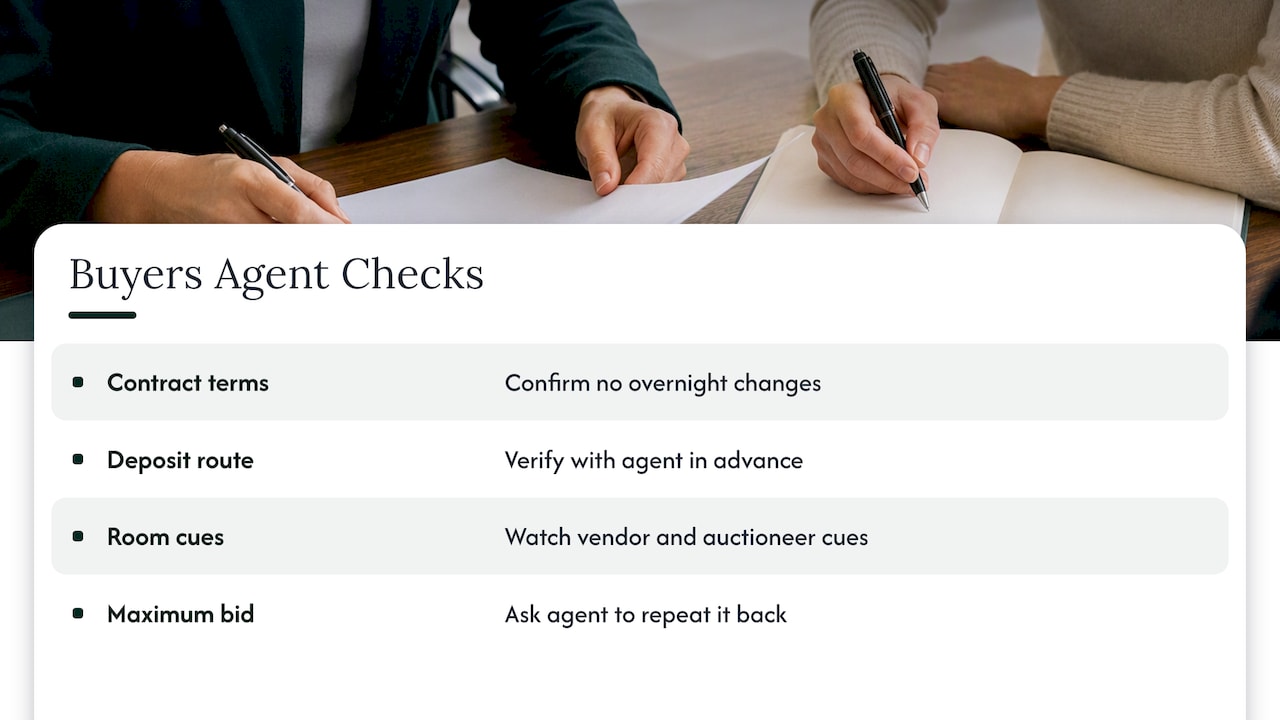
A licensed buyers agent runs a short set of checks before any auction bid on a client’s behalf. We confirm the special conditions in the contract have not changed overnight, verify the deposit transfer route with the agent in advance, and read the room, watching vendor body language and the auctioneer’s rhythm for cues on when bidding is likely to stall.
A bidding plan only works if someone in the room can stick to it without flinching when the pace speeds up.
Pro Tip: Ask whoever bids on your behalf to repeat your maximum back to you before the auction starts. It confirms there is no ambiguity under pressure.
For buyers who want this handled for them, our auction bidding service covers exactly these checks.
Staying composed when the bidding gets competitive
Nerves are normal, and the buyers who do best on auction day are not the calmest, just the most prepared. Take a breath before you raise your hand, repeat your maximum silently, and step back the moment you feel unsure rather than bidding to keep up.
If you have a support person or agent bidding with you, agree beforehand on a simple signal for “stop”. The plan you set the night before is the decision you should keep once the room gets loud.
How we support you through auction day
We offer two ways to get a professional in your corner on auction day. Our Auction Bidding service puts us in the room bidding on your behalf, drawing on the same contract checks and pacing reads outlined above, while Negotiation Only support suits buyers who have already found a property and want representation on price.

Both options start with a conversation about the property you are targeting and what outcome you need.
- Call us on 1800 676 177 or email hello@sydneypropertybuyers.com.au to discuss your auction.
- Visit our services page for full details on what each option covers.
- Browse recent purchases we’ve secured for clients across Sydney.
If bridging finance timing is a concern before your deposit is due, US-based readers researching short-term funding options can review auction financing structures as general background on how bridge loans work.
FAQ
What is the 15 minute rule in an auction?
There is no formal rule in NSW auction legislation about how long bidding continues once a property reaches the reserve and is “on the market”. In practice, the auctioneer keeps calling for bids until no higher offer is made, regardless of how long that takes.
How do I register to bid at a Sydney auction?
You register with the selling agent, usually at a table near the auction venue, by showing photo identification such as a driver’s licence or passport. Once registered, you are given a bidder’s number that you use to bid throughout the auction.
What percentage do most auctioneers take?
Auctioneer fees are negotiated directly between the auctioneer and the seller, not the buyer, so this figure is not published or standard across the industry. As a buyer, your costs relate to the purchase price and deposit, not the auctioneer’s commission.
What should I avoid bringing to an auction?
Avoid arriving without photo ID, since you cannot register to bid without it, and avoid bringing anyone whose role in the bidding (support, representative, or observer) has not been agreed beforehand. Leave distractions like unnecessary paperwork or unrelated devices at home so you can focus on the bidding.
How do I put a property up for auction myself?
This checklist is written for buyers bidding at auction, not for vendors listing a property for sale. If you are selling, a local selling agent can advise on auction appraisal, marketing, and setting a reserve price.
Recommended
- Sydney property auction bidding: how to bid with confidence
- Buyers agent search timeline expectations: Sydney guide
- Common buyers agent selection mistakes Sydney buyers make
- Beginners: Stop $5,000 Jumps Draining Your Budget in Auction Bidding