Rental demand in Sydney’s Eastern Suburbs is persistently strong because tenants compete for a limited supply of homes close to the harbour, the beaches and the CBD. Vacancy across Greater Sydney was reported at 1.8% in September 2026, well below the roughly 8.9% multifamily vacancy now seen across the United States. Strong demand does not automatically mean a good purchase, though. What you pay, what the property can realistically rent for and how you buy decide the result.
This guide is for US-based readers who are comparing Sydney with American suburban rental markets, and for anyone weighing an Eastern Suburbs investment. We explain what drives demand, how it compares with the US picture, which numbers to check and where the risks sit.
TL;DR
- Eastern Suburbs demand comes from a limited supply of homes near beaches, the harbour and the CBD, and it shows up in low vacancy across Sydney.
- US suburban renting is also growing: suburban renters in the 50 largest metros rose 22% between 2010 and 2019, but US vacancy is far higher than Sydney’s.
- Demand is not the same as return. Check achievable rent, holding costs, and capital growth together before you bid.
- Risks include interest rates, job losses, new supply and policy change, so test any purchase against a weaker rental scenario.
- A buyers agent can inspect, appraise and negotiate for you from abroad, including on off-market stock.
Table of Contents
- What rental demand in the Eastern Suburbs means
- Why tenants keep competing for Eastern Suburbs homes
- How US suburban rental demand compares
- What is pushing people to rent rather than buy
- What to check before you assess a property
- Risks that can weaken rental demand
- Our view on Eastern Suburbs rental demand
- Buying in the Eastern Suburbs with a buyers agent
- FAQ
- Sources
What rental demand in the Eastern Suburbs means
“Rental demand” is the number of households competing for rental homes in a given area, set against the number of homes available. You can read it through four signals: vacancy, time on market, rent movement and the quality of tenant applications.
In Sydney, the Eastern Suburbs covers well-known areas such as Bondi, Coogee, Randwick, Paddington and Woollahra. Tenants are attracted by the coastline, short commutes to the CBD, universities, hospitals and a dense mix of cafes, schools and transport. Land is scarce and much of the housing is apartments or heritage terraces, so new supply is slow to arrive. That scarcity is the core of the demand story.
For a US reader, one translation helps. What Americans call the suburbs usually means lower-density areas outside a city centre. Sydney’s Eastern Suburbs work the other way round: they are dense, established and close in, and in practice they behave more like a high-demand urban neighbourhood than a commuter ring. That changes how you should read the data.
Why tenants keep competing for Eastern Suburbs homes
Several forces keep demand high, and most of them are structural rather than cyclical.
Limited supply. The area is largely built out. Few large sites are available, and approvals for new apartments take time, so extra tenants cannot easily be absorbed.
Lifestyle and location. Beach access, proximity to the CBD and walkable streets are things renters pay for, and they do not disappear in a downturn.
High purchase prices. Many households that would otherwise buy stay in rental accommodation because entry prices in the east are steep. That keeps long-term tenants in the market and supports landlords.
Mixed tenant base. Young professionals, couples, students, hospital and university staff, and families renting for a school catchment all compete for the same stock.
If you want the local vacancy numbers in more detail, we have broken down three vacancy figures US buyers can use to time a purchase. For a wider look at suburb selection, see our Eastern Suburbs property buying guide.
How US suburban rental demand compares
Because many US searchers type this keyword while looking at American markets, it helps to see the other side of the comparison. US suburbs have seen a real rise in renting, but from a different starting point and with different supply conditions.
According to Realtor.com’s analysis, the number of suburban renters in the 50 largest US metros grew by 22% between 2010 and 2019, and renters made up an average of 39% of the population in those suburbs. RentCafe’s research puts the number at about 21 million people renting a suburban home in those metros, which is 3.7 million more than ten years earlier. Over the same period the number of suburban homeowners grew by only 3%.
The current US picture is firming but not tight by Sydney standards:
| Measure | United States | Source |
|---|---|---|
| Multifamily vacancy, Q2 2026 | 8.9%, down from a 9.2% to 9.4% range since late 2024 | Cushman & Wakefield |
| Professionally managed single-family rental vacancy, December 2025 | 5.9% | HUD |
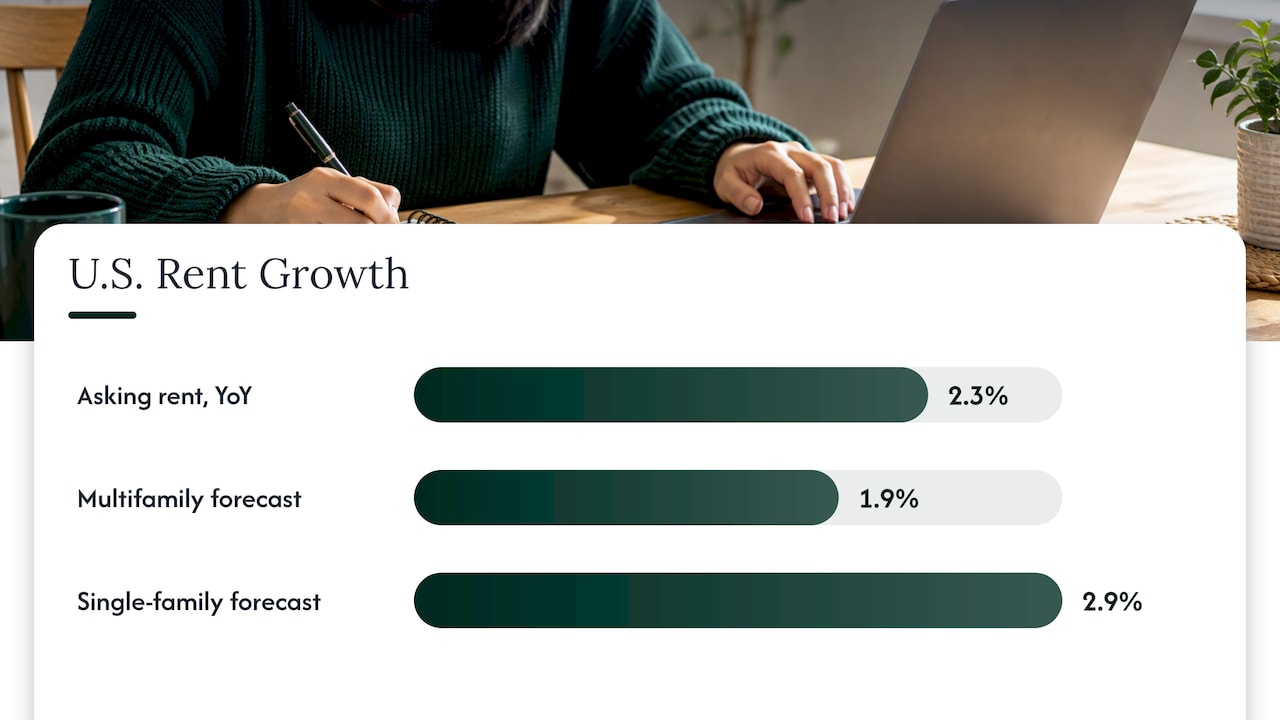
| Typical asking rent, July 2026 | $1,962 a month, up 2.3% year on year | Zillow |
| Full-year 2026 rent growth forecast | About 1.9% for multifamily and about 2.9% for single-family | Zillow |
Rent growth is also uneven across the US. Cushman & Wakefield found that strong Q2 2026 growth was led by Bay Area markets, with San Francisco up 13% year on year. RealPage’s April 2026 forecast described a divided market in which about 8% of the top 50 markets were projected to grow 3% to 3.5% while nine were projected to post declines, led by Denver at -2.8%.
The lesson for an investor is that US suburban demand is real but strongly local, and heavy new construction in some metros has capped rents. Sydney’s east has a different profile, with thin supply and low vacancy. Direct comparison of headline rent growth between countries is not meaningful, because currencies, tenancy laws, tax treatment and purchase costs all differ.
What is pushing people to rent rather than buy
The US drivers are well documented. Realtor.com reports that high mortgage rates are keeping would-be buyers on the sidelines, while people want more space and millennials are settling down and starting families. PGIM Real Estate adds that millennials entering their 30s, who prioritise space and schools, are expected to favour suburban housing demand, and that remote work makes longer commutes tolerable.
None of those drivers is unique to America. Higher borrowing costs and expensive entry prices push many Australians into long-term renting too, which feeds the same tenant pool in Sydney’s east. If you are weighing how to fund a purchase or rental property back home as well, it is worth reading about short-term rental financing options before you compare yields across borders.
What to check before you assess a property
High demand in a suburb is a starting point, not a verdict on a particular property. These are the checks we work through with every buyer who cares about rental return.
- Achievable rent, not asking rent. Look at what comparable homes actually let for, not what landlords hope for. Use leases signed in the past six to twelve months and discount unusual properties such as furnished corporate lets.
- Time to lease. How many days do similar properties sit before a tenant is found? Short periods signal real demand, long ones signal optimism in the asking price.
- Street-level vacancy. Suburb averages hide pockets. A building with many identical apartments can have much weaker demand than the postcode as a whole.
- Holding costs. Council and water rates, strata levies for apartments, insurance, maintenance and agent fees reduce what reaches you. Ask for the actual figures on the property you are considering.
- Condition and building quality. A tenant-ready property rents faster. Independent building and strata reports show what repairs lie ahead. Our guide on negotiating after a building report explains how to turn findings into a lower price.
- Yield and growth together. Rental return alone is only half the picture. Capital growth potential matters as much, so we assess both. See our suburbs with strong growth prospects for US investors.
A practical way to use all this is to build three rent scenarios for the same property: a realistic base case, a conservative case with a month or two of vacancy each year, and a stress case with higher rates. If the purchase only works in the best case, keep looking.
Risks that can weaken rental demand
Strong demand can still soften, and US research is a useful reminder of why. The Harvard Joint Center for Housing Studies says economic uncertainty, slowing job growth, weaker household formation, immigration-policy changes and substantial incoming apartment supply could cool rental markets and constrain rent growth. Chase’s 2026 outlook lists recessions and job losses, inflation, higher interest rates, legislative uncertainty and rising material, labour, insurance and maintenance costs among the pressures facing multifamily owners.
Translated to Sydney, the risks to watch are:
- Interest rates. Higher borrowing costs squeeze investor cash flow even when rents are strong.
- Employment. Job losses in finance, education or health would hit tenant numbers.
- Supply and policy. New apartment completions, planning changes or tenancy rules can shift the balance. Check current New South Wales rules before you rely on your rental assumptions.
- Currency. For a US-based owner, rent earned in Australian dollars is worth a different amount in US dollars from year to year.
- Vacancy creep. Sydney’s rate has moved up over the past year, so a tight market today is not a guarantee for the next five years.
None of this makes the Eastern Suburbs a poor choice. It means the numbers should survive a weaker scenario. Tax and lending are specific to your situation, so speak to an Australian tax adviser and a mortgage broker who works with foreign buyers before you commit.
Our view on Eastern Suburbs rental demand
We act only for buyers, never sellers, and rental demand is one of the first things we test when a client asks about an Eastern Suburbs property. Here is how we think about it.
Demand in the east is real, but it is not uniform. Two apartments a few streets apart can differ sharply in how quickly they let, because of aspect, noise, parking, building condition and layout. We inspect seven days a week, not only at open homes, which lets us see a property at different times of day and judge things a ten-minute open home hides.
We also look at rental return alongside capital growth. Chasing the highest yield can mean buying the weakest asset, while buying only for growth can leave a client carrying a property that costs too much to hold. Our job is to build the full picture: what the property is worth, what it will let for, and what it will cost to own.
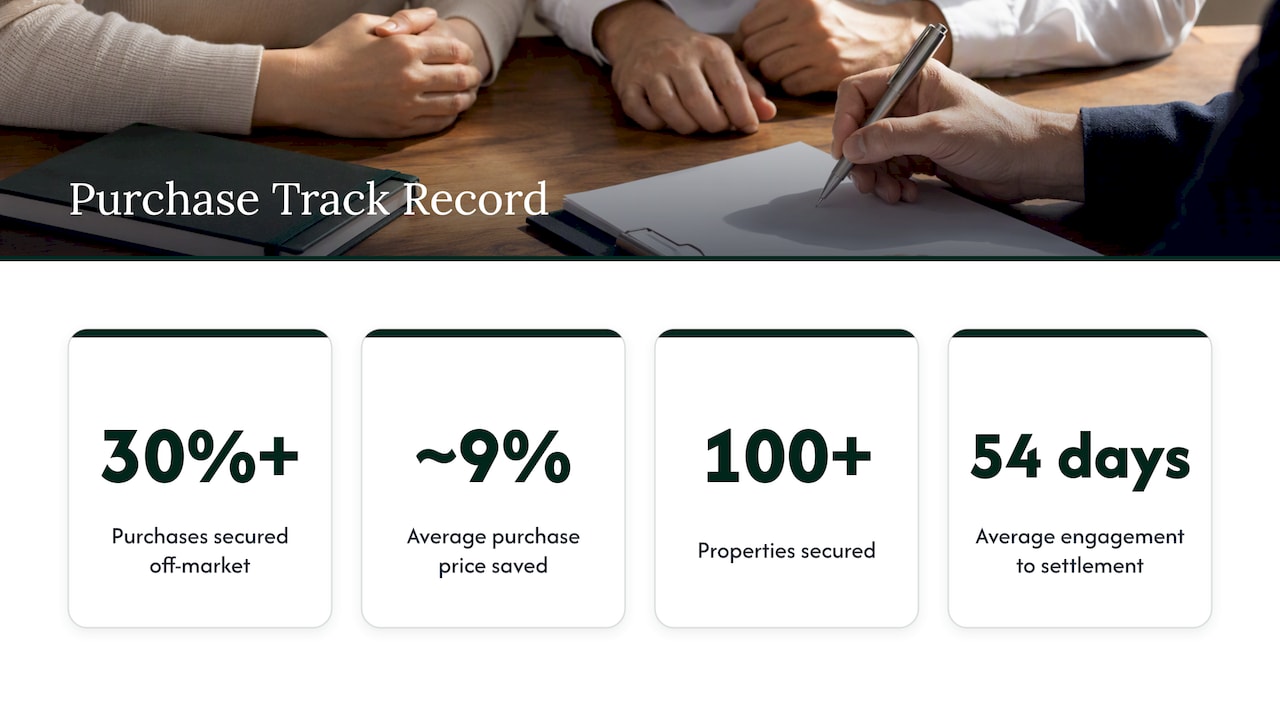
Finally, the way you buy matters as much as what you buy. More than 30% of our purchases are secured off-market, which means the property never competes in a public campaign, and our clients have saved an average of about 9% on purchase price. Across 100+ properties secured, the average time from engagement to settlement has been 54 days. Those figures describe our track record, not a promise for any single purchase, but they show why we believe preparation and negotiation pay for themselves.
— Kristan
Buying in the Eastern Suburbs with a buyers agent
If you are abroad, you cannot attend inspections or auctions, and you may not know how Sydney’s sale methods work. Our Complete Purchase Solution and Auction Bidding service covers strategy, on-market and off-market search, independent appraisal, due diligence, negotiation, bidding and settlement. If you have already found a property, our Negotiation Only service puts a licensed agent across the table for you.
To see how this plays out on the ground, browse our recent purchases. Sydney Property Buyers holds NSW Licence 20456819 and our office is at 79 New Canterbury Rd, Petersham. You can call 1800 676 177 or email hello@sydneypropertybuyers.com.au.
Two further reads help at this stage: how off-market access works for investors and how to bid with confidence at a Sydney auction.
FAQ
Is rental demand in Sydney’s Eastern Suburbs strong?
Yes. Vacancy across Greater Sydney was reported at 1.8% in September 2026, and the Eastern Suburbs combine scarce land with lifestyle appeal. Demand is uneven between buildings and streets, so check the specific property.
How does Sydney’s rental market compare with US suburbs?
Sydney’s vacancy is much lower than the 8.9% US multifamily rate reported by Cushman & Wakefield for Q2 2026. US suburbs have grown their renter population quickly, but supply, tenancy law and taxes differ, so compare yields after costs rather than headline rent growth.
Can I buy an Eastern Suburbs investment property from the United States?
Many overseas buyers do, but foreign purchasers face extra rules and approvals. Speak to an Australian solicitor and tax adviser before you bid. A buyers agent can then handle inspections, negotiation and auction bidding on your behalf.
Are rents in the US expected to rise in 2026?
Modestly. Zillow’s July 2026 report forecast full-year multifamily rents up about 1.9% and single-family rents closer to 2.9%, with large differences between metros.
Sources
- Realtor.com: suburban renting report
- RentCafe: Picket Fences for Rent
- Cushman & Wakefield: US multifamily Q2 2026
- HUD: National Comprehensive Housing Market Analysis
- Zillow: July 2026 rent report
- RealPage: apartment market forecast, Q1 2026
- PGIM Real Estate: US single-family rental housing
- Harvard JCHS: America’s Rental Housing 2026
- Chase: 2026 multifamily market outlook
- Australian vacancy rates, September 2026
Recommended
- Eastern suburbs property buying guide: 2026 edition
- Sydney Rental Vacancy: 3 Figures US Buyers Can Use to Time a Purchase
- 10 Sydney Suburbs Poised for 2026 Growth: US Investor Playbook
- How to research Sydney suburbs property in 2026