A property title search is an official examination of a property’s legal ownership and any registered interests recorded against its title. You obtain it directly from the relevant state or territory land registry, and it reflects the current state of the Torrens title system, Australia’s authoritative legal framework for recording who owns land and what encumbrances exist. Before you commit to any purchase, this document tells you whether the seller actually has the right to sell, and whether the land comes with strings attached.
Every Australian state and territory maintains its own land registry. The three you will encounter most often are:
- NSW Land Registry Services (NSW LRS) for New South Wales properties
- Victoria’s LANDATA for Victorian titles
- Queensland’s Online Titles System (OTIS) for Queensland properties
A title search is the foundational step in property due diligence. Without it, you are buying blind.
Table of Contents
- Why do buyers conduct a property title search?
- What does a property title search reveal?
- How to conduct a property title search in Australia
- Why a licensed buyers agent treats title searches as non-negotiable
- Understanding the different types of property titles in Australia
- Key takeaways
Why do buyers conduct a property title search?
The short answer: to avoid inheriting someone else’s legal problems. A title search confirms the seller’s right to transfer the property and surfaces any registered interests that could affect your ownership or use of the land after settlement.
- Confirm legal ownership. The search shows the registered proprietor’s full name and confirms they hold the right to sell.
- Identify mortgages and liens. Any lender with a registered mortgage over the property appears on the title. These must be discharged at settlement.
- Reveal caveats. A caveat signals that a third party claims an interest in the property. An unresolved caveat can block settlement entirely.
- Uncover easements and covenants. These registered interests can restrict what you build, where you build it, or who can access parts of your land.
- Support conveyancing. Your conveyancer relies on the title search to prepare the transfer documents and confirm the property is free of encumbrances before funds change hands.
Skipping this step does not save time. It creates risk that can take years and considerable legal expense to resolve.
What does a property title search reveal?
A standard title search result is a certificate of title document showing ownership details and all registered interests affecting the land. In Victoria, for example, the register search statement from LANDATA includes the registered proprietors’ names and addresses, a legal land description, and any encumbrances including mortgages, caveats, covenants, and notices.
Across all states, a title search typically shows:
- Registered proprietor(s): Full legal name(s) and how ownership is held, whether as joint tenants or tenants in common
- Legal land description: Lot and plan numbers that uniquely identify the parcel
- Title reference number: The registry’s unique identifier for the title
- Registered mortgages: The lender’s name and the mortgage reference
- Easements: Rights of access or use granted to others, such as a drainage easement or right of way
- Restrictive covenants: Conditions limiting how the land can be used or developed
- Caveats: Notices lodged by third parties claiming an interest in the title
- Body corporate information: For strata titles, relevant management statements and by-laws
What a title search does not show is equally worth knowing. Title searches do not reveal unregistered interests or zoning information, so your due diligence must include supplemental conveyancing checks such as a council planning certificate or Section 10.7 certificate in New South Wales.
How to conduct a property title search in Australia
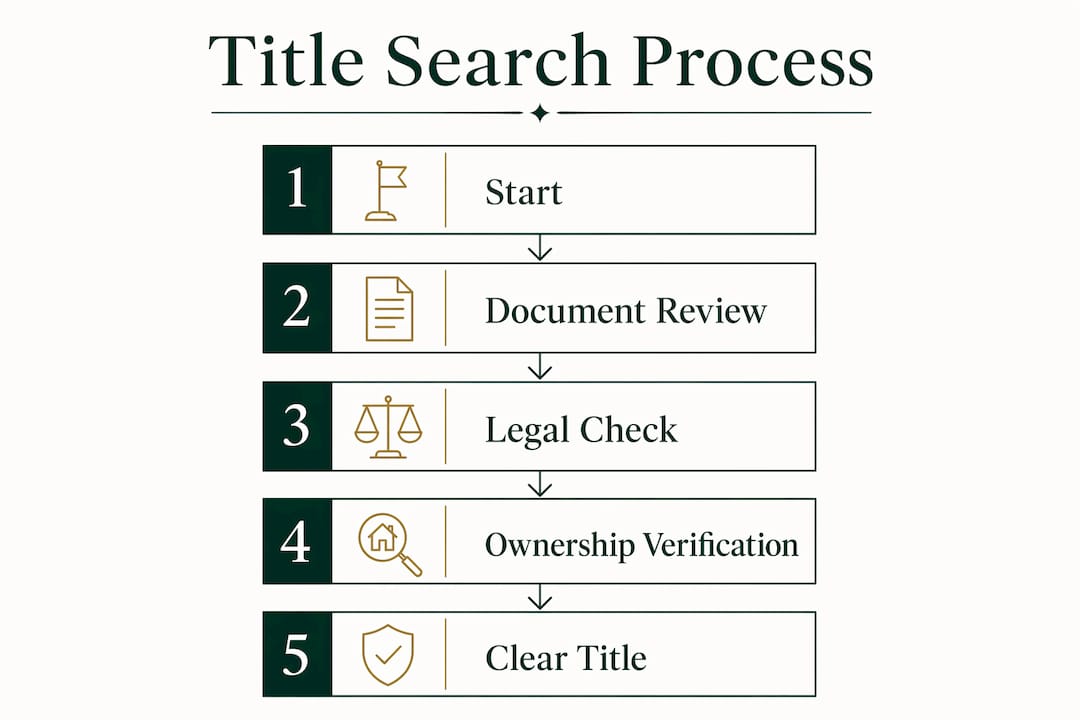
The property title search process is straightforward and takes minutes online. You can search by full property address, owner’s name, Lot/Plan number, or title reference number, depending on what you have to hand.
- Step 1: Identify the correct registry. Use NSW LRS Online for New South Wales, LANDATA for Victoria, or OTIS for Queensland. Western Australia uses Landgate; the ACT uses ACTLIS.
- Step 2: Gather your identifiers. The property’s full street address is usually enough. If you have the Lot/Plan number or title reference, the search is faster and more precise.
- Step 3: Create an account or proceed as a guest. Some portals require registration; others allow a one-off guest search.
- Step 4: Submit the search and pay the fee. A current title search typically costs between $20 and $40, paid by credit card. Queensland’s OTIS charges $25.71 (excl. GST) for a current title search.
- Step 5: Receive your document. The result arrives as a digital PDF, usually within seconds. This is your certificate of title or register search statement.
- Step 6: Check the title status. Only a current, active title reflects true legal ownership. A cancelled title does not represent the property’s present legal status, so always confirm the status column before relying on the document.
For historical ownership records, a historical title search is available at most registries for a higher fee. If the title is held by a company, you will need a separate ASIC company search to identify the directors behind it.
Pro Tip: Conveyancers and licensed buyers agents routinely conduct these searches on behalf of clients. If you are unfamiliar with reading a title document, having a professional interpret it is worth far more than the search fee itself.

Why a licensed buyers agent treats title searches as non-negotiable
The primary goal of a title search is to confirm a clear title free from legal defects or hidden encumbrances that could affect property value or use. That sounds straightforward, but the interpretation is where most buyers come unstuck.
Professional interpretation of a title search is crucial because different encumbrances carry very different legal consequences. An easement granting a utility company access across the rear of a block is a minor inconvenience. A restrictive covenant prohibiting subdivision can fundamentally alter an investment property’s future value. Treating both as “just encumbrances” is a costly mistake.
The ownership structure listed on the title also matters more than buyers realise. Joint tenants must act unanimously to transfer the property, whereas tenants in common may sell their individual share independently. That distinction affects how you negotiate and what conditions you include in a contract.
Sydney Property Buyers integrates title searches into every full-service acquisition as part of a broader due diligence process for Sydney and NSW buyers. Kristan Johnson, director and 2024 Outstanding Buyers Agent of the Year, reviews title documents alongside building reports, strata records, and council searches before any offer is made. The agency has secured 100+ properties for clients, with a 5.0 Google rating and an average saving of approximately 9% on purchase price.
Pro Tip: Getting the title search is only half the job. Ask your conveyancer or buyers agent to walk you through every encumbrance listed, not just flag that they exist. An easement you understand is manageable; one you discover after settlement is a problem.
Understanding the different types of property titles in Australia
The type of title affects what the search reveals and what restrictions apply to the land.
Torrens title is the most common form of ownership in Australia. The government register is the definitive record of ownership, and the registered proprietor’s rights are guaranteed by the state. A Torrens title search gives you a clean, reliable snapshot of who owns the land and what is registered against it.
Strata title applies to apartments, townhouses, and units within a strata scheme. Each owner holds title to their individual lot plus a share in the common property. A title search on a strata property will reference the strata plan number and may include a strata management statement or by-laws that govern what owners can and cannot do with their lot. Body corporate levies and special levies do not appear on the title itself, so a separate strata records inspection is always necessary.
Company title is an older and less common arrangement where a company owns the building and residents hold shares entitling them to occupy a particular unit. The title search shows the company as proprietor, not the individual occupant. Financing a company title property can be more difficult, as some lenders treat it differently from standard Torrens title.
Leasehold title applies primarily in the ACT, where the Commonwealth or territory government retains ownership of the land and grants a long-term lease to the occupant. The title search reflects the lease terms and any conditions attached to it.
Key takeaways
A property title search is the single most important document check in any Australian property purchase, confirming legal ownership and revealing every registered interest that could affect your use or value of the land.
| Point | Details |
|---|---|
| Official source only | Title searches come from state or territory land registries under the Torrens system, not from agents or vendors. |
| Fees are modest | A current title search typically costs $20 to $40, with Queensland’s OTIS charging $25.71 (excl. GST) for a current search. |
| What it shows | Registered owner, mortgages, easements, covenants, caveats, and lot/plan details. |
| What it misses | Zoning, unregistered interests, and building approvals require separate conveyancing checks. |
| Interpretation matters | Different encumbrances have different legal effects; professional review prevents costly misreading. |
Recommended
- What is a property search criteria? Sydney buyer’s guide
- What is a property investment brief? Your 2026 guide
- Types of properties buyers agents specialise in: 2026 guide
- Eastern suburbs property buying guide: 2026 edition