Property settlement in NSW is the legal and financial handover of a property, when the purchase price is paid and title passes to the buyer, and it typically happens 30–42 days after contracts exchange, with six weeks being the standard industry default. If you’ve just exchanged, your immediate move is simple: call your conveyancer, gather your certified ID, and start organising cleared funds now, not in the final week.
TL;DR:
- Delays often stem from human errors such as incomplete paperwork, late clearance of funds, or missed authorizations, rather than technology failures.
- It is crucial to order searches and certificates immediately after exchange to avoid slow council or strata processing times, especially in complex properties.
- Confirm your final settlement figure and have cleared funds ready at least three business days before settlement to prevent last-minute transfer issues.
- Final inspection should be booked within 48 hours of settlement, with photographic records recommended to resolve potential disputes after closing.
- Engagement of a buyers agent to coordinate logistics like ID, funds, and inspections can significantly reduce settlement delays and stress.
Table of Contents
- What does property settlement actually mean in NSW?
- How long does settlement take from exchange in NSW?
- What are the steps in the property settlement process NSW buyers follow?
- Who handles what during settlement?
- What usually causes settlement delays, and how do you avoid them?
- Your pre-settlement checklist for the final fortnight
- What happens on settlement day itself?
- How does a buyers agent help settlement run smoothly?
- The one action that prevents most settlement headaches
- Settlement support that actually removes the risk
- Where to check the details yourself
- Sources
What does property settlement actually mean in NSW?
Settlement is the moment beneficial ownership passes from seller to buyer. Your conveyancer confirms the settlement figure, arranges discharge of the seller’s mortgage, and lodges the transfer for registration. Almost all settlements now run through electronic conveyancing, a digital workspace where solicitors upload documents and disburse funds simultaneously. NSW rules require each side to be represented by a solicitor or licensed conveyancer registered as a subscriber on that platform.
How long does settlement take from exchange in NSW?
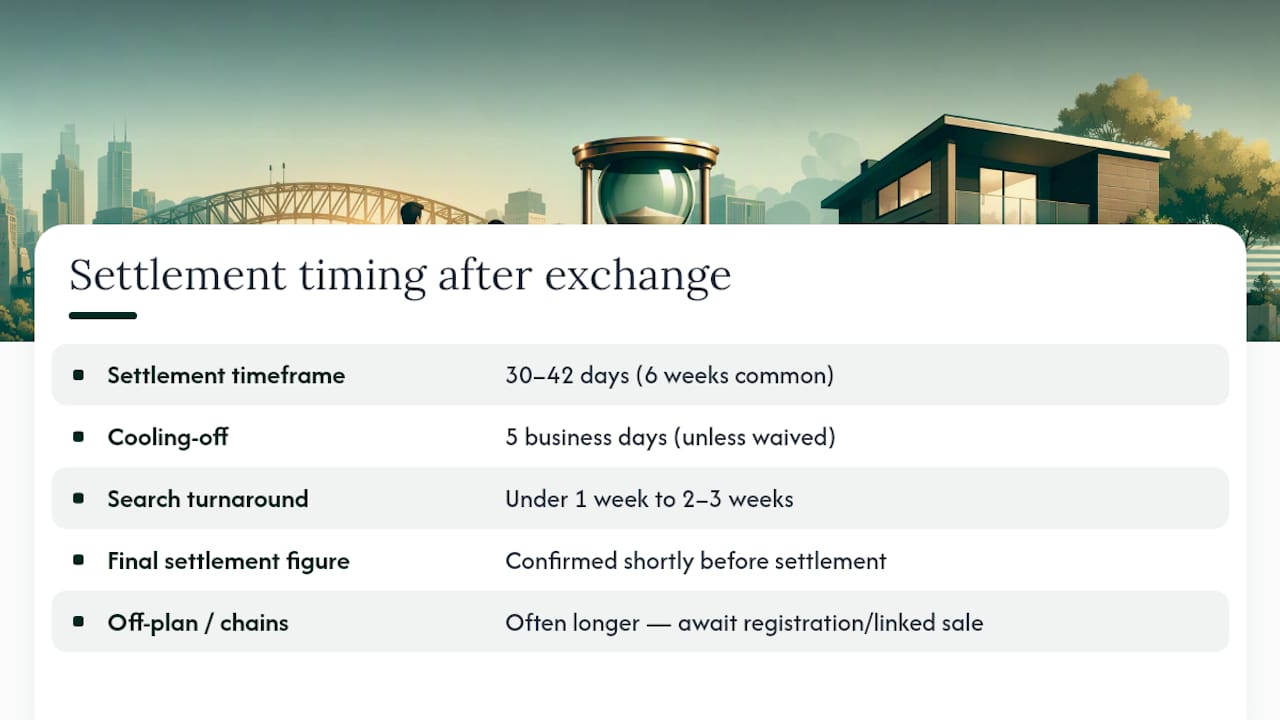
Most residential contracts set settlement 30 to 42 days after exchange, and six weeks is the common default written into standard contracts across the state, though the date is negotiable between parties before exchange. If you’re buying privately (not at auction), a five-business-day cooling-off period usually follows exchange, unless a Section 66W certificate has waived it.
Council and water searches tend to start within days of exchange, but turnaround varies. Some councils clear certificates in under a week; others, particularly in areas with development overlays or strata complications, can take two to three weeks. Your conveyancer typically confirms the final settlement figure, covering adjustments for rates and levies, shortly before settlement, and that’s your cue to lock in building and contents insurance from settlement day onward.
Off-the-plan purchases and chain transactions often run longer, since they depend on registration of a new plan of subdivision or a linked sale completing first.
What are the steps in the property settlement process NSW buyers follow?
Once contracts are exchanged, a defined sequence of tasks runs in parallel between your conveyancer, the lender, and the seller’s representative.
- Open the PEXA workspace. Your conveyancer creates the electronic settlement file and invites the other parties’ representatives, including your lender’s nominated solicitor.
- Order searches and certificates. Title searches, council rates certificates, water authority certificates, and (for apartments) strata certificates all get requested here. These confirm there’s nothing outstanding against the property, like unpaid rates or unregistered easements.
- Instruct the lender. Your bank issues loan documents and prepares to release funds into the workspace, while any existing mortgage on the seller’s side is flagged for discharge.
- Confirm cleared funds. Your conveyancer calculates the final adjustment figure, factoring in the deposit already paid, and informs you about the amount you need to have available before settlement.
- Conduct the final inspection and confirm the settlement statement. Once you’ve checked the property matches its condition at contract date, settlement proceeds and funds move electronically, all parties paid in the same transaction.
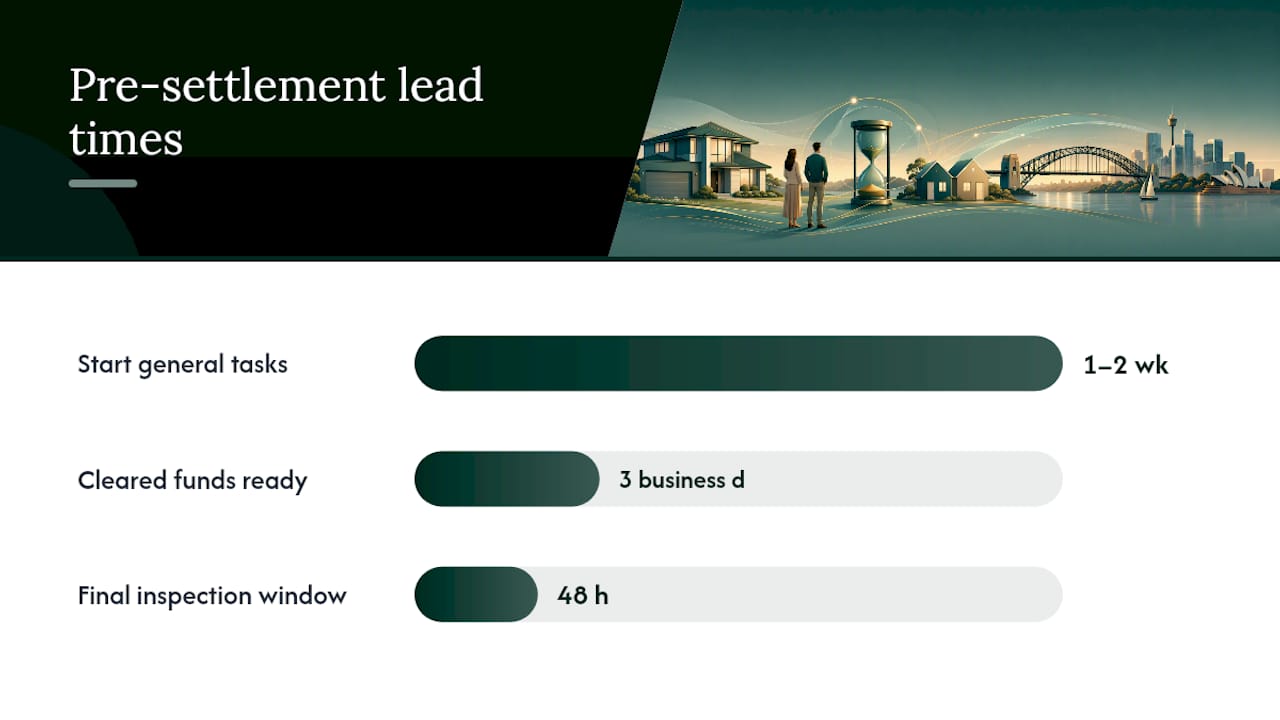
Pro Tip: Ask your conveyancer for the PEXA workspace timeline the day you exchange, not the week before settlement. Banks can take three or more business days to process fund transfers internally, and finding that out at the last minute is how settlements slip.
Who handles what during settlement?
Settlement runs smoothly when each party sticks to their lane. You, as the buyer, are responsible for certified identification, cleared funds, arranging insurance from settlement day, and doing the final inspection. Your conveyancer or solicitor handles the searches, manages the PEXA lodgement, and checks the settlement statement matches what you’ve agreed. Your lender issues loan documents and transfers funds into the workspace on the day. The seller (through their agent) must provide vacant possession and hand over keys once settlement is confirmed, unless the contract states the property is sold with an existing tenancy in place.
What usually causes settlement delays, and how do you avoid them?
Delays rarely come from the technology itself. Legal practitioners point out that PEXA settlement is largely automated. The problems that hold things up are almost always on the human side: paperwork not submitted, funds not cleared, authorisations not signed.
- Finance delays: get unconditional loan approval early and confirm your lender’s internal processing timeframe, since some take longer than others to release funds.
- Missing ID or late authorisation: supply certified identification and sign your Client Authorisation form for eConveyancing as soon as your conveyancer requests it.
- Outstanding searches or certificates: instruct your conveyancer to order these immediately after exchange, especially in council areas known for slower turnaround.
- Chain transactions: if your purchase depends on your own sale settling first, build in a buffer and discuss contingency options with your conveyancer before locking in dates.
Your pre-settlement checklist for the final fortnight
With one to two weeks before settlement, a short list of tasks stands between you and the keys.
- Confirm the final settlement figure with your conveyancer and have cleared funds ready at least three business days beforehand, since bank transfers aren’t instant.
- Arrange building and contents insurance to start from settlement day, because risk generally shifts to you once settlement is confirmed.
- Provide certified ID and sign your Client Authorisation well ahead of the date, not on the morning of.
- Book your final inspection within 48 hours of settlement and flag any issues with your conveyancer immediately.
- Confirm key collection arrangements with the agent, particularly if the property is tenanted or vacant possession has specific timing conditions in the contract.
Pro Tip: Photograph every room during your final inspection, even if everything looks fine. If a dispute arises over the property’s condition after settlement, timestamped photos are far more useful than memory.
For a broader checklist covering the lead-up to closing, this buyer closing checklist is a useful cross-check against your own conveyancer’s list.
What happens on settlement day itself?
On the day, your solicitor runs final searches to confirm nothing has changed since exchange, then coordinates the electronic transfer of funds and lodgement of documents through PEXA, all happening in the same transaction. Settlement commonly completes between midday and mid-afternoon, though finance delays or last-minute registration issues can push it later. You become legally entitled to possession once settlement is confirmed, which is why keys are usually only released after that confirmation comes through, not before. If the property is tenanted, the seller’s obligation to deliver vacant possession (or hand over a continuing lease) is set out in your contract terms.
How does a buyers agent help settlement run smoothly?
Sydney Property Buyers coordinates the practical side of settlement for clients: chasing document collection, tracking PEXA milestones, liaising with lenders on fund timing, and managing the final inspection so nothing gets missed. Collecting certified ID and confirming cleared funds early, rather than reactively, is the single biggest lever against the delays covered above. Under Kristan Johnson, named 2024 Outstanding Buyers Agent of the Year by the Inner West Local Business Awards, the agency has secured over 100 properties for clients, with settlement coordination built into the process from day one.
The one action that prevents most settlement headaches
If you take one piece of advice from this, engage your conveyancer and get your ID and funds sorted before you even exchange. Sydney Property Buyers averages 54 days from engagement to settlement, and readiness is why.
— Kristan
Settlement support that actually removes the risk
Sydney Property Buyers is the alternative to going it alone on settlement admin: instead of chasing PEXA updates, lender timelines and final inspection logistics yourself while juggling work and life, a dedicated buyers agent runs that coordination for you from the day you engage. That matters most in the final fortnight, when a missed certified ID request or a slow bank transfer is exactly what pushes settlement back a day or more.

Full Service clients get this coordination built into the entire purchase, from strategy and property search through to settlement management, while Negotiation Only clients can bring the agency in once a property’s identified. Either way, the retainer is deducted from the final fee, so you’re not paying twice. Have a look at the full settlement to search process, or call 1800 676 177 to talk through your settlement date and what needs organising before it.
Where to check the details yourself
For the legal steps and obligations behind a NSW sale, the NSW Government’s settlement guidance is the primary reference. For a plain-English walkthrough of what solicitors actually do on the day, see Golottas Solicitors’ settlement day explainer. If you’re wondering about keys and moving-in timing specifically, Peacock Settlements covers that directly.
Sources
- Steps to selling a property | NSW Government
- Property settlement day: what actually happens in NSW | Golottas Solicitors
- Can I move in on settlement day? | Peacock Settlements
Recommended
- Section 32 explained: what Sydney buyers need to know
- Unconditional exchange: what Sydney buyers must know
- How a buyers agent oversees property settlement in sydney