Sydney buyers agents typically charge either a fixed fee (commonly $9,000 to $20,000+ depending on scope) or a percentage of the purchase price, with many firms structuring this as an upfront retainer which is often credited against a success fee on exchange. Which model costs you more depends on the property price and how much work the search actually takes. Below is where each fee format tends to win, and when it doesn’t.
- Fixed fee — set price, agreed upfront, doesn’t move with the purchase price
- Percentage fee — a proportion of the final purchase price, usually a percentage of the purchase price
- Retainer + success fee — a smaller deposit at engagement, credited against a larger fee due at exchange or settlement
Key Takeaways
Sydney buyers agent fees typically run 1% to 3% on a percentage basis or $9,000 to $20,000+ as a fixed fee, with the right choice depending on purchase price and search complexity.
| Point | Details |
|---|---|
| Fee formats are negotiable | NSW has no set fee scale, so ask for both a fixed and percentage quote before deciding. |
| Match tier to your situation | Full service suits interstate and high-value buyers; negotiation-only suits those who’ve already found a property. |
| Scrutinise the contract, not just the price | Check retainer refundability, the success fee trigger, and termination terms before signing. |
| Off-market access is where value hides | Ask what percentage of an agent’s purchases were secured off-market before comparing fees. |
| Sydney Property Buyers offers both models | Fixed fee and percentage full-service options, plus negotiation-only, with retainers credited against the final fee and a documented 9% average saving. |
Table of Contents
- How much do buyers agent fees in Sydney actually cost?
- Which fee model should you choose?
- What does a buyers agent fee usually cover in Sydney?
- Which service tier fits your situation?
- When are buyers agent fees actually charged?
- Do buyers agents actually pay for themselves?
- What should you ask before signing with a buyers agent?
- What does a real Sydney buyers agent engagement look like?
- Choosing an agent on more than just the fee
- Get a clear fee quote for your Sydney purchase
- Sources
How much do buyers agent fees in Sydney actually cost?
There’s no legislated fee scale for buyers agents in New South Wales. The NSW Government’s own guidance confirms agents can charge either a fixed fee or a percentage, and every term is negotiable. That’s good news for buyers who ask the right questions, and it’s exactly why fee ranges you’ll see quoted online vary so widely.
Percentage fees scale directly with what you pay for the property, which is where buyers get caught out on Sydney’s price tags. This makes fees higher on more expensive purchases. This is precisely why many full-service buyers agents in Sydney cap their percentage fee once a purchase price crosses a certain threshold, or switch clients onto a fixed-fee structure instead.
Fixed fees work the other way. A single flat number, usually landing somewhere between a moderate to higher fixed fee depending on service tier and complexity involved(https://bestinsydney.co/how-much-do-buyers-agents-cost-in-sydney-2026-guide/), stays the same whether the agent secures you a $900,000 apartment or a $2 million house. That predictability suits buyers who want to budget precisely, though it can mean paying a similar fee for a shorter, simpler search as for a drawn-out, competitive one.
Hybrid models blend both. You pay a retainer at engagement, typically a few thousand dollars, which is then credited against a larger success fee due once you exchange contracts. Industry guidance on buyer’s agent costs across Australia notes this retainer is usually offset rather than charged on top, though the wording in the agreement matters enormously here.
Location within Sydney moves the number too. Buyers agents working the eastern suburbs, inner west, lower north shore and northern beaches generally charge towards the top of the range, reflecting higher average purchase prices, more competitive stock, and the deeper local networks needed to find anything before it hits the open market.
Pro Tip: Ask any agent to quote both a fixed fee and a percentage estimate for your actual target price range before you sign anything. If the percentage comes out well above the fixed quote, that’s your negotiating lever.
Which fee model should you choose?
Every fee structure trades off transparency, predictability and incentive alignment differently, and understanding those trade-offs matters more than chasing the lowest headline number.
| Fee model | Cost predictability | Incentive alignment | Typical use case |
|---|---|---|---|
| Fixed fee | High. Set price regardless of purchase price. | Neutral. Agent isn’t rewarded for a higher sale price. | Buyers who want budget certainty, first home buyers, standard purchases |
| Percentage/commission | Low on expensive purchases. Scales with price. | Mixed. Some argue it rewards agents for pushing price up, not down. | Complex negotiations, competitive suburbs, high-value purchases |
| Capped percentage | Moderate. Percentage applies up to a ceiling. | Better. Limits upside once a threshold is hit. | Mid to high-value purchases where buyers want a ceiling |
| Retainer + success fee | Moderate. Deposit locked in, balance depends on trigger. | Depends entirely on contract wording. | Most full-service Sydney engagements |
| Single-service fee | High. Flat charge per task (bidding, appraisal). | Neutral. Paid regardless of outcome. | Buyers who’ve found the property themselves |
Fixed fees suit buyers who value certainty over anything else. You know the number on day one, and it doesn’t shift if the negotiation drags on or the price climbs. Percentage fees suit agents and buyers who want the incentive tied to outcome, though the OwnHome cost breakdown points out that in Sydney’s metropolitan market, percentage models remain the default for full-service engagements because the negotiation work often justifies the scaling cost.
Success fees are usually triggered by one of three events written into the contract: exchange of contracts, unconditional exchange (after finance and building checks clear), or settlement itself. Cancellation clauses vary just as much. Some agreements let you walk away and forfeit only the retainer; others attach a minimum notice period or a partial fee even if you don’t proceed.
Pro Tip: Read the termination clause before the fee schedule. A buyers agent contract that’s vague about what happens if you don’t purchase within six months is a bigger risk than a slightly higher fee.
Pro Tip: Watch for “success fee” definitions that trigger on signing a contract rather than on an unconditional exchange. That distinction can cost you thousands if the deal later falls through on finance.
What does a buyers agent fee usually cover in Sydney?
Most full-service engagements bundle a consistent set of tasks into the headline fee, but the fine print on exclusions is where quotes stop being comparable.
Typically included:
- Buying strategy and brief development
- Suburb and market research
- Property search across on-market and off-market listings
- Property inspections and independent appraisal
- Due diligence coordination
- Negotiation or auction bidding
- Liaison through to settlement
Commonly excluded or charged separately:
- Building and pest inspection reports
- Conveyancing or legal fees
- Lender or mortgage broker fees
- Specialist reports (strata, flood, contamination)
- Travel costs for interstate or overseas buyers
Off-market access deserves its own line item because it’s often where the real value sits, not just a marketing phrase. Sydney Property Buyers reports that more than 30% of its purchases are secured off-market, meaning the property never appeared on a public listing at all. Agents who’ve built genuine relationships with selling agents over years charge more for exactly this reason. It removes you from the auction crowd entirely.
If you’re weighing up whether that access is worth paying for, it’s worth reading how off-market property access works for Sydney buyers before comparing quotes, since a cheaper agent with no off-market pipeline is competing on a different playing field to one who isn’t.
Which service tier fits your situation?
Not every buyer needs the full engagement, and matching the tier to your circumstances is where a lot of money either gets saved or wasted.
| Service tier | What’s covered | Best suited to |
|---|---|---|
| Full service (done-for-you) | Strategy, search, appraisal, due diligence, negotiation or bidding, settlement | Time-poor buyers, interstate purchasers, high-net-worth clients, investors scaling a portfolio |
| Done-with-you (partial) | Search assistance and appraisal with the buyer handling some legwork | Buyers with time to inspect but who want negotiation support |
| Negotiation or bidding only | Representation once you’ve found the property yourself | Buyers who’ve already identified the property and just need the deal closed well |
First home buyers often start at the negotiation-only tier because budgets are tighter and they’ve usually already found a property they like. Interstate buyers tend to need full service, simply because they can’t inspect properties themselves on a normal schedule. That’s where seven-day inspection availability becomes genuinely useful rather than a nice-to-have. High-net-worth purchasers and investors building a portfolio typically favour full service too, since the value of off-market access and rigorous due diligence compounds across multiple purchases.

Negotiation-only pricing is almost always a flat single-service fee rather than a percentage, precisely because the scope is narrow and the outcome is easier to define upfront.
When are buyers agent fees actually charged?
Payment structures follow a fairly consistent pattern across the Sydney market, even though the exact numbers vary firm to firm.
Standard payment milestones:
- A retainer paid at engagement, typically ranging from a few hundred to several thousand dollars depending on the firm
- A success fee triggered on exchange of contracts or settlement
- GST applied to the total fee, as buyers agent services are a taxable supply
- Invoicing usually issued at each milestone rather than as one lump sum
Contract clauses worth checking before you sign:
- Whether the retainer may be refundable depending on the agreement if you don’t purchase within the agreed period
- The exact event that triggers the success fee (signing versus unconditional exchange)
- Termination and notice provisions if you want to exit the arrangement
- Whether scope changes, such as extending the search to new suburbs, trigger additional charges
The Aussie insights piece on buyers agent costs flags that hidden costs tend to surface exactly at these boundary points, not in the headline fee itself. A retainer that’s non-refundable regardless of outcome, a success fee trigger that’s ambiguously worded, or an automatic renewal clause buried in the fine print are the three most common red flags.
Red flags to watch for:
- Non-refundable retainers with no crediting against the final fee
- Success fee triggers left undefined or open to interpretation
- Automatic contract renewal without a clear opt-out
- No written fee schedule provided before you sign anything
Pro Tip: Ask for the fee schedule in writing before your first paid meeting, not after. A firm that’s confident in its pricing will hand this over without hesitation.
If you’re also engaging a solicitor or conveyancer for the purchase, it’s worth understanding how fixed-fee legal pricing works in Sydney too, since the same transparency principle applies to conveyancing costs as it does to buyers agent fees.
Do buyers agents actually pay for themselves?
The ROI case rests on three things: negotiation savings, off-market premiums avoided, and time saved chasing properties you’d never have found on your own.
Consider the numbers. Sydney Property Buyers reports an average saving of around 9% on purchase price across its engagements. That gap is exactly why the ROI argument holds for most buyers in competitive Sydney markets, though it isn’t universal.
When a buyers agent is likely to save you more than they cost:
- You’re buying in a competitive, high-demand suburb where auction premiums routinely exceed guide prices
- You lack the time to inspect properties across multiple weekends or you live interstate
- You’re targeting off-market stock that simply isn’t visible without an existing network
- You’ve previously overpaid or lost a negotiation and want professional representation next time
- You’re building an investment portfolio and need capital growth and rental yield analysis alongside the purchase
When it may be less economical:
- On lower-priced purchases where a flat fee represents a larger proportion of the price
- If you already have deep local knowledge of the specific street or building you’re targeting
- If you’re simply after a second opinion rather than full representation
Value signals worth checking before you commit include a valid NSW real estate licence, a documented history of off-market purchases, and a fee schedule that’s disclosed in writing before you engage. Reading about how a buyers agent saves you money on property is a useful next step if you want the negotiation mechanics spelled out in more detail.
What should you ask before signing with a buyers agent?
A structured comparison across proposals beats gut instinct every time, especially when fee formats differ between the firms you’re considering.
Questions to put to every agent:
- Can I see your current NSW real estate licence number?
- Can you provide a sample fee schedule in writing, including GST?
- Is the engagement retainer refundable, and under what circumstances?
- What percentage of your recent purchases were secured off-market?
- Can you share examples of recent results, including purchase price versus initial appraisal?
- What exactly triggers the success fee?
- Can I speak to a recent client as a reference?
Decision heuristics that actually help:
- Favour fixed fees on lower-value purchases where a percentage would eat disproportionately into your budget
- Favour percentage or capped-percentage models on complex, competitive purchases where the negotiation work is substantial
- Rule out any agent who won’t provide a written fee schedule before your first paid engagement
Red flags that should end the conversation:
- Reluctance to disclose a licence number
- Vague answers about what counts as “off-market”
- No willingness to put fee terms in writing before you sign
To compare proposals properly, line up each firm’s fixed fee, percentage rate, retainer amount and success trigger side by side on one page. Anything left blank or vague on that page is a question you haven’t asked yet.
What does a real Sydney buyers agent engagement look like?
Kristan Johnson, director of Sydney Property Buyers and named 2024 Outstanding Buyers Agent of the Year at the Inner West Local Business Awards, has overseen more than 100 property purchases for Sydney clients under a full-service model that pairs a retainer with a success fee, and separately under a negotiation-only structure for buyers who’ve already found their property.
A typical full-service engagement runs through strategy, search, appraisal, negotiation or bidding, and settlement liaison. Clients are told upfront which fee model applies to their brief, and the retainer is always credited against the final fee rather than charged as an extra cost on top.
The firm’s average time-to-purchase across engagements sits at 54 days from engagement to settlement, with an average saving of around 9% on purchase price and more than 30% of purchases secured off-market rather than through public listings. Those figures sit alongside a 5.0 Google rating built from completed transactions across the inner west, eastern suburbs, lower north shore and eastern beaches.
If you want to see how this translates to your own budget, requesting a sample fee schedule and consultation is the most direct way to compare a real quote against the ranges discussed here.
Choosing an agent on more than just the fee
Too many buyers shortlist agents by comparing headline fees alone, and that’s the wrong first filter. A cheaper fixed fee from an agent with no track record in your target suburb can cost you far more than a slightly higher fee from someone who actually knows which off-market listings are coming and how a particular selling agent negotiates. Licensing matters, but it’s the floor, not the differentiator. What separates a good buyers agent from an average one is documented results, a written fee schedule you can compare against a competitor’s terms line by line, and a service level that actually matches what you need rather than what’s easiest for the agent to sell you.
My honest view, having watched fee structures shift across this market for years, is that the retainer-plus-success-fee model gets unfairly criticised for being complicated when it’s usually the fairest option on the table, provided the trigger event is spelled out clearly. The real risk isn’t the fee format. It’s ambiguity in the contract, and that’s what buyers should be negotiating on before they even discuss the percentage.
Get a clear fee quote for your Sydney purchase
If you’ve read this far, you already know the fee format matters less than the clarity behind it. Sydney Property Buyers offers both a fixed-fee and a percentage-based full-service option, plus a negotiation-only service for buyers who’ve already found their property, with every retainer credited against the final fee rather than charged as an add-on.
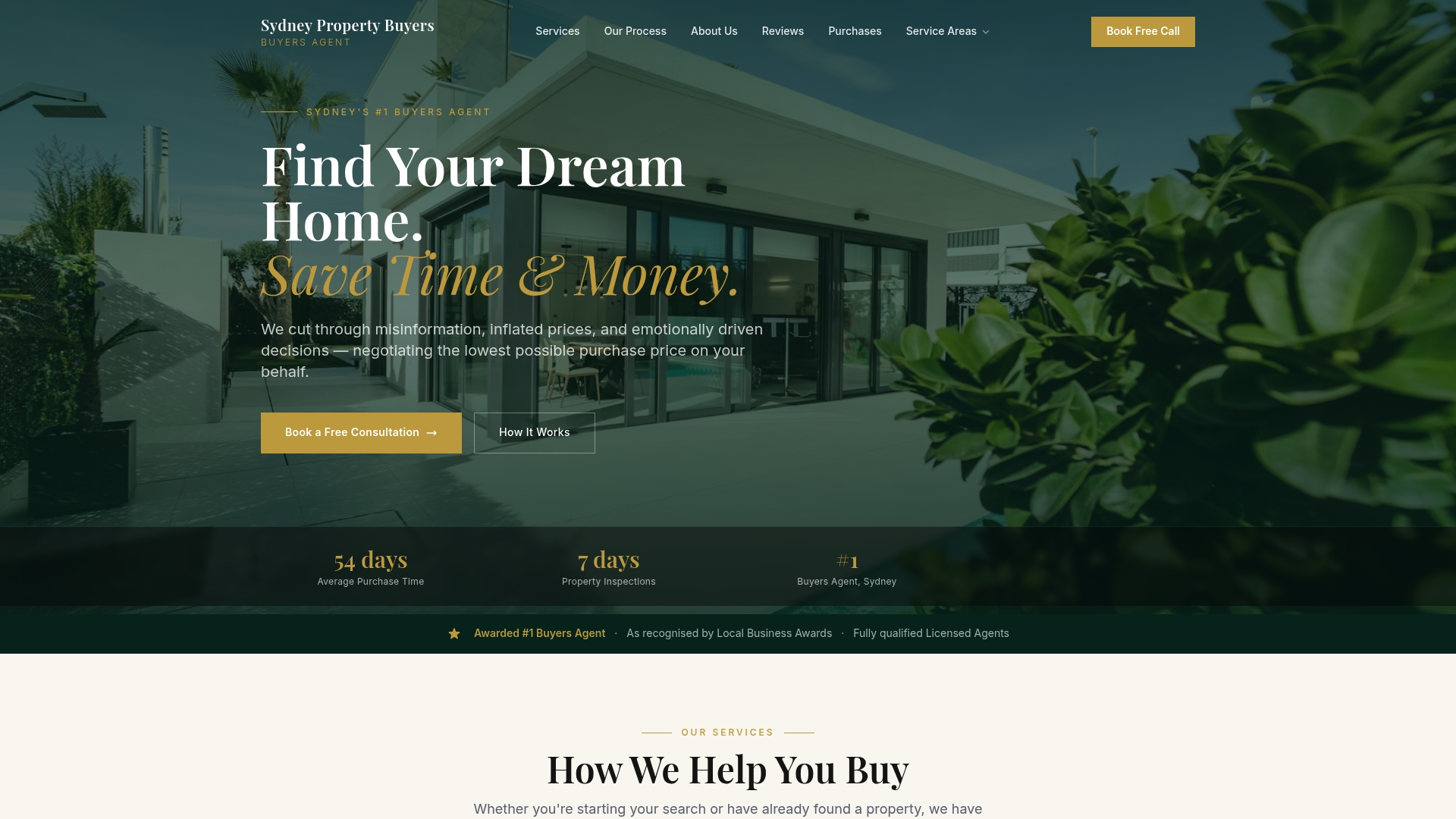
What sets the firm apart isn’t just the pricing structure. You’re not comparing a headline fee in isolation. You’re comparing it against a documented history of what that fee actually delivers.
If you’re weighing exclusive representation against going it alone, it’s worth reading about the benefits of exclusive buyers agent representation before you decide. When you’re ready to compare a real quote against the ranges in this guide, request a fee schedule and consultation directly with the team.
Sources
- Using a real estate agent to buy a property | NSW Government
- How much does a buyer’s agent cost in Australia? — OwnHome
This article is general information, not a substitute for advice from a qualified financial advisor. Consult a qualified financial professional about your own circumstances before acting on anything here.
Recommended
- Fixed fee vs percentage buyers agent: Sydney guide
- What is a buyer’s agent? sydney property guide
- How a buyers agent saves you money on property
- Common misconceptions about buyers agents explained