A buyer’s agent is a licensed property professional who works exclusively for the purchaser, not the vendor, making them the single most effective resource for interstate buyers attempting to purchase property in Sydney without a local presence. Buying interstate is operationally complex at the best of times. Sydney’s market adds further pressure: competitive auction conditions, suburb-level pricing variations, and a pace that punishes hesitation. For buyers based in Melbourne, Brisbane, or Perth, the question is not whether to hire professional representation. It is which qualified agent to trust with a decision worth hundreds of thousands of pounds. This article explains exactly why a buyer’s agent suits interstate buyers and what to look for when choosing one.
Why buyer’s agents suit interstate buyers tackling Sydney’s market
The core advantage is local presence combined with professional independence. Interstate investing is operationally complex, and a buyer’s agent delivers local market insight, identifies suitable properties, and brokers negotiations, directly mitigating the challenge of not being on site. That combination of knowledge and access is something no amount of online research can replicate from another state.
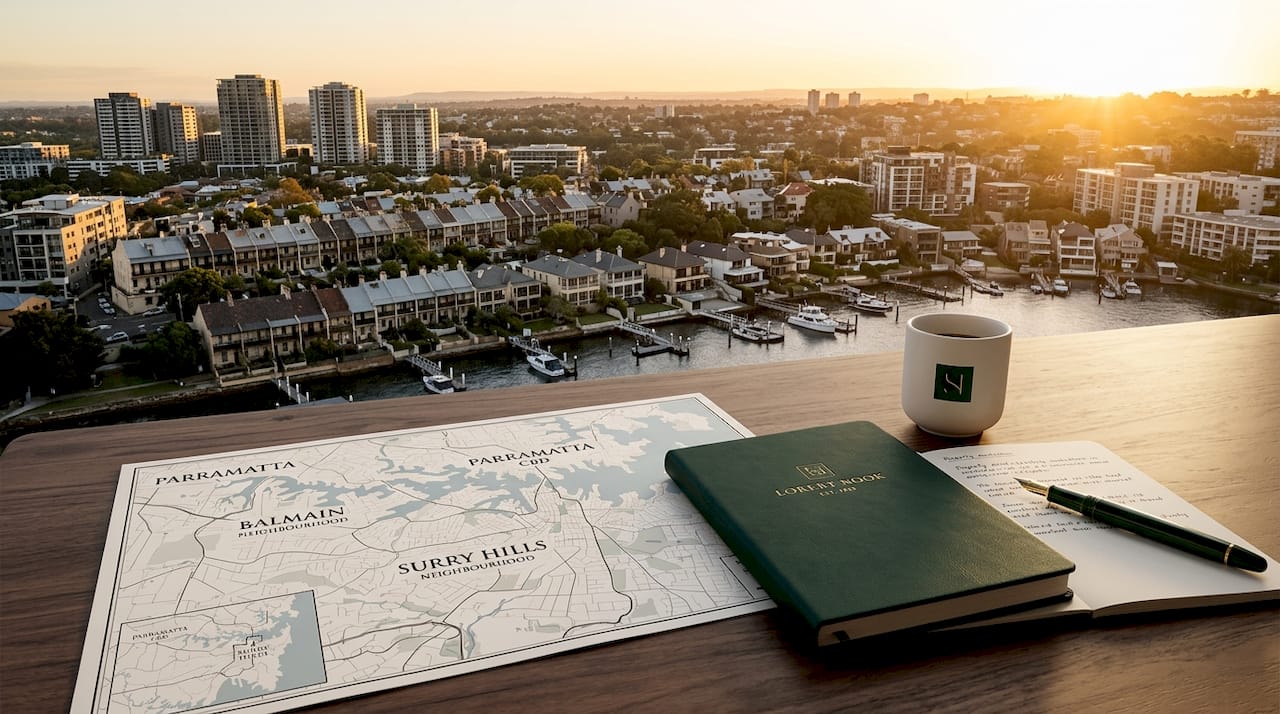
Sydney’s property market does not behave uniformly. Prices in Surry Hills, Balmain, and Parramatta can diverge sharply even within the same quarter. A buyer’s agent who operates daily in these suburbs understands which streets carry flood risk, which blocks are affected by flight paths, and which developments are suppressing resale values. This is the kind of micro-neighbourhood insight that online portals like Domain or realestate.com.au simply cannot provide.
The benefits of buyer’s agents extend beyond market knowledge. They attend inspections, review contracts, coordinate legal professionals, and bid at auction on your behalf. For an interstate buyer, this means the entire purchase process can proceed without a single flight to Sydney.
How buyer’s agents manage due diligence and inspections remotely
Due diligence for a Sydney property purchase involves building and pest inspections, strata reports, contract reviews, conveyancing, and settlement coordination. Attempting to assemble this team remotely without local contacts is one of the most common and costly mistakes interstate buyers make.
A buyer’s agent solves this by maintaining an established network of trusted local professionals. When a property is identified, the agent can mobilise a building inspector, pest specialist, and conveyancer within 24 to 48 hours. This speed matters in Sydney, where properties under offer can move to exchange within days.
The tasks a buyer’s agent typically manages on your behalf include:
-
Booking and attending building and pest inspections, then interpreting the findings for you
-
Commissioning independent strata reports for apartment purchases
-
Liaising with conveyancers and solicitors to review contract terms and special conditions
-
Attending pre-settlement inspections to confirm the property’s condition
-
Coordinating with the vendor’s agent on settlement timing and key handover
Each of these steps carries real financial risk if handled poorly from a distance. A missed defect in a building report or an unfavourable contract clause can cost far more than the buyer’s agent fee itself.
Pro Tip: Never skip a professional building and pest inspection on the basis that a property looks well-maintained. Cosmetic presentation and structural integrity are entirely separate matters, and Sydney’s older housing stock in suburbs like Paddington or Glebe regularly conceals significant issues beneath freshly painted surfaces.
What local market knowledge and negotiation skills actually save you
The financial case for hiring a buyer’s agent is direct. Properties purchased through buyer’s agents typically save clients 5 to 10% below market value through skilled negotiation and informed pricing assessments. On a $1.2 million Sydney property, that represents a saving of $60,000 to $120,000. The agent’s fee, which typically sits between 1.5% and 2.5% of the purchase price in NSW, is covered many times over.
The negotiation advantage comes from two sources: relationships and data. Buyer’s agents who operate in specific Sydney suburbs build working relationships with local selling agents over years. These relationships create access to off-market listings that never appear on public portals, and they create goodwill that can influence how a vendor’s agent presents competing offers. Sydney Property Buyers, for example, offers exclusive off-market access as a core part of its service, which is a genuine structural advantage in a market where the best properties are often sold before public listing.
The data side is equally important. Consider the difference between these two approaches to assessing a property’s value:
| Approach | Information available | Accuracy for interstate buyer |
|---|---|---|
| Online research via portals | Listed prices, sold prices, suburb medians | Moderate; misses recent off-market sales |
| Buyer’s agent assessment | Comparable sales, vendor motivation, local demand signals | High; accounts for street-level and timing factors |
| Auction bidding without representation | Public price guide only | Low; vulnerable to emotional overbidding |
Auction conditions in Sydney are particularly unforgiving for interstate buyers. Without a buyer’s agent present to bid strategically and hold to a pre-agreed limit, remote buyers frequently overpay or miss properties entirely because they cannot read the room in real time.
How to choose a qualified buyer’s agent under REBAA standards
The Real Estate Buyers Agents Association of Australia, known as REBAA, is the industry body that sets the professional benchmark for buyer’s agents in this country. REBAA membership signals that an agent is bound by a code of conduct and has met entry requirements that go well beyond holding a standard real estate licence. For interstate buyers who cannot vet an agent through face-to-face meetings or local reputation, REBAA membership is the most reliable proxy for trustworthiness.
The distinction matters because not every licensed real estate agent operates independently. Some agents who market themselves as buyer’s agents also hold selling licences or receive referral fees from developers, creating conflicts of interest that directly harm buyers. A genuine buyer’s agent works solely for the purchaser and charges a transparent, agreed fee.
When evaluating prospective agents, ask the following questions directly:
-
Are you a member of REBAA, and can you provide your membership details?
-
Do you receive any commissions, referral fees, or incentives from vendors, developers, or selling agents?
-
What is your fee structure, and is it fixed or percentage-based?
-
How many properties have you purchased in my target suburb in the past 12 months?
-
Can you provide references from interstate clients specifically?
Fee transparency is non-negotiable. A reputable agent will provide a written fee agreement before any engagement begins. If an agent is vague about how they are compensated, treat that as a disqualifying signal.
Pro Tip: Ask any prospective buyer’s agent to show you three recent comparable sales they used to assess a property’s value. This single request reveals both their analytical rigour and their genuine familiarity with your target area.
How buyer’s agents overcome the practical challenges of remote purchasing
The logistical gap between an interstate buyer and a Sydney property is real, but buyer’s agents have developed structured processes to close it. Managing time zone differences and using technology like video walkthroughs and online tours are now standard practice for agents who regularly work with remote clients.
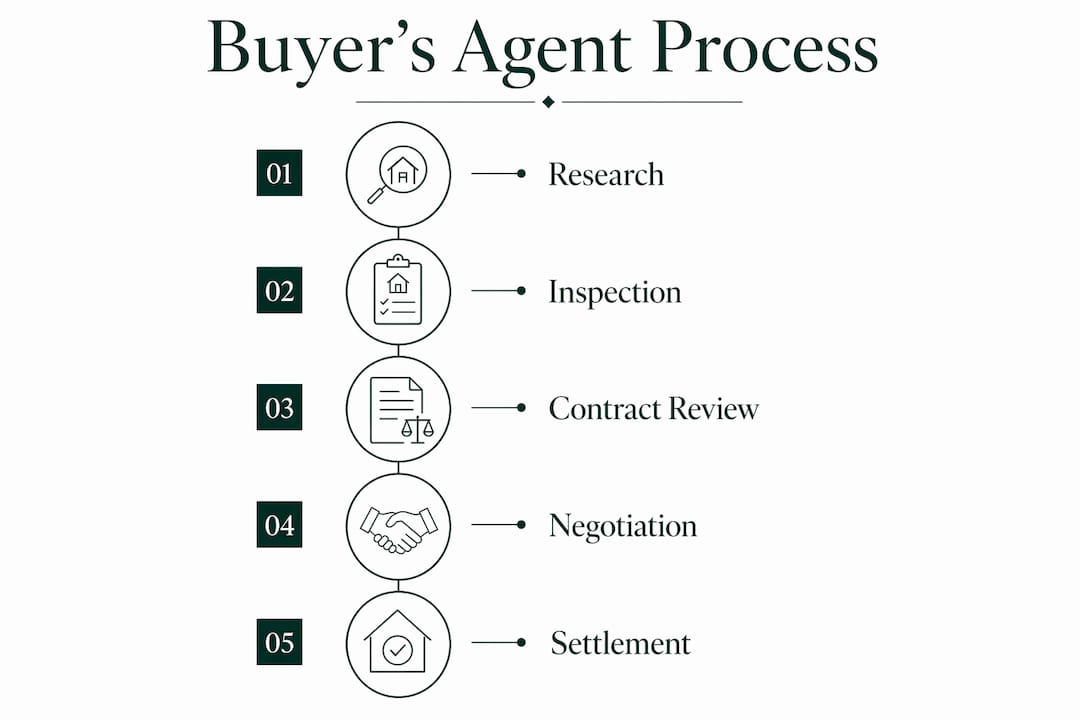
A well-organised buyer’s agent will establish a communication protocol from day one. Here is how a typical remote purchase process unfolds:
-
Initial briefing call. The agent documents your budget, property criteria, preferred suburbs, and timeline. This brief drives every subsequent decision.
-
Property identification. The agent searches on-market listings, off-market networks, and direct vendor contacts to compile a shortlist aligned to your brief.
-
Video walkthrough and report. Before you commit time to reviewing a property seriously, the agent attends in person and provides a video walkthrough with commentary, followed by a written assessment.
-
Due diligence coordination. Once you approve a property for further investigation, the agent commissions inspections and legal reviews, then presents findings in a clear summary.
-
Negotiation or auction representation. The agent negotiates privately or bids at auction on your behalf, operating within a pre-agreed price limit you have set.
-
Settlement management. The agent attends the pre-settlement inspection, liaises with your conveyancer, and confirms key handover, keeping you informed at each stage.
This structured approach means interstate buyers can avoid costly mistakes that arise from incomplete information, rushed decisions, or the absence of a trusted local advocate. Sydney Property Buyers completes purchases in an average of 54 days, which reflects the efficiency that a coordinated, professional process delivers for buyers who cannot afford to leave capital uncommitted for months.
Key takeaways
A buyer’s agent is the most effective tool for interstate buyers purchasing in Sydney because local expertise, professional independence, and coordinated due diligence directly reduce financial risk and purchase cost.
| Point | Details |
|---|---|
| Local expertise is irreplaceable | Micro-neighbourhood knowledge on pricing, risks, and off-market stock cannot be sourced from online portals alone. |
| Negotiation saves real money | Buyer’s agents typically secure properties 5 to 10% below market value, covering their fee many times over. |
| Due diligence requires local coordination | Inspections, conveyancing, and settlement tasks are managed faster and more reliably by an agent with established local networks. |
| REBAA membership signals trustworthiness | Choose agents bound by REBAA’s code of conduct to avoid conflicts of interest and fee opacity. |
| Structured remote processes close the distance gap | Video walkthroughs, written assessments, and auction representation remove the need for interstate buyers to travel. |
The uncomfortable truth about buying Sydney property from afar
I have seen interstate buyers arrive at the process with genuine confidence, armed with months of online research, spreadsheets of comparable sales, and a clear budget. Most of them still underestimate what they do not know. The gap is not information. It is interpretation.
Sydney’s property market rewards people who understand context. Why did that Newtown terrace sell $80,000 under its guide price? Was it a motivated vendor, a structural issue the building report flagged, or simply a slow auction room on a wet Saturday? An interstate buyer reading the sold price on a portal sees a number. A buyer’s agent who was in the room understands what it means for your next offer.
The agents I respect most are the ones who tell clients not to buy a property, not just which ones to pursue. That willingness to advise against a purchase, even when it delays the transaction and delays their fee, is the clearest signal of genuine independence. It is also the hardest thing to assess from another state, which is precisely why REBAA membership and verifiable client references matter so much.
Interstate property purchasing in Sydney is not inherently riskier than buying locally. It is riskier without the right professional in your corner. The buyers who get this right treat their buyer’s agent not as a convenience but as the most important appointment they make in the entire process.
— Kristan
How Sydney Property Buyers supports interstate buyers from search to settlement
Sydney Property Buyers specialises in guiding interstate buyers through Sydney’s property market with a concierge-level service that covers every stage of the purchase. From initial property search and off-market access through to independent appraisals, inspection coordination, and settlement management, the agency handles the full process on your behalf.

Their full purchase service includes expert negotiation, transparent fee structures, and a dedicated agent who knows Sydney’s suburbs in depth. With an average purchase time of 54 days and a track record built on client referrals, Sydney Property Buyers removes the distance barrier for buyers across Australia. You can also review their step-by-step process to understand exactly what to expect from first brief to key handover.
FAQ
What does a buyer’s agent do for interstate buyers?
A buyer’s agent attends inspections, coordinates conveyancers and building reports, negotiates on your behalf, and manages settlement, removing the need for you to be physically present in Sydney at any stage of the purchase.
How much does a buyer’s agent cost in NSW?
Buyer’s agents in NSW typically charge 1.5% to 2.5% of the purchase price, covering services from property search through to settlement coordination. The fee is generally offset by savings achieved through professional negotiation.
What is REBAA and why does it matter?
REBAA is the Real Estate Buyers Agents Association of Australia. REBAA membership indicates an agent operates under a professional code of conduct with entry requirements beyond standard licensing, which is the most reliable quality signal for interstate buyers who cannot vet agents locally.
Can a buyer’s agent access properties not listed publicly?
Yes. Established buyer’s agents maintain off-market networks through relationships with selling agents and direct vendor contacts, giving clients access to properties that never appear on Domain or realestate.com.au.
How long does it take to buy a Sydney property through a buyer’s agent?
With a professional buyer’s agent coordinating the process, purchases can complete in as few as 54 days from initial brief to settlement, depending on market conditions and the buyer’s criteria.