Yes, you can be gazumped in New South Wales. A sale is only legally binding once contracts are exchanged, so until that moment a seller can accept another offer even after telling you “yes.” The immediate fix is boring but effective: have finance pre-approved and a conveyancer briefed before you make an offer, so you can exchange within days rather than weeks. Most costs paid before exchange, bar an expression of interest deposit, are not recoverable if it happens to you.
TL;DR:
- Gazumping is more likely during private treaty sales in a rising market where multiple buyers compete, as the seller can still accept better offers before contracts are exchanged.
- The risk of gazumping is eliminated at auction because the hammer fall creates a binding contract immediately, removing the gap that allows for rival offers.
- Having finance pre-approved and engaging a conveyancer before making an offer can minimize exposure time, enabling quicker exchange and reducing gazumping chances.
- Using a Section 66W waiver to waive the cooling-off period only makes sense after securing full finance approval, completed inspections, and contract review; premature signing increases risk.
- Buyers agents can significantly reduce gazumping risk by providing early contract access, off-market listings, and swift move-to-exchange services, especially in competitive markets.
Table of Contents
- What is gazumping and when does it happen in NSW?
- Is gazumping illegal in NSW? Your rights explained
- How common is gazumping in Sydney’s property market?
- Your step-by-step checklist to avoid being gazumped
- NSW-specific rules: cooling-off and Section 66W explained
- What to do if you’ve already been gazumped
- How buyers agents cut the risk of gazumping
- How the NSW purchase timeline exposes you to risk
- Gazumping rules in other Australian states compared
- Speed versus safety: a buyers agent’s view
- Move faster than the market with Sydney Property Buyers
- Sources
- FAQ
What is gazumping and when does it happen in NSW?
Gazumping happens when a seller accepts your offer, verbally or even in writing, and then sells to a different buyer before contracts are exchanged. It’s a gap in the process rather than a trick written into any contract, and it’s exactly what makes gazumping legal in NSW: nothing is binding until both parties sign identical contracts and exchange them.
The purchase journey typically runs through three stages, and the danger zone sits squarely in the middle one:
- Offer accepted. The seller or agent indicates verbal or written acceptance of your price and terms.
- Contract preparation. Solicitors or conveyancers finalise the contract of sale, and this stage can stretch from a day to several weeks depending on how organised both sides are.
- Exchange of contracts. Both parties sign identical contracts, the deposit is paid, and the sale becomes binding.
Estate agents in NSW carry an obligation here that surprises a lot of first-time buyers: they must present every bona fide offer to the vendor right up until exchange, even if the vendor has already agreed terms with someone else. That obligation exists to protect the seller’s right to the best outcome, not the buyer’s peace of mind, and it’s precisely why a “verbal yes” from an agent means very little in practice.
Is gazumping illegal in NSW? Your rights explained
Gazumping is not illegal in NSW. It feels unfair, and it is unfair, but the law is built around a simple principle: nothing is binding until signed contracts are exchanged. A seller who accepts a better offer before that point hasn’t broken any rule, however frustrating that is for the buyer left behind.
That legal reality shapes what you can and can’t claim back if it happens to you:
- Usually lost: legal or conveyancing fees paid for contract review, building and pest inspection costs, loan application fees, and valuation fees.
- Usually recoverable: an expression of interest or holding payment, which should be refunded in full if the sale doesn’t proceed to exchange.
If a holding payment isn’t returned promptly, put the refund request in writing to the agent and vendor, and escalate to the agent’s principal or NSW Fair Trading if it’s ignored. Most agencies release these funds without a fight once the request is formal.
How common is gazumping in Sydney’s property market?
Gazumping tends to cluster in specific conditions rather than happening evenly across the market. It’s far more likely during private treaty sales in a rising, competitive market, where multiple buyers are circling the same property and a seller has every incentive to keep talking to other parties after accepting your offer.
Auctions largely remove the risk. The fall of the hammer creates a binding contract on the spot, so there’s no gap between acceptance and exchange for a rival buyer to exploit.
A few signs suggest a seller or agent might still be shopping the market after accepting your offer:
- The agent is slow to send the contract or keeps citing vendor “finalising details.”
- The property gets relisted or the listing status changes without explanation.
- The agent mentions “another party” is still interested, even after telling you the offer was accepted.
Your step-by-step checklist to avoid being gazumped
Speed is the whole game here. Handling contract review, inspections and finance in parallel rather than one after another is the single biggest lever a buyer has, and it costs nothing beyond a bit of organisation before you even start inspecting properties.
- Get finance pre-approval before you start bidding. Confirm with your lender how you’ll pay the deposit, whether by bank cheque or a deposit bond, so there’s no scramble once you’re ready to exchange.
- Engage a conveyancer or solicitor before making offers, not after. Waiting until you’ve had an offer accepted to find a solicitor adds days you can’t afford to lose.
- Request the contract of sale early, ideally before you make a formal offer, so your conveyancer can start reviewing title, inclusions, easements and special conditions immediately.
- Sequence your building and pest inspections to run during the cooling-off period where the timing allows it, rather than delaying exchange to complete them first.
- Weigh up whether a Section 66W waiver or a larger deposit will strengthen your position. Both signal certainty to a vendor weighing up competing offers, but neither should be used without your due diligence already complete.
Pro Tip: Ask your conveyancer to pre-draft a list of standard queries for any contract before you’ve even found the property. When the real contract lands, you’ll cut review time from days to hours.
Buyers who skip step two are usually the ones who lose out. A conveyancer who’s already briefed on your situation can turn a contract around same-day; one meeting you for the first time after you’ve been gazumped once already is starting from zero.
NSW-specific rules: cooling-off and Section 66W explained
NSW gives residential buyers a five-business-day cooling-off period after exchange, which lets you pull out if something concerning turns up.
A Section 66W certificate waives that cooling-off period entirely, making the exchange unconditional the moment it happens. Vendors love it because it removes their own risk of a buyer walking away days later, and offering it can make your offer noticeably more attractive in a competitive situation.
Don’t sign a 66W waiver until you’ve genuinely finished your homework:
- Finance is fully approved, not just pre-approved in principle.
- Building and pest inspections are complete and clean.
- Your conveyancer has reviewed the contract and flagged nothing outstanding.
Pro Tip: A 66W waiver only makes sense once every one of those three boxes is ticked. Signing it to “seem keen” before your due diligence is finished is how buyers end up stuck with a property they can’t actually afford or don’t want.
What to do if you’ve already been gazumped
Act on the money first. Request written confirmation from the agent that the sale won’t proceed, then formally demand the return of any expression of interest or holding payment you’ve paid. Get legal advice quickly if the agent stalls or disputes the refund.
Beyond that, be realistic about what’s recoverable. Legal fees, inspection costs and loan application fees are typically gone for good, so document every payment carefully in case there’s ever a dispute or a tax deduction angle worth exploring with your accountant.
Practically, most buyers in this position do one of three things:
- Redirect the same finance pre-approval and conveyancer relationship straight into the next property, rather than starting the process again.
- Bring in a buyers agent who already has properties in the pipeline, including ones not yet publicly listed.
- Reallocate the budget set aside for inspections and reports toward moving faster on the next opportunity.
How buyers agents cut the risk of gazumping
A buyers agent shortens the exact window where gazumping happens. Early access to contracts, established conveyancer relationships and off-market listings mean an offer can move to exchange in days rather than weeks.
Sydney Property Buyers is a licensed NSW buyers agency (Licence 20456819) directed by Kristan Johnson, named 2024 Outstanding Buyers Agent of the Year by the Inner West Local Business Awards. The agency has secured over 100 properties for clients, holds a 5.0 Google rating, delivers an average saving of around 9% on purchase price, and sources more than 30% of purchases off-market, where public competition and gazumping risk simply don’t apply.
Self-managed buying works fine when you have time on your side. It’s the wrong approach in a hot, competitive market where speed decides who ends up with the keys.
How the NSW purchase timeline exposes you to risk
Understanding where the clock actually starts matters more than most buyers realise. Property hunting itself carries zero legal risk. You can inspect twenty properties and change your mind twenty times without consequence. The exposure begins the moment a seller says yes to your offer, and it doesn’t end until contracts are exchanged.
For a private treaty purchase, that gap typically runs anywhere from a few days to two or three weeks. Contract preparation depends on how organised the vendor’s solicitor is, how quickly your own conveyancer reviews the terms, and how fast you can arrange your deposit. Every day added to that window is another day a competing buyer, or a change of heart from the vendor, can undo the deal.
Auction purchases skip this entire danger zone. The moment the hammer falls, the contract is exchanged and binding, deposit due immediately. That’s the trade-off buyers weigh constantly in Sydney’s market: auctions offer certainty but remove your ability to negotiate quietly, while private treaty gives you room to negotiate but leaves that vulnerable gap open until signatures are exchanged.
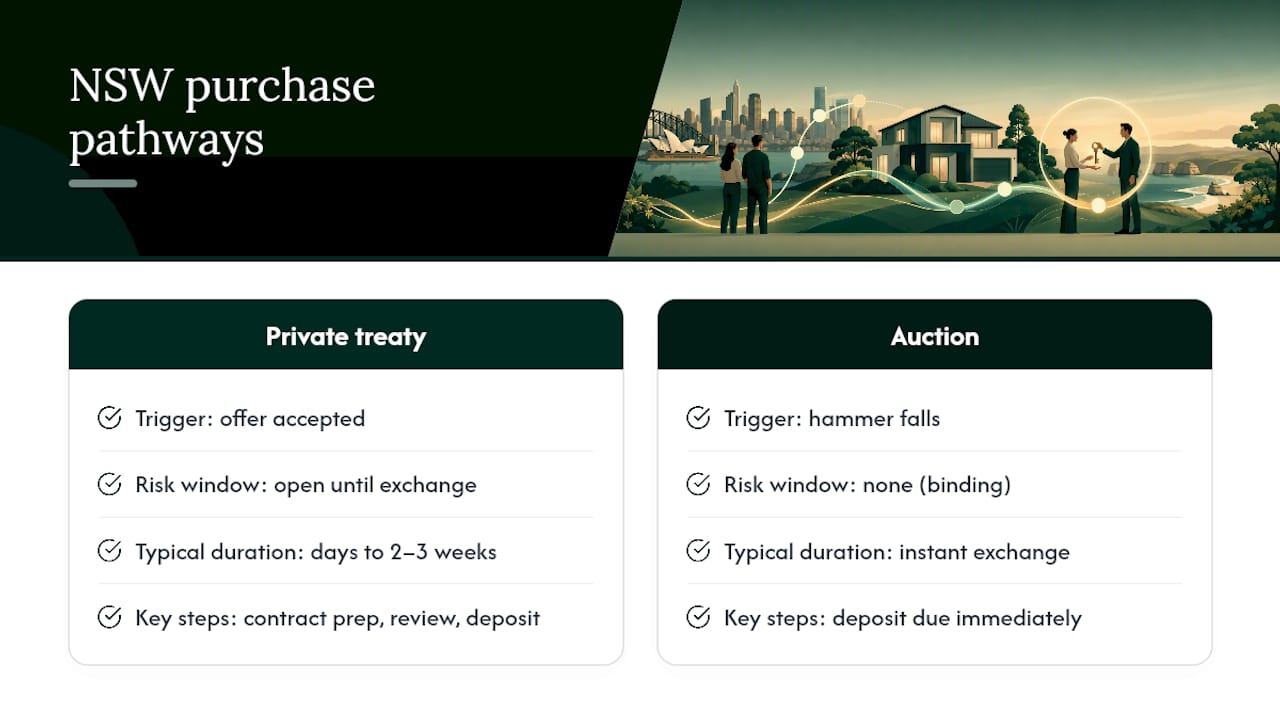
The practical lesson is to treat “offer accepted” as the starting gun, not the finish line. Everything from that point, contract review, inspections, finance confirmation, should already be primed to move as fast as legally possible.
Gazumping rules in other Australian states compared
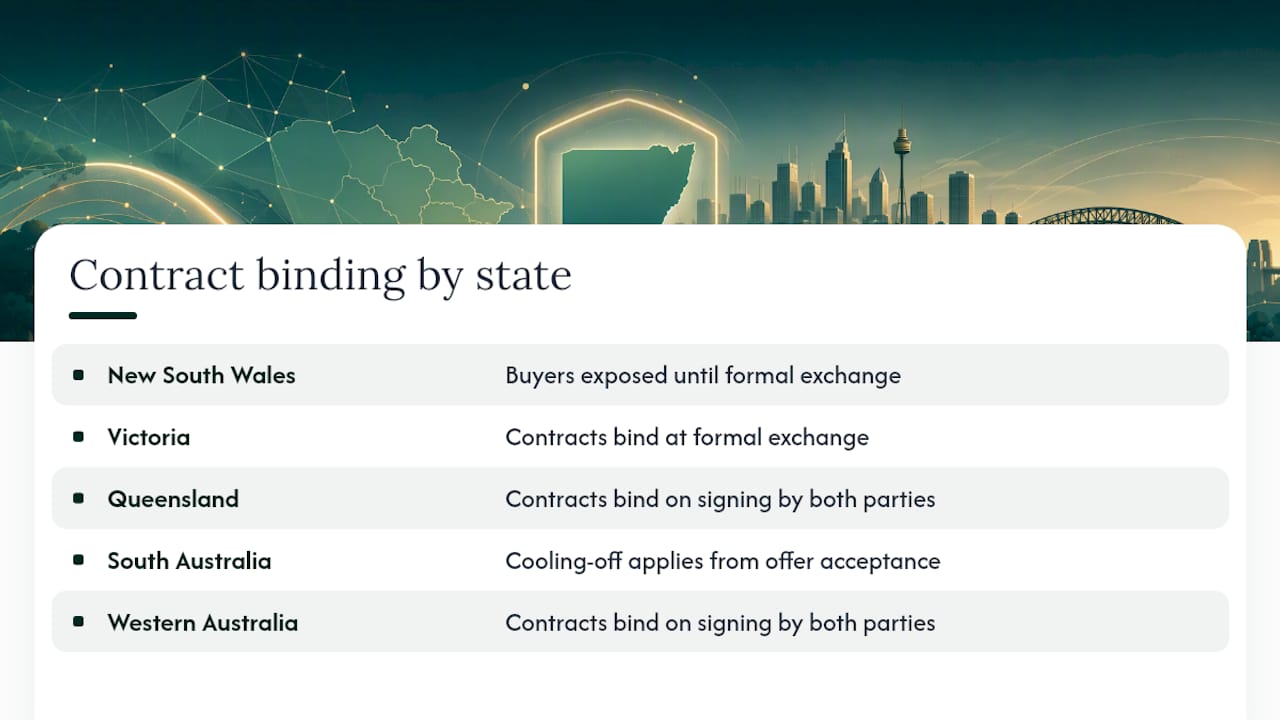
NSW isn’t unique in allowing gazumping. Victoria and Queensland follow broadly the same principle: contracts only bind once formally exchanged (Victoria) or signed by both parties (Queensland), leaving a comparable window of exposure for private treaty sales in both states.
South Australia stands apart because it’s introduced cooling-off protections that apply from the point an offer is accepted, before exchange, which narrows the gap gazumping typically exploits. It’s a structural difference worth knowing if you’re comparing interstate investment options, since a rule that protects buyers in Adelaide won’t help you in Sydney.
Western Australia’s process runs closer to the NSW model, with contracts becoming binding on signing by both parties rather than at an earlier acceptance stage.
None of these differences change your position as a Sydney buyer, but they’re useful context if you’ve heard a friend in another state describe a completely different experience. The rules genuinely vary, and “that couldn’t happen where I bought” is often literally true, just not because gazumping is illegal everywhere. It’s because some states have closed the gap earlier in the process than NSW has.
Speed versus safety: a buyers agent’s view
Chasing an unconditional exchange without finished due diligence is how buyers end up trapped in a bad purchase, not a fast one. A Section 66W waiver only earns its place once finance, inspections and contract review are genuinely complete, never before.
The clearest signal it’s time to bring in a buyers agent is simple: you’re competing against multiple offers and don’t have a conveyancer already briefed. That gap is exactly where deals are lost.
— Kristan
Move faster than the market with Sydney Property Buyers
Sydney Property Buyers exists for exactly the moment described above: the gap between “offer accepted” and “contracts exchanged” where gazumping lives. Because the agency already has conveyancer relationships, pre-vetted contracts and off-market properties in its pipeline, clients routinely move from engagement to settlement in an average of 54 days, well ahead of buyers starting from scratch after a verbal yes.

Whether you need full-service support (strategy, search, appraisal, negotiation, auction bidding and settlement) or negotiation-only representation on a property you’ve already found, the team handles the parts of the process most likely to expose you to a rival offer. Get in touch on 1800 676 177 or hello@sydneypropertybuyers.com.au, or read through the full purchase process to see exactly how engagement to exchange is structured before you commit to anything.
Sources
- What is gazumping in NSW and can you prevent it? — RS Law Group
- Making an offer on a property | NSW Government
- How to avoid gazumping in NSW, VIC & QLD — Titlespace
- Gazumping explained | The complete NSW buyer’s guide — Hindsight Legal
FAQ
Is gazumping illegal in NSW?
No. A sale only becomes binding once contracts are exchanged, so a seller accepting a better offer beforehand isn’t breaking the law, even though it feels unfair to the buyer who missed out.
Do estate agents like gazumping?
Agents have a duty to present every genuine offer to the vendor until exchange, so gazumping is really a byproduct of that obligation rather than something agents deliberately engineer.
How common is gazumping in NSW?
It’s more frequent in rising, competitive markets and private treaty sales, where multiple buyers are pursuing the same property; auctions largely eliminate the risk because the hammer fall creates an immediate binding contract.
Can I get my deposit back if I’m gazumped?
An expression of interest or holding payment should be refunded in full, but other pre-exchange costs like legal fees, inspections and loan application fees are typically not recoverable.
Should I use a buyers agent to avoid gazumping?
A buyers agent like Sydney Property Buyers can shorten the exposure window through early contract access and established conveyancer relationships, which matters most if you’re bidding in a competitive private treaty market without your own team already lined up.
Recommended
- Do This Before Exchange to Avoid NSW Property Settlement Delays
- Buyers agent search timeline expectations: Sydney guide
- Unconditional exchange: what Sydney buyers must know