Dulwich Hill wins on transport and value for money; Petersham wins on heritage character and a tighter, café-driven village feel. Dulwich Hill suits commuters and families chasing light rail access and a slightly larger budget stretch, while Petersham suits buyers who want Victorian terraces, a walkable strip, and a lower entry price on houses. Both sit firmly in Sydney’s Inner West, and the right pick comes down to whether you value train frequency or streetscape.
TL;DR:
- Dulwich Hill offers more transport options including light rail access, which provides greater flexibility during disruptions, while Petersham relies solely on train and bus services.
- The median house price in Dulwich Hill is approximately $2.55 million, compared to Petersham’s lower median of around $2.17 million, making Petersham more affordable for entry-level buyers.
- Dulwich Hill’s larger population and varied housing stock make it more suitable for renovators seeking dual-occupancy potential, whereas Petersham’s heritage terraces appeal to those prioritizing character and lower prices.
- Residents of Dulwich Hill tend to have higher household income levels compared to Petersham, which has a median personal income of about $1,223 per week.
- Being walkable to city fringe amenities, Dulwich Hill’s proximity to green spaces and river access contrast with Petersham’s quieter, food-focused street life centered along New Canterbury Road.
Table of Contents
- Dulwich Hill vs Petersham at a glance
- How each suburb came to be
- Who lives in Dulwich Hill and Petersham today
- Getting around: trains, light rail and the daily commute
- Comparing the property markets
- Cafés, parks and everyday life
- Schools and childcare in both suburbs
- Which suburb actually suits you?
- What a buyer’s agent notices that listings don’t show
- Get local Inner West expertise on your side
- Sources
- FAQ
Dulwich Hill vs Petersham at a glance
The two suburbs sit almost side by side, but the numbers reveal different personalities. Dulwich Hill is roughly 7.5 kilometres south-west of the CBD with a 2021 population of 14,046, while Petersham carries a smaller population near 8,200 according to recent suburb profile data.
| Metric | Dulwich Hill | Petersham |
|---|---|---|
| Distance to CBD | ~7.5 km | 7.5 kilometres |
| 2021 population | 14,046 | ~8,200 |
| Median house price | ~$2.55M | ~$2.17M |
| Median unit price | Not consistently published | ~$1.22M |
| Housing stock | Federation homes, units, terraces | Victorian and Federation terraces |
| Main transport | Train station, Inner West Light Rail | Train and bus connections |
A few things jump out immediately:
- Petersham’s median house price sits noticeably below Dulwich Hill’s, based on figures from StMate’s suburb profile.
- Dulwich Hill has double the population, spread across a wider footprint that includes more standalone houses and newer unit blocks.
- Both suburbs are genuinely walkable to the city fringe, but Dulwich Hill’s transport options are more varied thanks to the light rail running through it.
If price is the deciding factor, Petersham currently offers a cheaper way into Inner West house ownership. If transport flexibility matters more, Dulwich Hill has the edge.
How each suburb came to be
Dulwich Hill grew almost entirely because of the tram. Once services reached the area in the early twentieth century, subdivision followed fast, and much of the suburb’s housing stock still reflects that boom: Federation-era cottages on narrow blocks, laid out along street patterns built for a horse-and-cart era rather than modern driveways. That layout has an unexpected upside for renovators. Tram-era lot sizes and street grids in suburbs like Dulwich Hill tend to lend themselves well to dual-occupancy conversions and small infill builds, which is part of why the suburb attracts both owner-occupiers and small-scale developers.
Petersham’s story runs slightly earlier and has a different flavour. Some of its original land parcels were known by names like Petersham Hill before formal subdivision, and the suburb built its identity around its position on the rail line to Sydney, with grand Victorian terraces going up for city workers who wanted a short commute without inner-city crowding.
A few historical threads worth noting:
- Both suburbs sit on land originally occupied by the Gadigal and Wangal peoples of the Eora nation, a heritage that predates European subdivision by tens of thousands of years.
- Dulwich Hill’s tram-driven growth explains its mix of workers’ cottages and slightly larger Federation villas.
- Petersham’s early rail connection shaped its denser terrace streetscape, which remains largely intact today.
Who lives in Dulwich Hill and Petersham today
Dulwich Hill’s 2021 census population of 14,046 makes it noticeably larger and more built-out than Petersham, according to ABS QuickStats. Petersham’s population sits closer to 8,200, with a reported median personal income around $1,223 per week, or roughly $63,596 annually, per recent suburb income data.
Quick fact: Petersham’s median weekly personal income of $1,223 places it comfortably in the middle range for Inner West suburbs, reflecting a mix of professionals and long-term residents rather than a purely young-renter demographic.
Cultural character differs sharply between the two:
- Dulwich Hill has long-established Greek and Vietnamese communities, visible in grocers and restaurants along its main strips, alongside a wave of younger professionals drawn by gentrification.
- Petersham carries a strong Portuguese and Italian heritage, with delis, bakeries and cafés along New Canterbury Road still run by families connected to that history.
- Both suburbs skew toward established residents rather than a purely transient rental population, though Dulwich Hill’s larger footprint means more variety street to street.
Getting around: trains, light rail and the daily commute
Transport is where Dulwich Hill separates itself most clearly from its neighbour. The suburb has its own train station on the Bankstown line, plus multiple stops on the Inner West Light Rail, giving residents two distinct ways into the city and connections toward Dulwich Hill’s surrounding suburbs without needing a car.
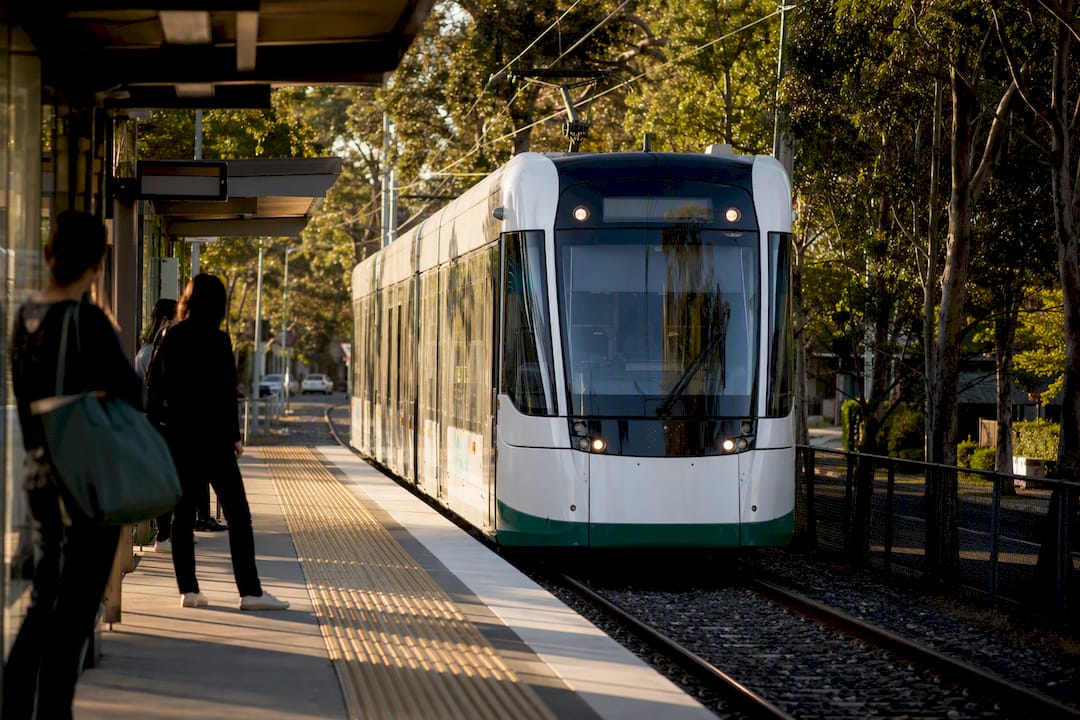
Petersham relies on train services from its own station and a solid bus network, but it doesn’t have light rail running through the heart of the suburb. Commute times to the CBD from both suburbs land in a similar range, generally under 30 minutes by train, but Dulwich Hill’s dual network gives residents more flexibility if one service is disrupted.
Key transport points:
- Dulwich Hill: train station plus Inner West Light Rail, with high transport scores reflected in suburb liveability data.
- Petersham: train station on the Inner West line plus regular bus routes into the city and neighbouring suburbs.
- Both suburbs are within easy cycling distance of the CBD for confident riders.
Pro Tip: Properties within a five-minute walk of Dulwich Hill’s light rail stops often carry a premium over near-identical homes ten minutes further out. If light rail access isn’t a daily priority for you, that gap is where the value sits.
Comparing the property markets
Dulwich Hill’s median house price sits around $2.55 million, with the suburb scoring highly on transport and liveability measures reported by SuburbCheck. Petersham’s median house price comes in lower at roughly $2.17 million, with units averaging around $1.22 million and recent growth near 5.2%, according to StMate’s property data.
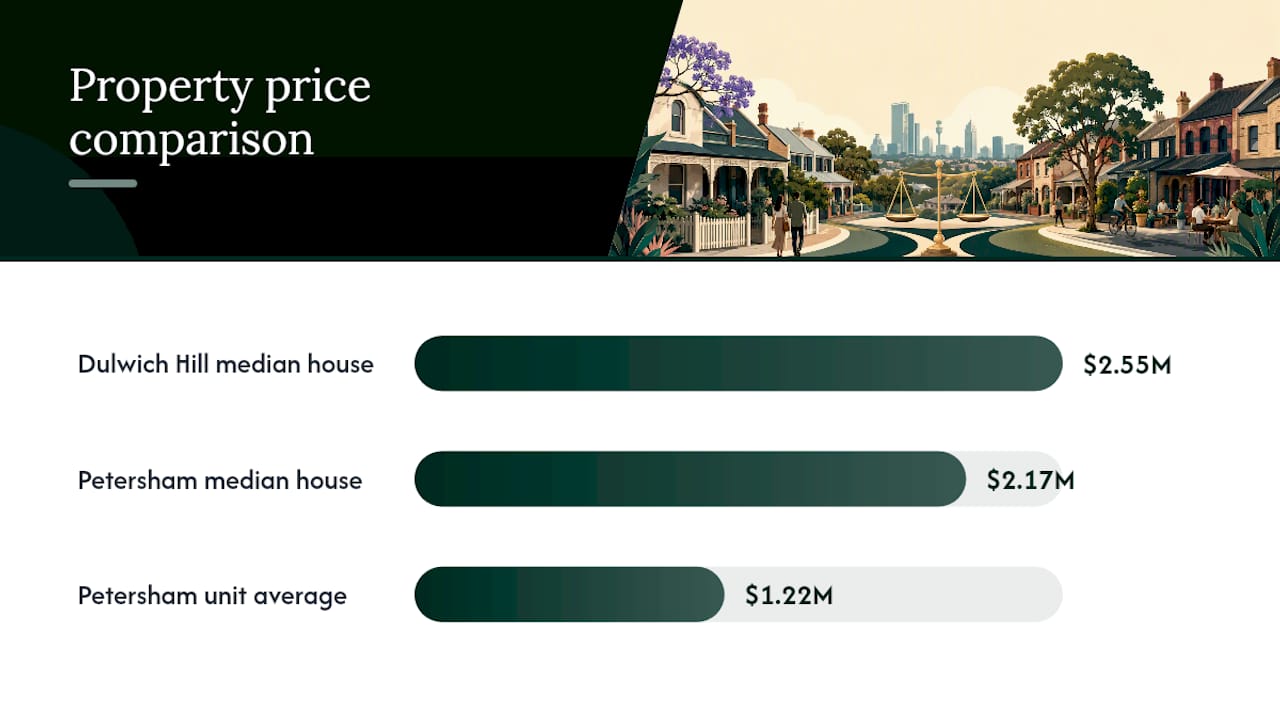
By the numbers: that gap between the two suburbs’ median house prices runs close to $380,000, a meaningful difference for buyers stretching a budget in either direction.
Housing stock shapes what that money actually buys:
- Dulwich Hill offers a broader mix: Federation houses, post-war units, and newer apartment developments near the light rail corridor.
- Petersham leans heavily on Victorian and Federation terraces, many with original detailing intact, offering less scope for major footprint changes but strong heritage appeal.
- Investors eyeing rental demand should note both suburbs attract steady tenant interest from professionals working in the city, given the short commute either way offers.
Buyers chasing a renovator’s project will generally find more flexibility in Dulwich Hill’s wider blocks. Buyers who want heritage character without a renovation project may find Petersham’s intact terraces the better fit, at a comparatively lower entry price.
Cafés, parks and everyday life
Petersham’s New Canterbury Road strip has built its reputation on Portuguese and Italian food culture, from long-running delis to bakeries that have served the same families for decades. It’s a quieter, more residential feel once you step off the main road, with terrace-lined streets that stay calm even on weekends.

Dulwich Hill trades some of that old-world charm for variety. Marrickville Road and the surrounding shopping strips mix Greek and Vietnamese grocers with newer cafés and bars that have moved in as the suburb gentrified. The suburb also sits close to the Cooks River, giving residents parkland and river paths that Petersham’s more built-up terrace streets don’t offer in the same way.
The everyday texture differs accordingly:
- Petersham suits people who want a slower, food-focused strip within walking distance of home.
- Dulwich Hill suits people who want river access, more green space, and a busier retail mix.
- Both suburbs have strong café cultures, but Dulwich Hill’s is more spread out while Petersham’s concentrates along one main road.
Schools and childcare in both suburbs
Families weighing Dulwich Hill against Petersham will find solid public schooling options in both. Dulwich Hill Public School serves local families directly, with several well-regarded primary and secondary options in surrounding suburbs also within easy reach. Petersham Public School anchors the local area similarly, giving residents a walkable option without needing to enter the private system.
A few practical points for families:
- Both suburbs sit within catchment distance of respected selective and private secondary schools in the broader Inner West, a factor that shows up in buyer demand from families.
- Childcare centres are reasonably well distributed in both suburbs, though Dulwich Hill’s larger population supports a slightly wider spread of options.
- Proximity to public transport matters here too. Families without a second car often prioritise suburbs where school runs don’t require driving.
Which suburb actually suits you?
Match your priorities against what each suburb genuinely delivers, rather than picking on reputation alone.
- Prioritise commute flexibility and lower total spend? Lean toward Dulwich Hill for its light rail and train combination.
- Want heritage terraces and a lower house-price entry point? Petersham’s Victorian streetscape and comparatively lower median price make more sense.
- Chasing renovation or dual-occupancy potential? Dulwich Hill’s tram-era lot sizes give more room to work with.
- Want a quieter, food-focused village feel? Petersham’s New Canterbury Road strip fits that brief better.
- Next step either way: inspect properties in person, check current listings against the median figures above, and speak with a local buyer’s agent before making an offer.
What a buyer’s agent notices that listings don’t show
Kristan Johnson, licensed real estate agent and 2024 Outstanding Buyers Agent of the Year for the Inner West, has watched both suburbs closely enough to know the listing photos rarely tell the full story. Heritage terraces in Petersham often hide dated wiring or damp behind a freshly painted facade, and light rail proximity in Dulwich Hill can mean vibration or noise that only shows up on an evening inspection, not a Saturday open home.
The buyers who do best in either suburb are the ones who inspect on weekdays, ask directly about strata reports on unit blocks, and move fast when something genuinely undervalued appears off-market. That’s precisely where professional representation earns its keep, particularly at auction, where a calm, experienced bidder rarely loses to nerves.
— Kristan
Get local Inner West expertise on your side
Comparing suburbs on paper only gets a buyer so far. A licensed buyers agency can provide an alternative to hunting solo through open homes and auction listings for Dulwich Hill or Petersham, offering clients access to off-market and pre-market properties that never reach public listings, supported by independent appraisals and inspections available seven days a week regardless of open home timing.
One service option covers the full journey from strategy through to settlement, including auction bidding support for buyers who want a specialist standing beside them on the day. For buyers who have already found a property and just need negotiation representation, a negotiation-only service is available. Explore the full range of services or see how the buying process works from first call to settlement, and get in touch to discuss which Inner West suburb fits your next move.
Sources
The figures in this comparison draw from public and industry sources rather than guesswork:
- Dulwich Hill
- 2021 Dulwich Hill, Census All persons QuickStats
- Petersham, NSW 2049 Suburb Profile — Property, Market & Demographics | StMate
- Dulwich Hill, NSW 2203 — Profile, Prices & Safety | SuburbCheck
The 2021 census remains the most reliable baseline for population comparisons, since it’s the most recent full count available for both suburbs.
FAQ
What is the average household income in Dulwich Hill?
Detailed household income figures for Dulwich Hill specifically aren’t consistently published in the sources reviewed, though ABS QuickStats provides the underlying census data. Neighbouring Petersham reports a median personal income of $1,223 per week, which gives a useful comparative benchmark for the wider Inner West area.
What is the nickname for Dulwich Hill?
There’s no single, widely documented nickname consistently used for Dulwich Hill in the sources available. Locals sometimes refer to it informally by its light rail terminus name, but this isn’t an official or universally recognised title.
Is Dulwich Hill a good investment?
Dulwich Hill’s transport links and gentrification trend make it a suburb with strong ongoing buyer demand, backed by a high transport score reported by SuburbCheck. Whether it suits your specific goals depends on budget and timeframe, and a buyer’s agent like Sydney Property Buyers can help assess capital growth potential and rental yield before you commit.
Is Dulwich Hill Public School good?
Dulwich Hill Public School serves as the main local primary option and is generally well regarded by families in the area, though specific NAPLAN or ICSEA performance figures weren’t available in the sources reviewed for this comparison. Families should check current school profiles directly for the most up-to-date performance data before deciding.
Recommended
- Sydney inner west suburb comparison: 2026 guide
- Balmain vs Leichhardt: which Inner West suburb suits you?
- A$40,000 to A$230,000: What Sydney House Deposits Buy in 2026